



Zoning
| Older Posts |
 |
 |
Harrisonburg Explores Options For Developing Housing On City Owned Land |
|
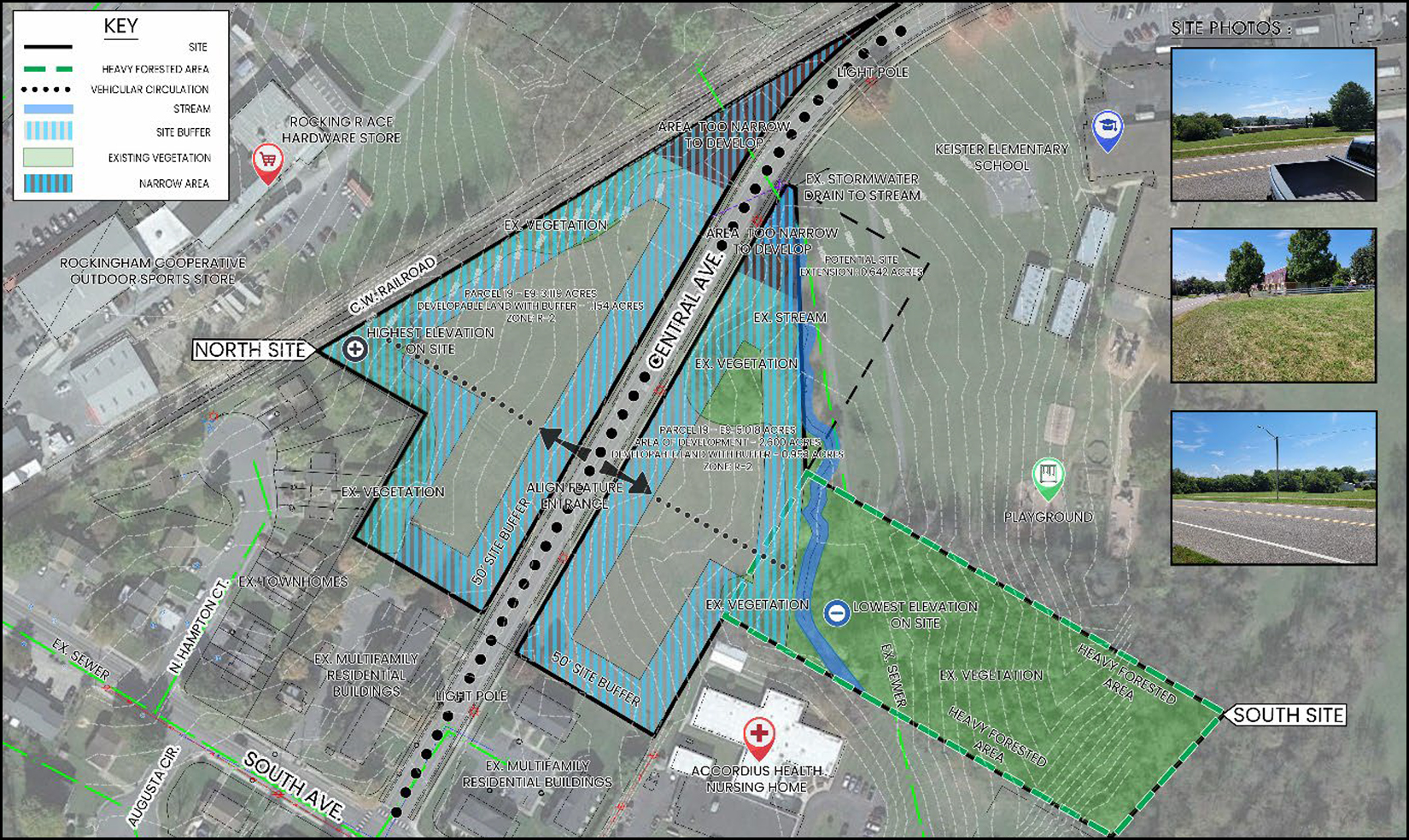 The City of Harrisonburg has been working for the past year on exploring how two City-owned properties might be developed to provide future affordable housing solutions. The first site is an 8.59 acre parcel located on Neff Avenue that would likely allow for the development of either (72) townhomes or up to (200) apartments. Here is an illustration of a potential townhome layout... 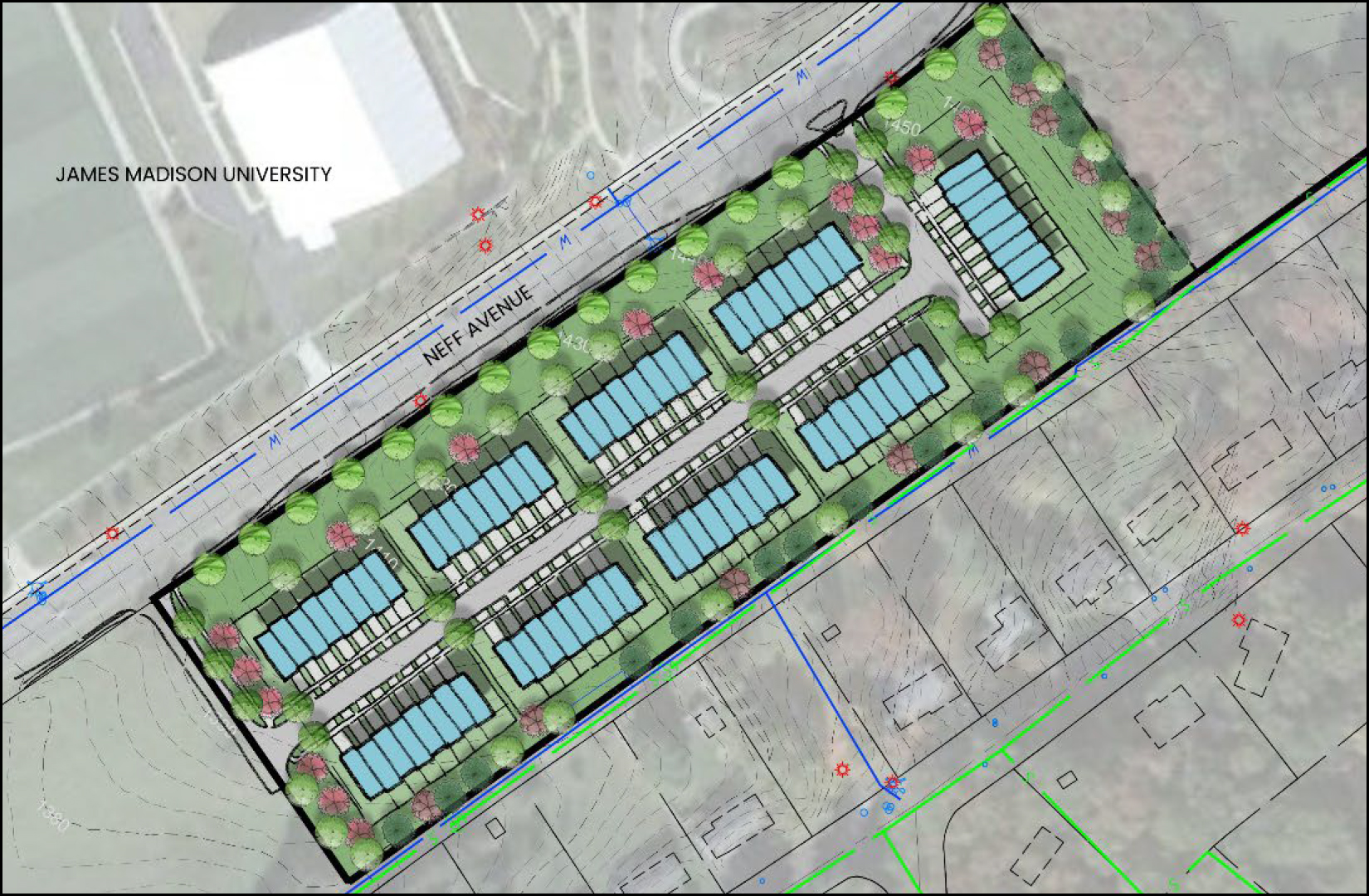 The second site is an 8.13 acre parcel on Central Avenue that would likely allow for the development of (36) single family homes, (51) townhomes or up to (133) apartments. Here is an illustration of a potential single family home layout... 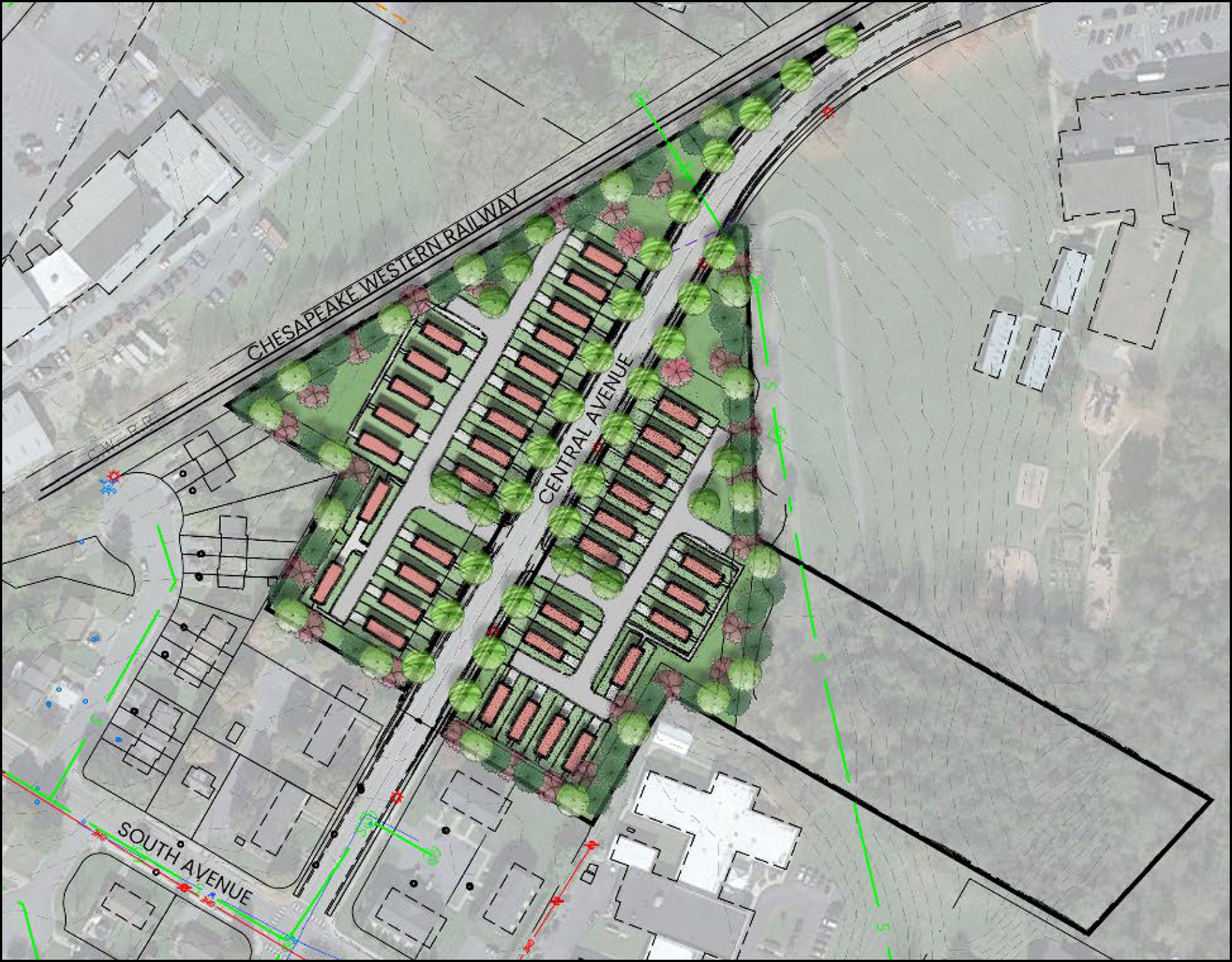 Click here to download the full memorandum from Land Planning and Design Associates, Inc. who prepared a detailed technical memorandum outlining opportunities, constraints, possible development solutions and affordable housing solutions. The memorandum also include multiple other renderings of potential development plans for these sites. | |
 |
 |
|
|
Rockingham County Launches Development Tracker |
|
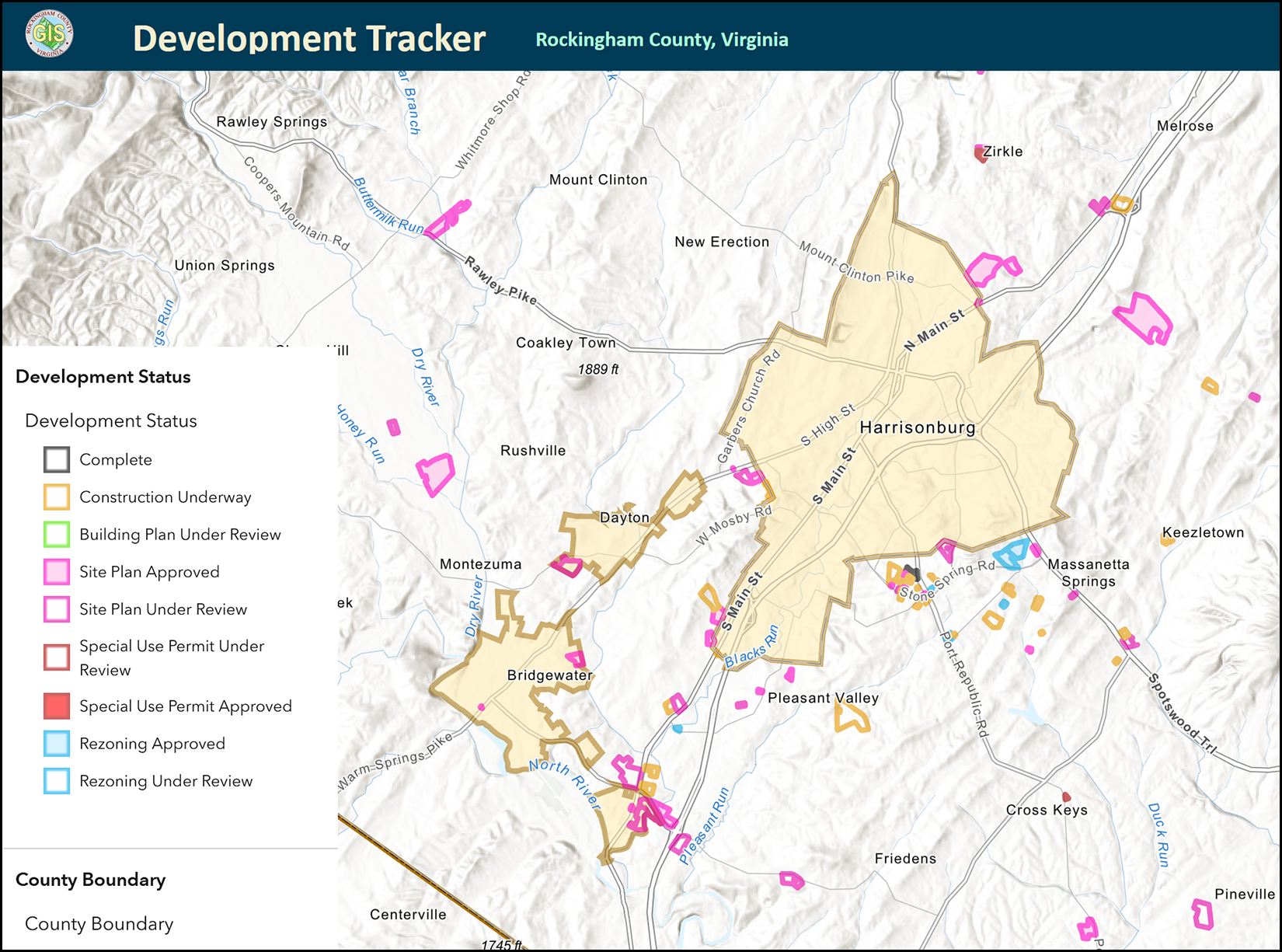 Exciting news from Kayla Yankey, a planner in the Rockingham County Department of Community Development... Rockingham County has launched a new resource to track development activity occurring throughout the County. This Development Tracker application tracks rezoning and special use permit requests under review and approved, site plans under review and approved, building permits under review, projects under construction, and recently completed building projects. The application is user-friendly and easy to navigate, providing the public with a clear vision of the County’s development pipeline. Information will be updated weekly. For development questions beyond the scope of the Development Tracker, please contact the Rockingham County Department of Community Development at 540-564-3030. This is a great resource to understand developments that have been proposed in Rockingham County. Check it out here. | |
|
|
|
|
58 Townhomes, 34 Apartments Likely Coming Soon On Mt Clinton Pike Near Intersection With North Main Street |
|
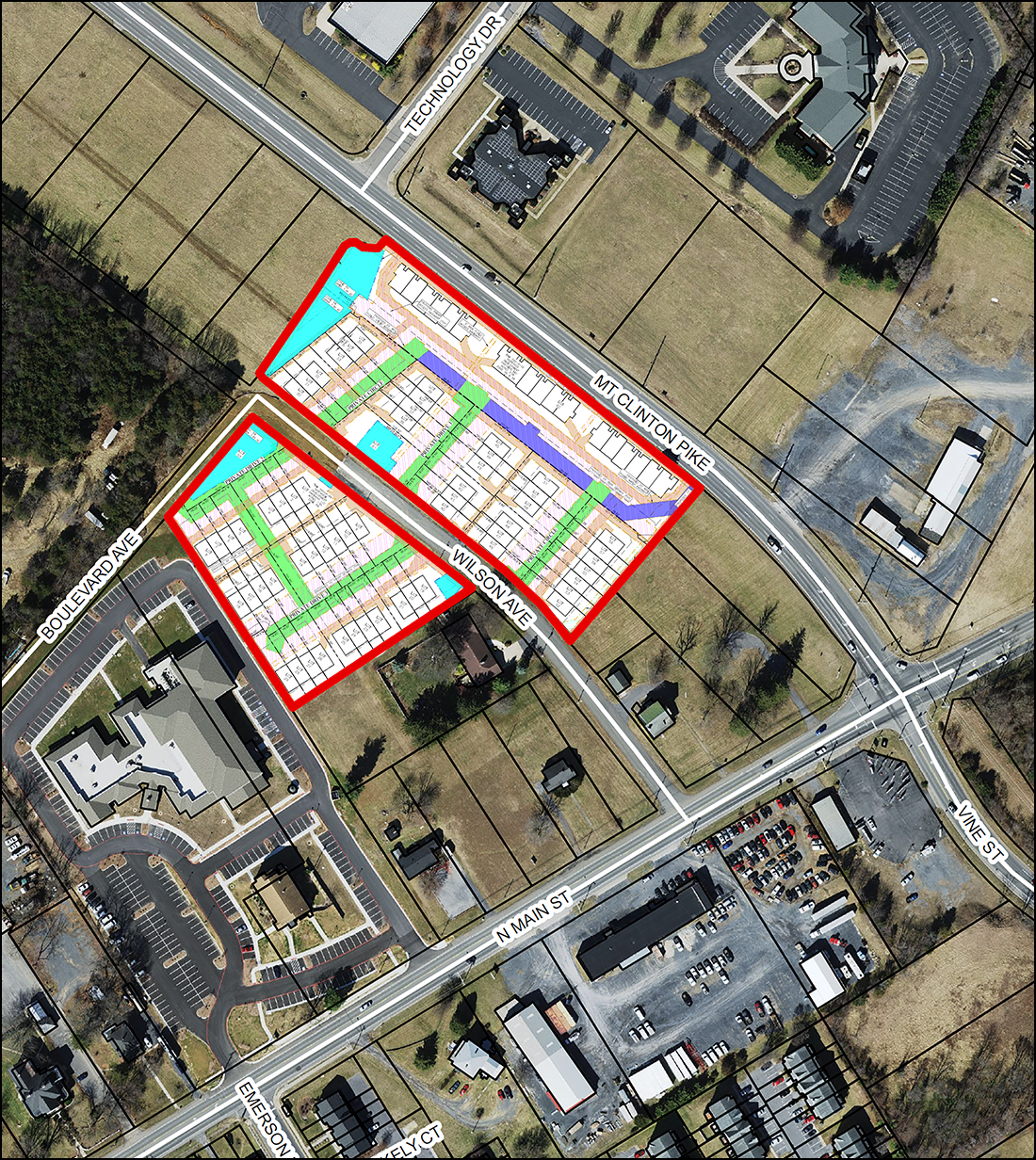 The 5.23 acre parcel shown above was rezoned back in December 2022 to allow for this new residential development and now the Planning Commission and City Council are reviewing and potentially approving the site plan to allow the development to move forward. The 5.23 acre property will include:
Here's the layout, zoomed in a bit... 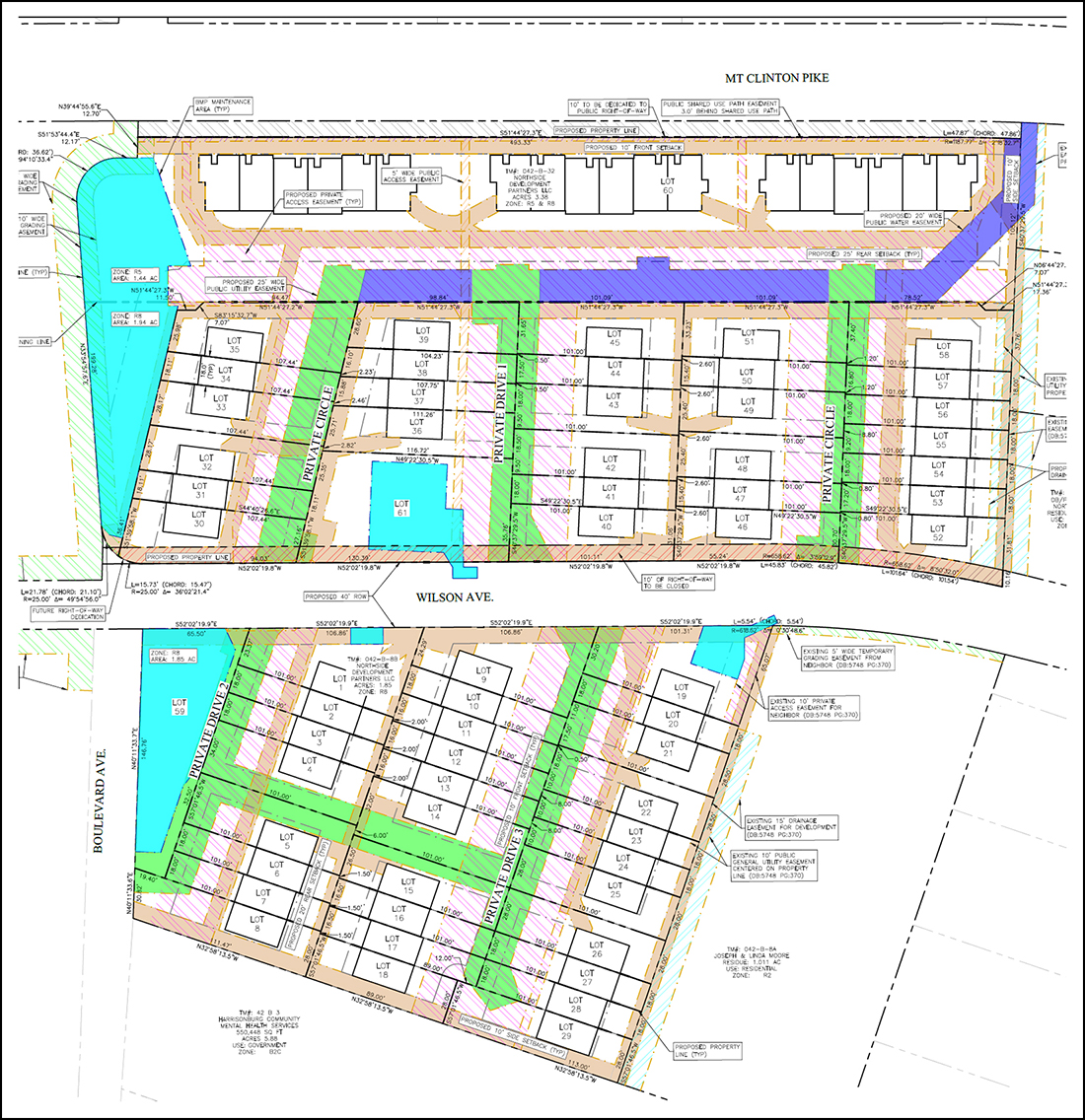 Download the full Planning Commission packet (from their meeting last week) here. | |
|
|
|
|
Evergreene Homes Proposed New Residential Development On Port Republic Road, Weston Park, To Potentially Include 74 Townhomes, 28 Duplexes And 26 Detached Homes |
|
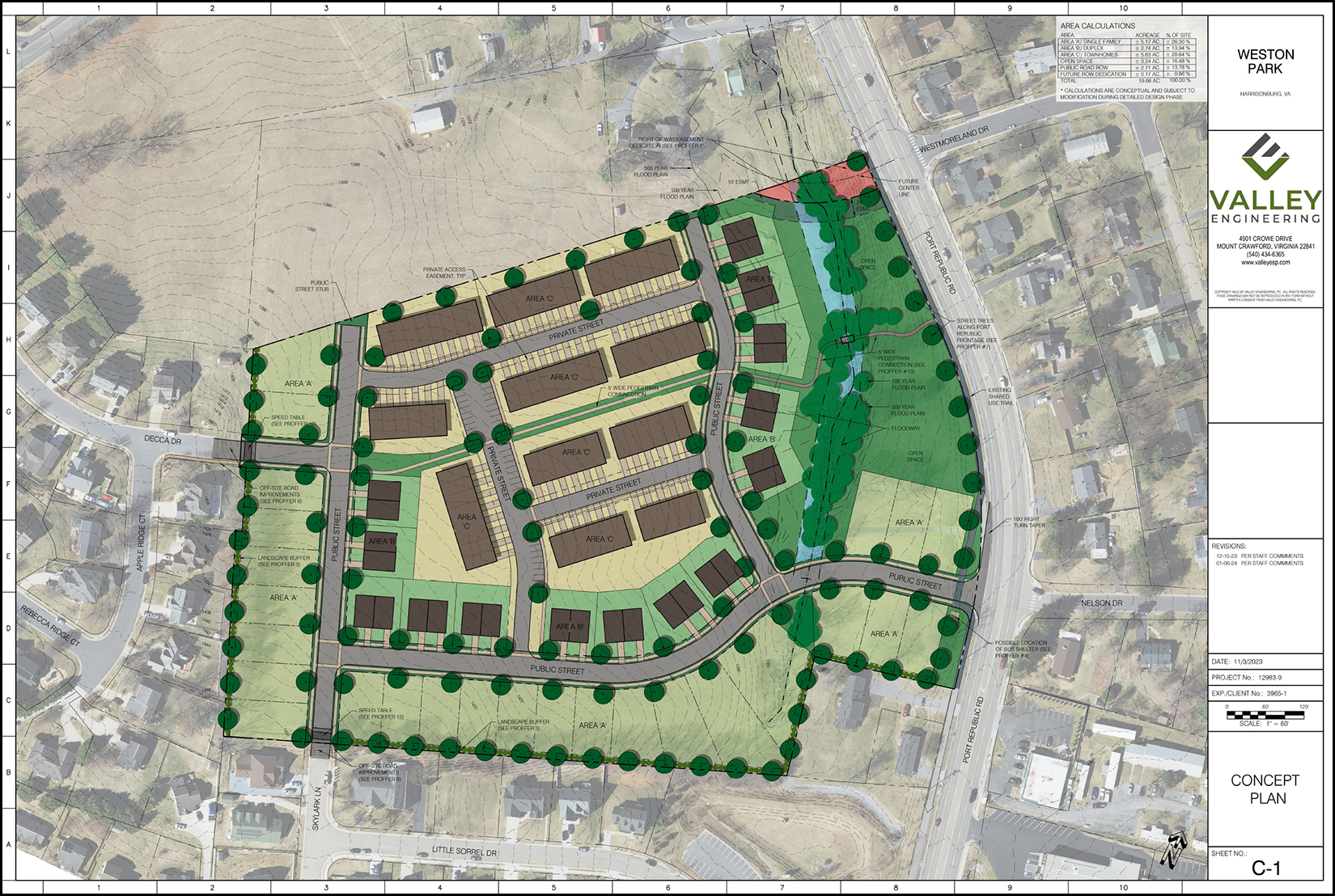 The developer of Preston Lake, Evergreene Homes, is proposing a rezoning in the City of Harrisonburg to allow for the development of a new neighborhood across Port Republic Road from Westmoreland Drive... 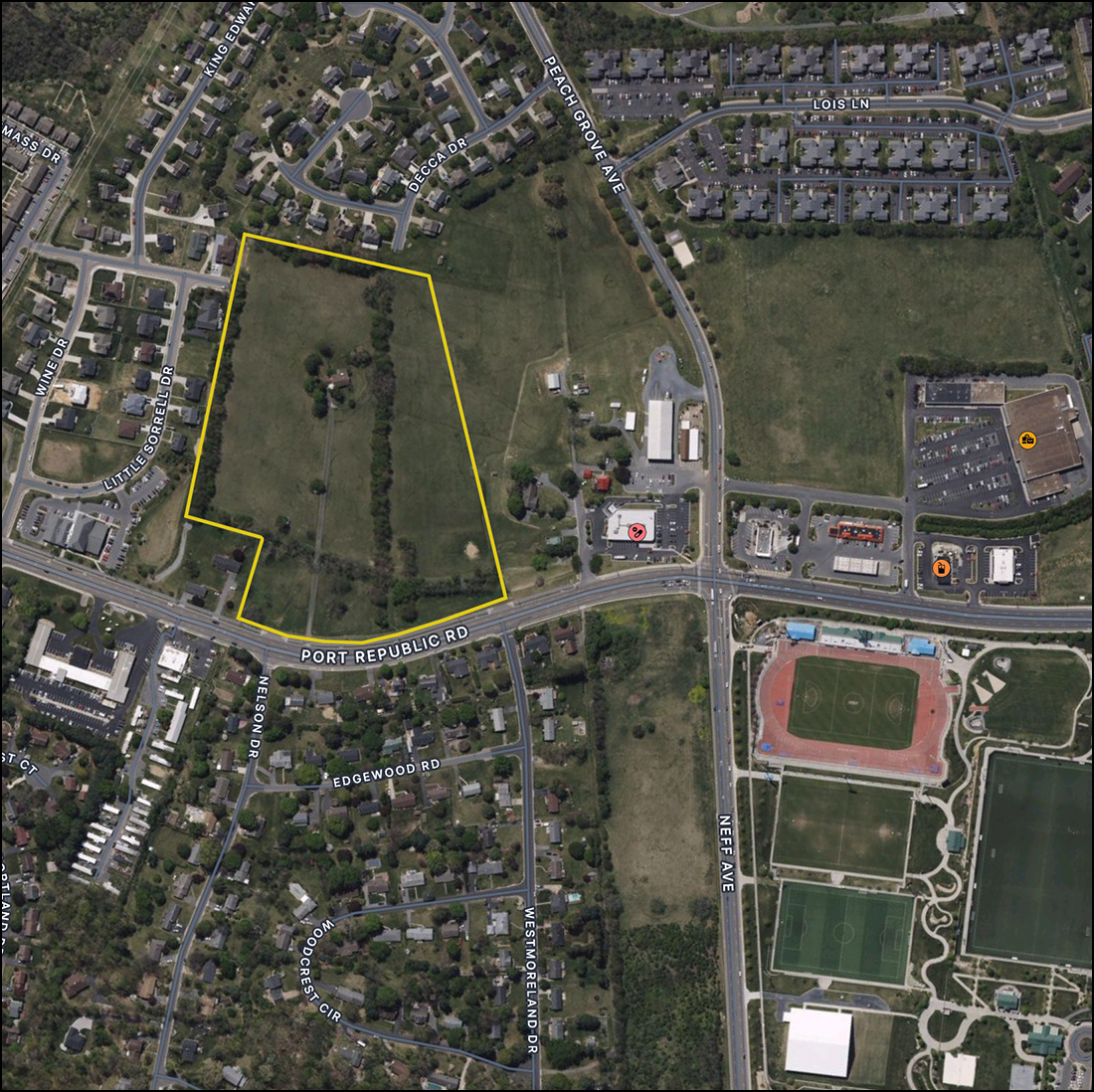 This development would include 128 homes currently shown as:
The City of Harrisonburg Planning Commission will hold a public hearing about this rezoning request on February 14, 2024. City staff recommends that this rezoning request be denied, for two reasons... [1] The Comprehensive Plan shows this area as Low Density Mixed Residential which is intended to include large and small lot single family detached dwellings, sometimes with duplexes - but not with townhouses. The majority of the dwelling units in the proposal for Weston Park are townhouses. [2] Only 6.3% of the approved dwelling units between January 2021 and February 2024 have been single family homes and 1.6% have been duplexes. During that timeframe, 23.2% of the approved dwelling units have been for townhomes (589 of them) and 68.9% of the approved dwelling units have been for multi-family properties (1,747 of them). As the staff report summarizes... "Given the lower number of single-family detached and duplex dwellings that have been given use-approval compared to townhomes, and that the Comprehensive Plan recommends single-family detached and duplexes for the subject property, at this time, staff does not believe the subject property needs to be rezoned to allow for more townhome development." | |
|
|
|
|
Starbucks, Chipotle, Hotels, Storage And More Planned For Urban Development Area |
|
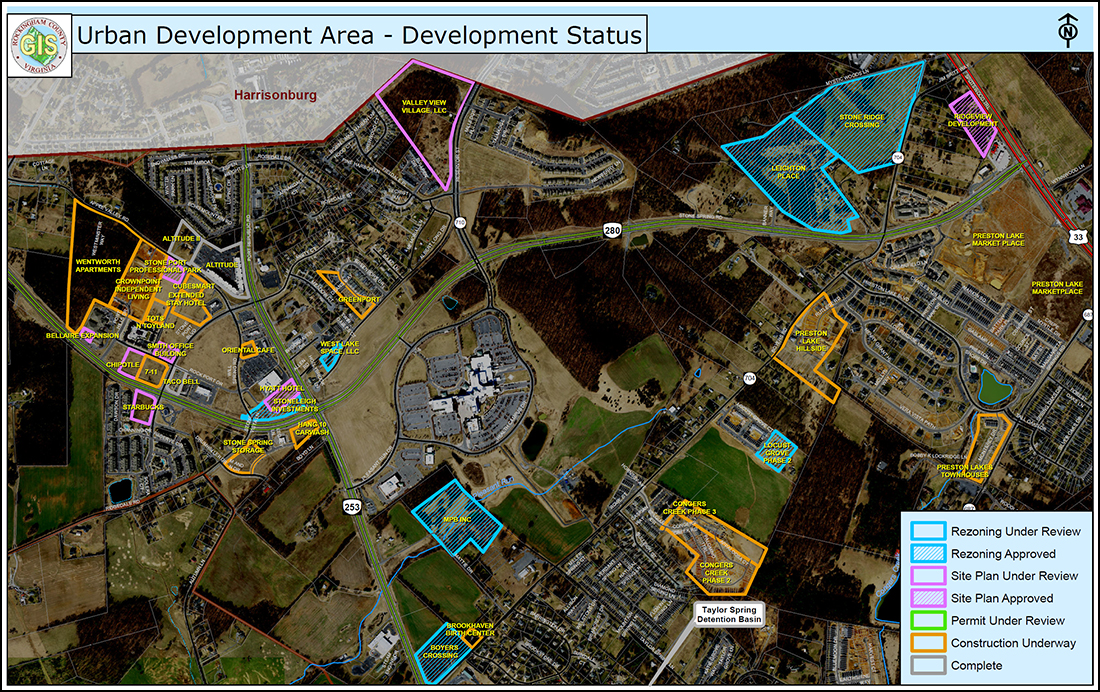 Above is a recently updated map of the Urban Development Area. Some updates to be aware of... [1] Site work has begun for Wentworth Apartments. [2] An extended stay hotel is being built on Stone Port Blvd. [3] A new Chipotle might be built on Stone Spring Road next to the new 7-11 gas station that is almost complete, which is next to Taco Bell. [4] A new Starbucks may be built on Stone Spring Road. [5] A Hyatt Hotel may be built behind Walmart. [6] CubeSmart Storage was recently completed and Stone Spring Storage is being constructed. Download the full sized map here. | |
|
|
|
|
Phase One Plat For Bluestone Town Center Proposed To Include 146 Apartments, 106 Townhomes, 38 Manufactured Homes on 28.31 Acres |
|
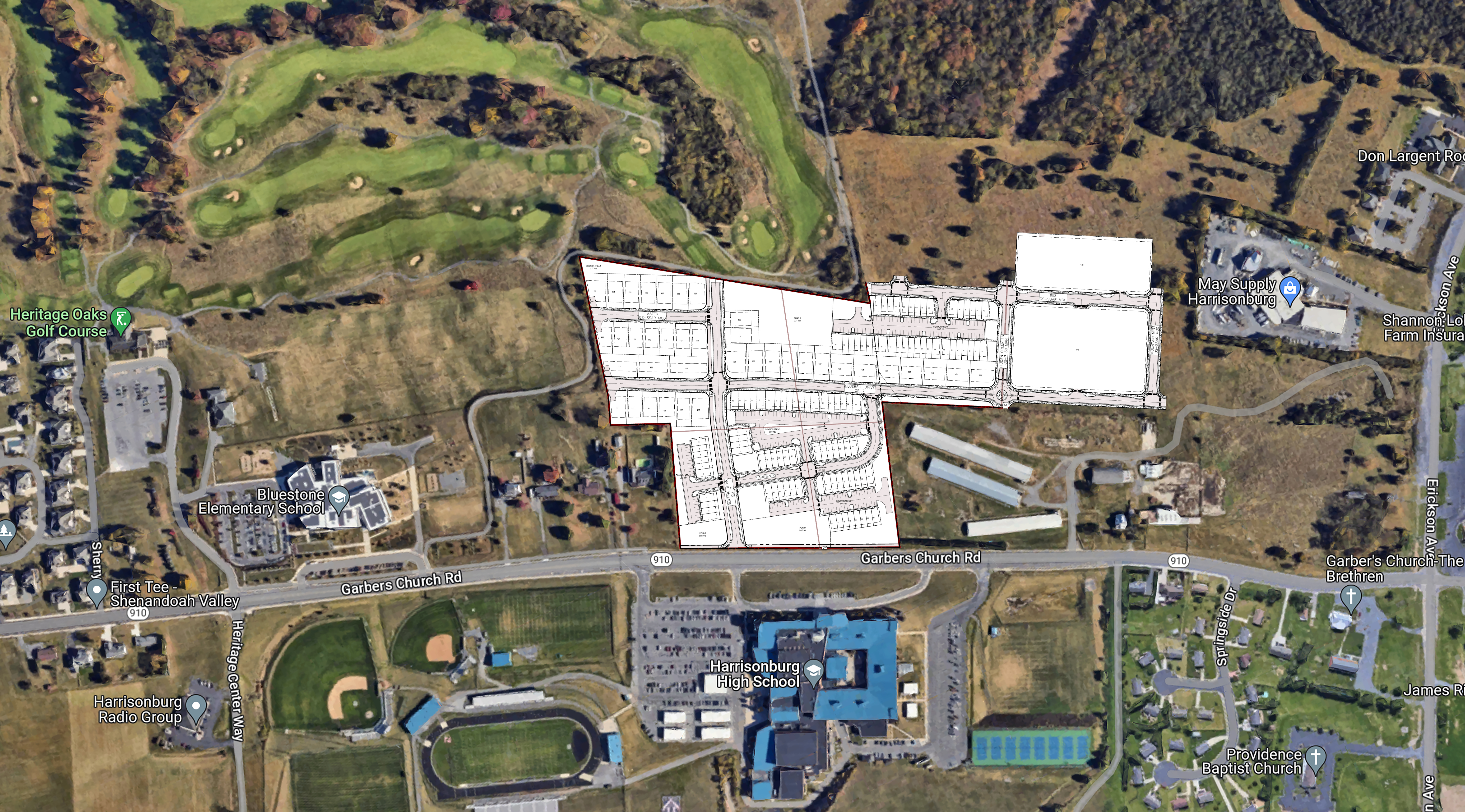 The developers of Bluestone Town Center are proposing a plat for the first phase of the development to include the following property types on 28.31 acres...
A few other interesting details about this upcoming first phase of the development include...
| |
|
|
|
|
94 New City Townhomes Proposed On Pear Street In Cobblers Valley, Zephyr Hill |
|
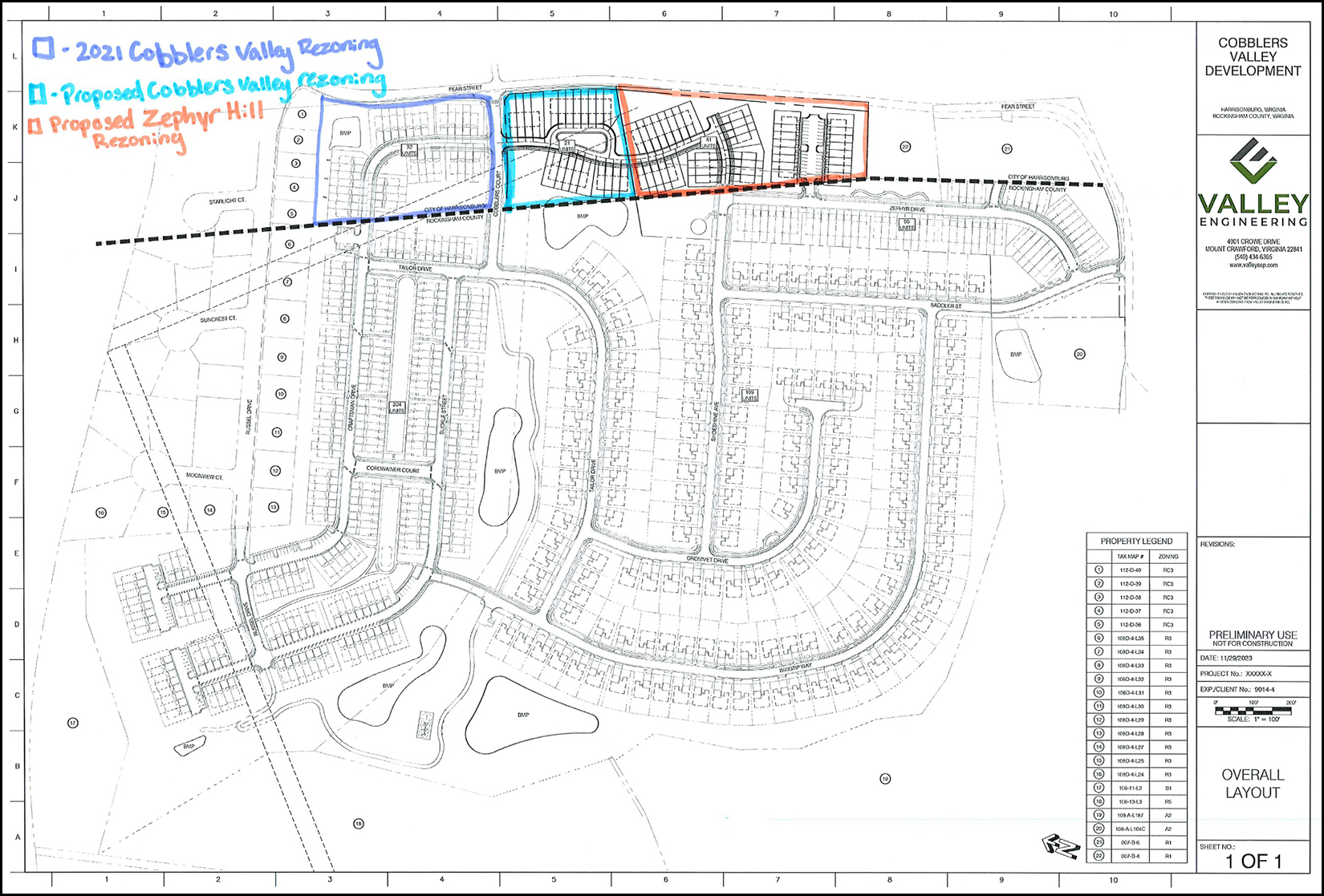 Ryan Homes is in the process of developing a neighborhood called Cobblers Valley, on Pear Street, in Rockingham County. The portion of the development to be built in Rockingham County is intended to include:
There is also a small portion of the development that will exist in the City of Harrisonburg, to include 32 townhomes, highlighted in purple above. A new rezoning to go before the Planning Commission this evening would allow for an additional 21 townhouses, highlighted in blue above. A second rezoning to go before the Planning Commission this evening would allow for an additional 41 townhomes, highlighted in red/orange above. My understanding is that the 53 townhomes (32 +21) would be a part of Cobblers Valley, but that the 41 townhomes would be a separate development, called Zephyr Hill, which already includes 55 planned townhomes. View City documents related to the rezoning and special use permit requests here (21 townhomes) and here (41 townhomes). 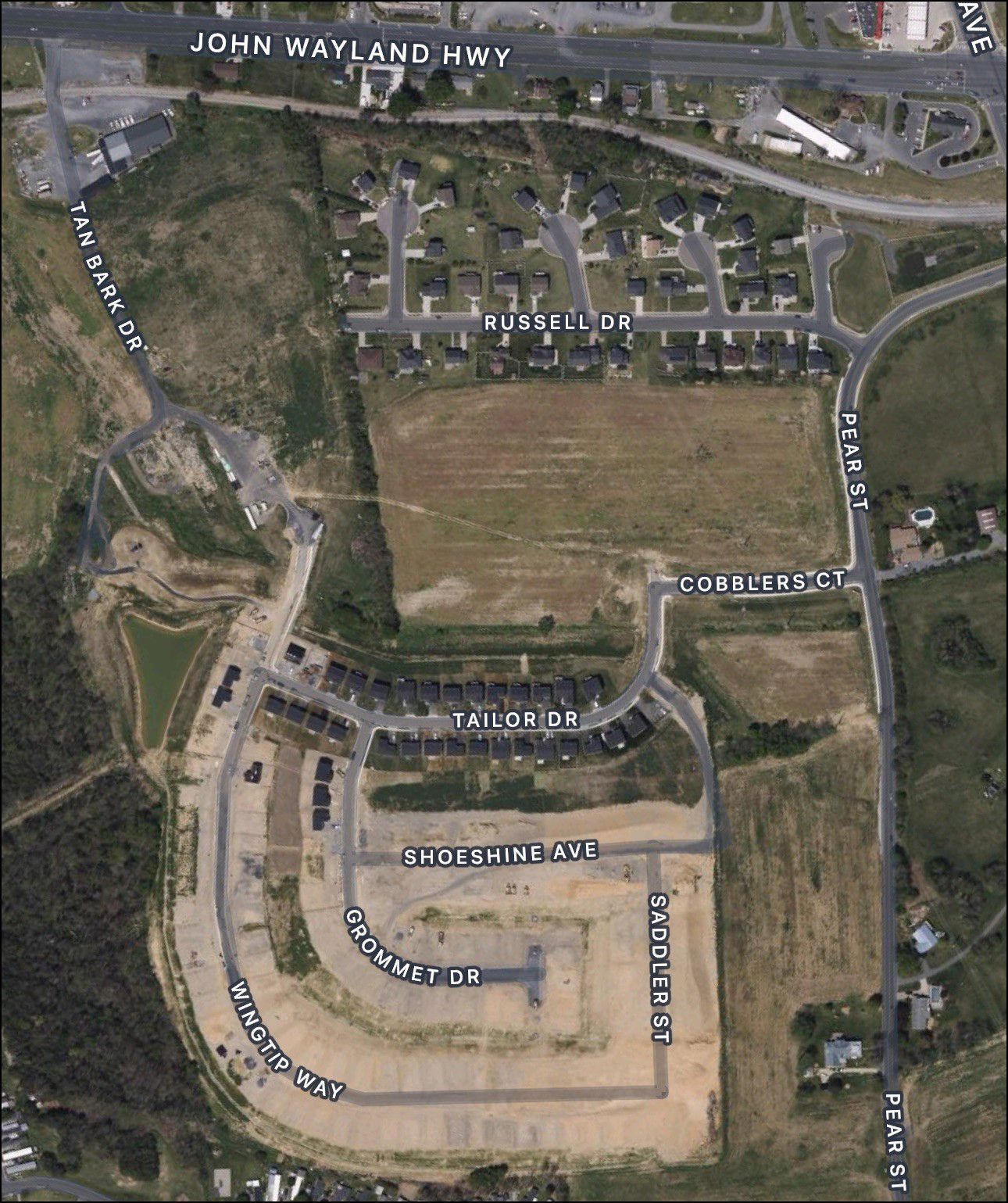 | |
|
|
|
|
Proposed Expansion Of Student Housing Complex, 865 East, To Include 60 More Apartments For A Total Of 160 |
|
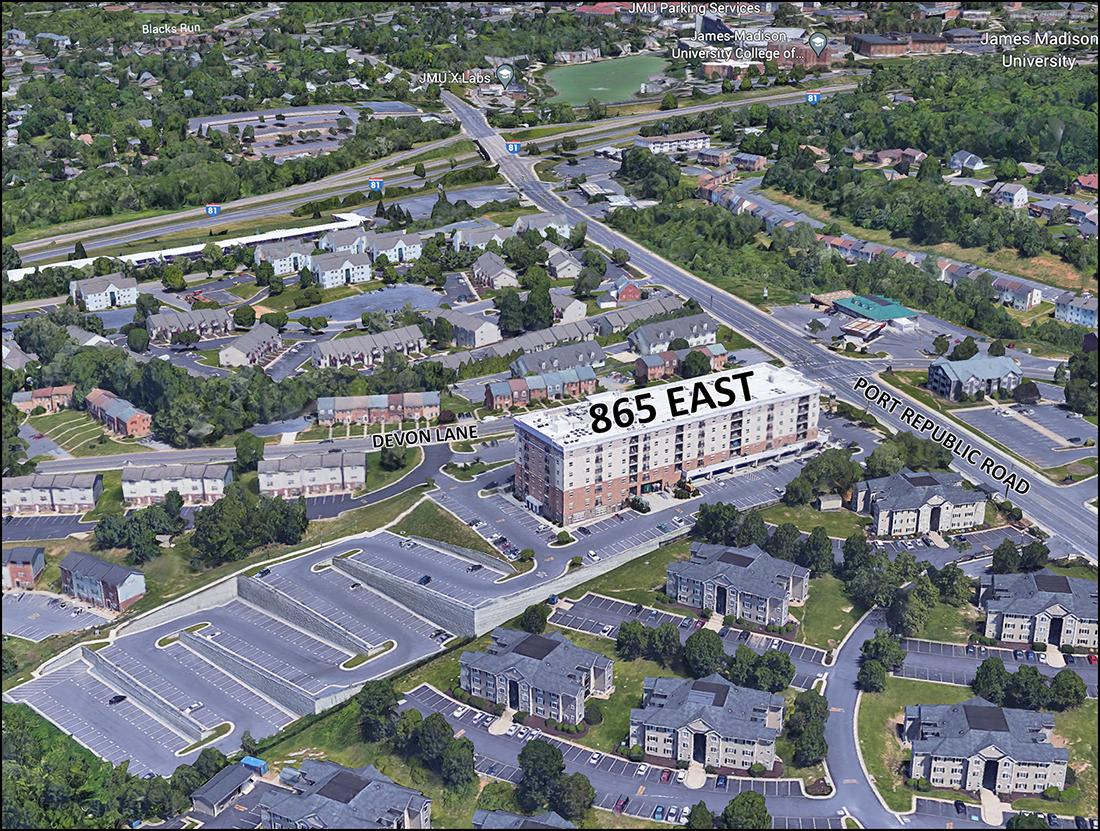 The student housing development at the corner of Port Republic Road and Devon Lane -- 865 East -- may be expanding in the near future. The owner has requested that the City rezone the property and provide a special use permit to allow for an expansion of this mixed use property. 865 East currently features 100 apartments and retail on the ground level. The proposed addition would include 60 more apartments connected to the first building via an elevated breezeway. Here is the potential layout of the addition... 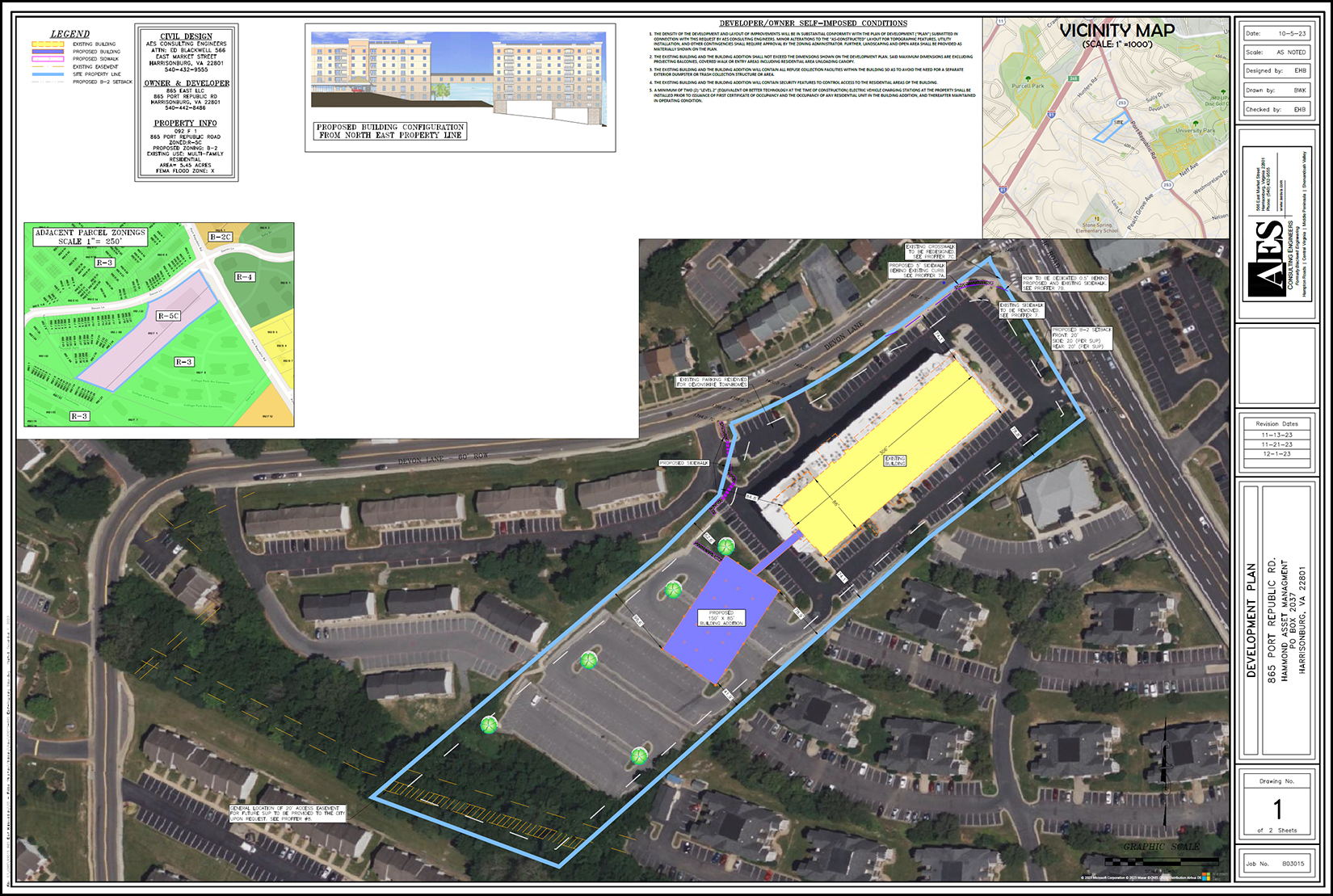 Here's a slightly larger view of the potential new profile of the building and addition, connected by an elevated breezeway... 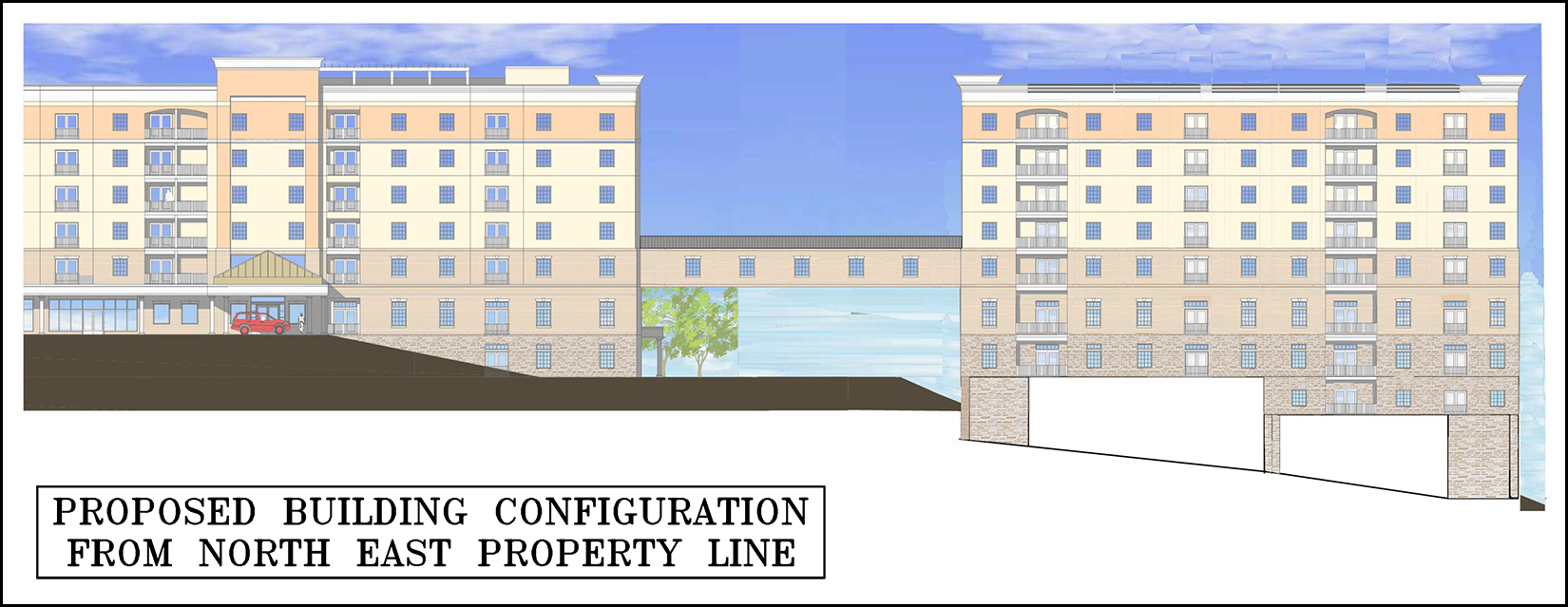 The Planning Commission reviewed this request earlier this week (details here) and they recommended that City Council approve the rezoning and special use permit to allow for this expansion of 865 East. | |
|
|
|
|
Tuscan Village, A New Community To Include 57 Townhomes, 54 Apartments, 2 Single Family Homes, Proposed Near Intersection Of Keezletown Road and Country Club Road |
|
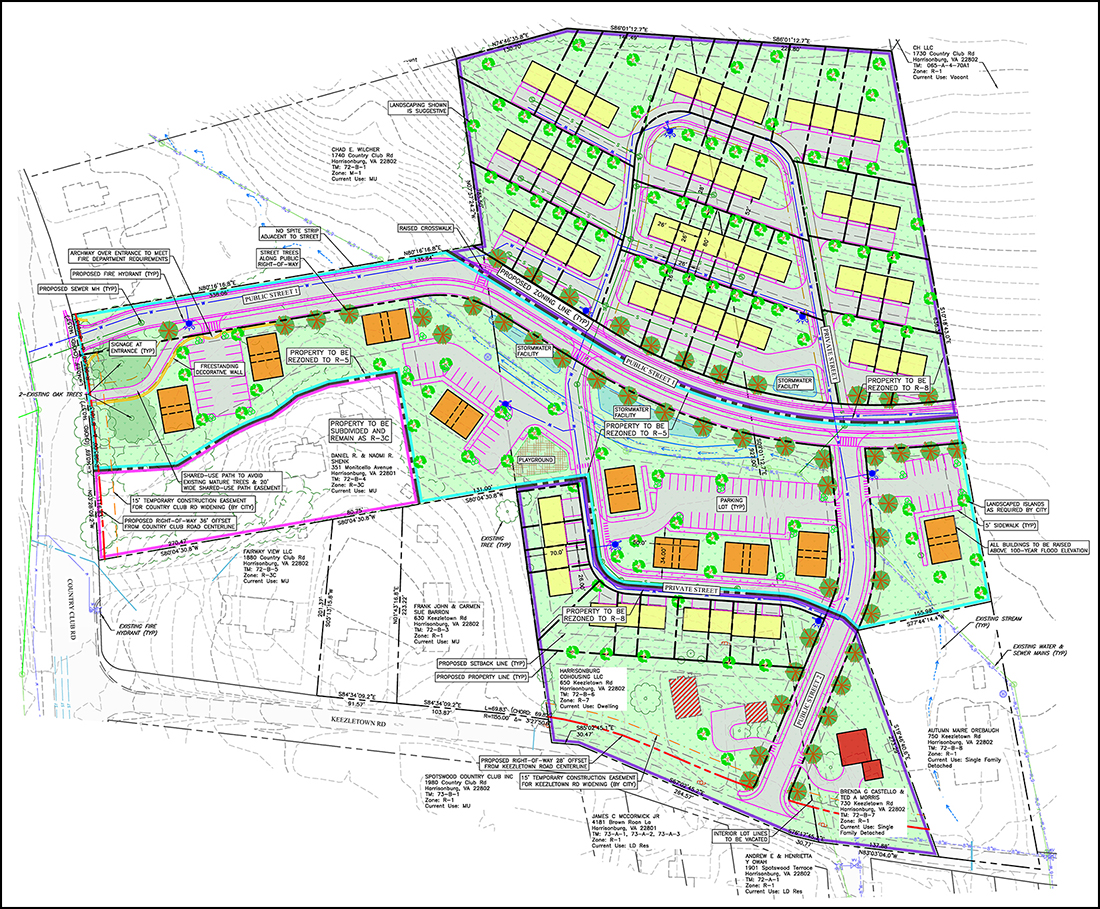 The Harrisonburg Planning Commission considered a request last evening for a new community proposed to be built near the intersection of Keezletown Road and Country Club Road. This potential new community would feature 57 townhomes and 54 apartments and would be developed by Scripture Communities, the builder/developer who has also developed Stone Spring Village, Avalon Woods, Heritage Estates, Liberty Square, The Glen at Cross Keys, The Townes at Bluestone, and is currently developing The Townes at Congers Creek. Of note - I represent this builder/developer and have been involved in the planning of this potential new community. The architectural inspiration for this new community comes from the stone and stucco of Italy and the builder plans to incorporate these elements into the exterior of all of the townhomes and apartments. Below are two renderings of the plans for the townhome section of the neighborhood... 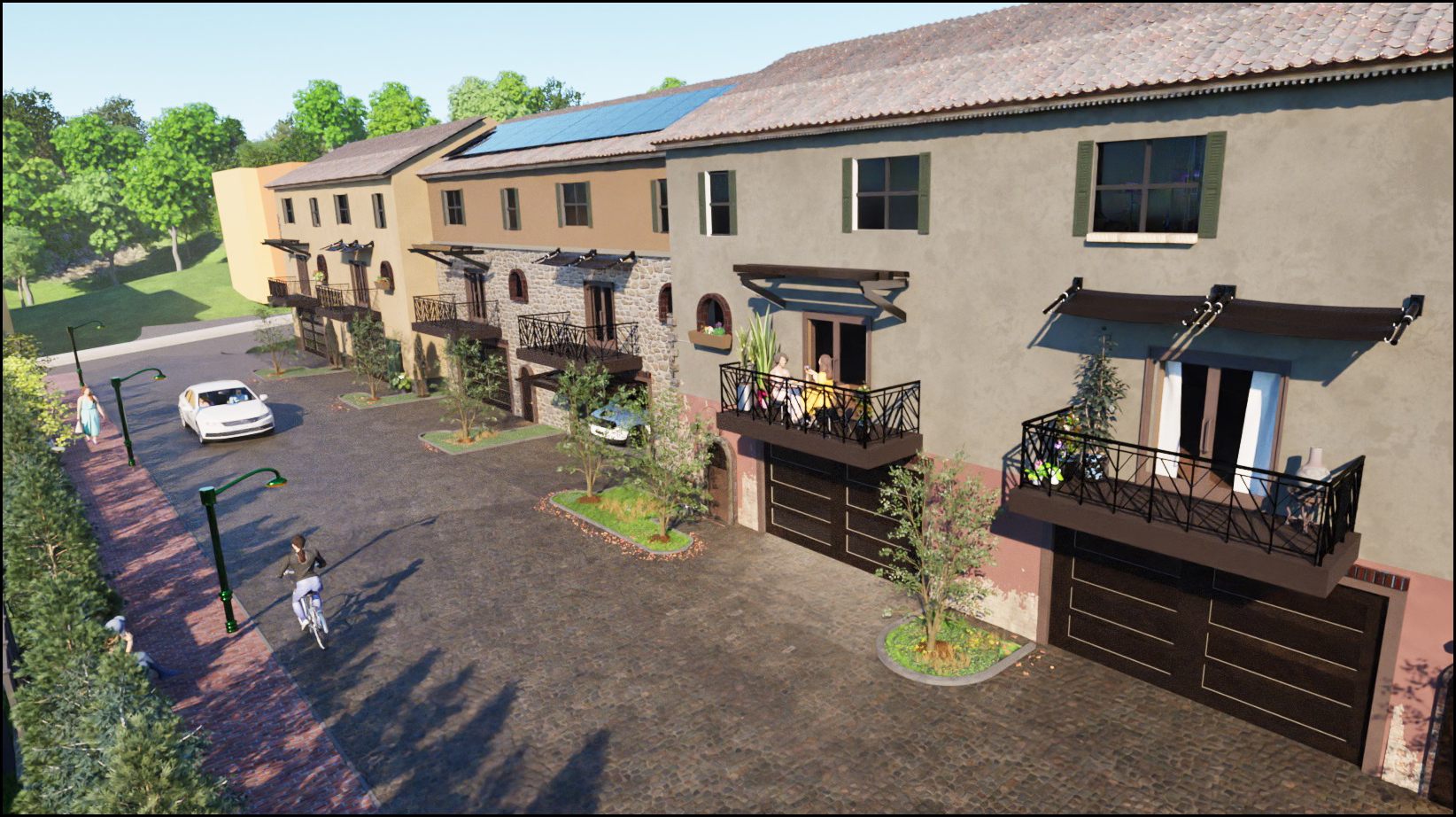 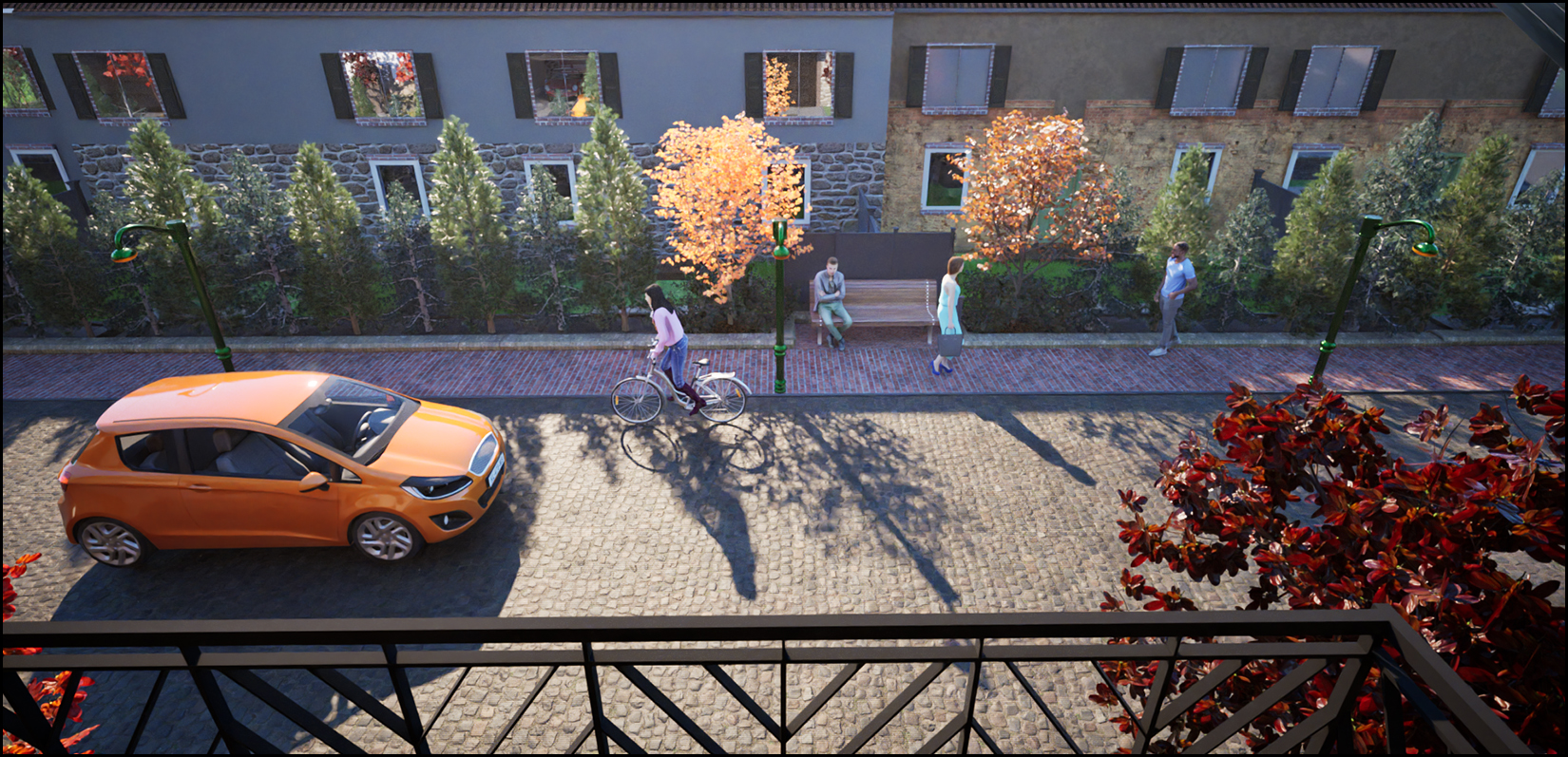 A few other items to note about this potential new community in the City of Harrisonburg...
Multiple people spoke in favor of this request at the Planning Commission and a few others raised concerns. The concerns that were raised were primarily related to traffic on the roads adjacent to the potential new community -- and stormwater management. The developer will be responsible for ensuring that the development does not create additional stormwater coming off the site to neighboring properties -- and the City has future plans to improve both adjacent roads, though they are not yet funded. City planning staff recommended that the rezoning request (and other releated requests) be approved and the Planning Commission unanimously voted to recommend that City Council approve the requests to allow for this development to move forward. City Council will review this request in January. | |
|
|
|
|
Middleburg at Stone Spring, To Include Up To 500 Apartments, Proposed Adjacent To The Reserve At Stoneport |
|
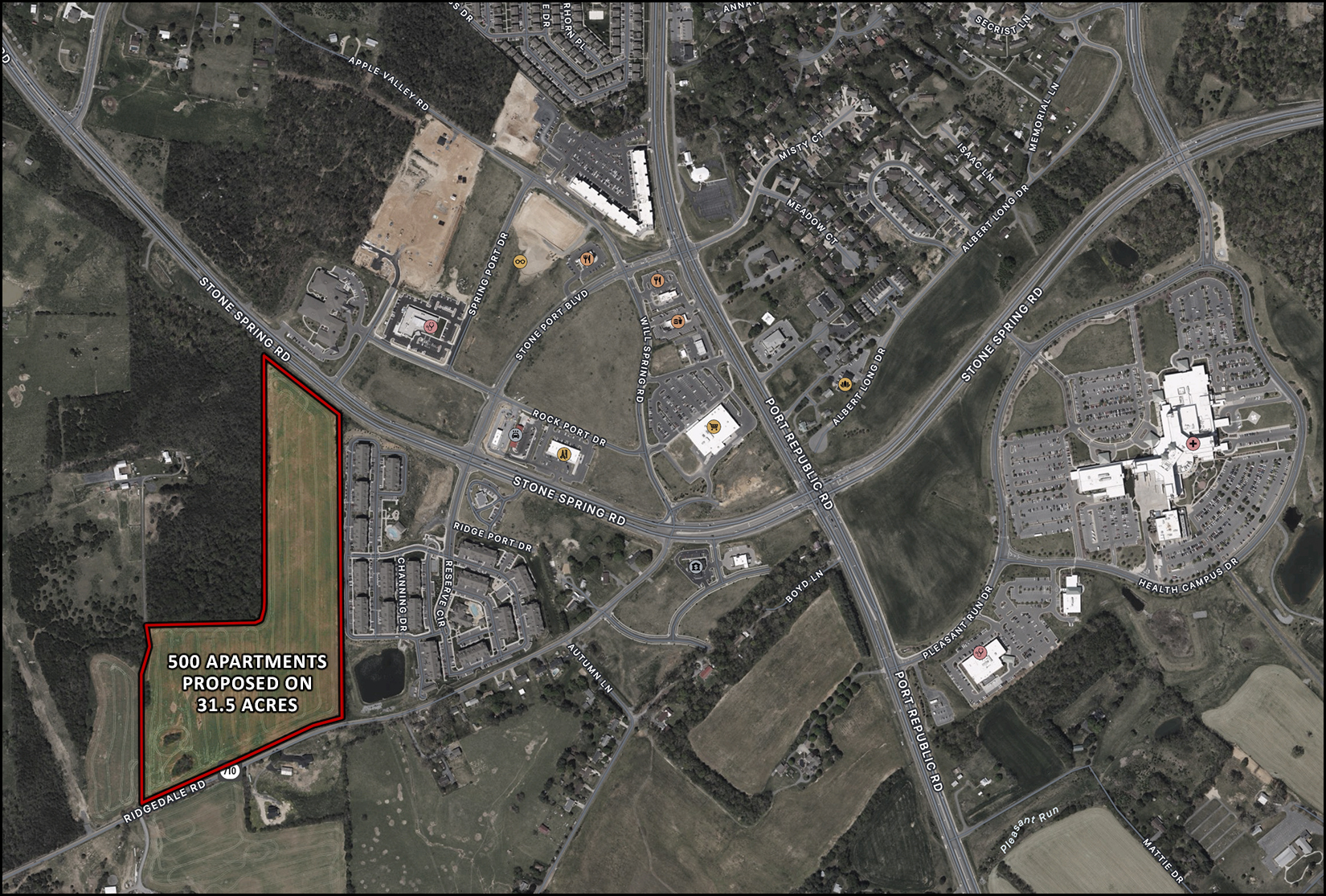 A developer out of Vienna is proposing that the 31.5 acre parcel shown above be rezoned from A-2 (agricultural) to PMF (Planned Multi-Family) to allow for the construction of 500 apartments in two phases adjacent to The Reserve at Stoneport. Phase 1 would include no more than 300 garden-style apartments in the larger buildings shown below with 30 apartments per building. Phase 2 would include no more than 200 townhome-style apartments shown as the permitted to be smaller clusters of buildings below with four to eight townhouse style apartments per building. Here's the full proposed site plan... 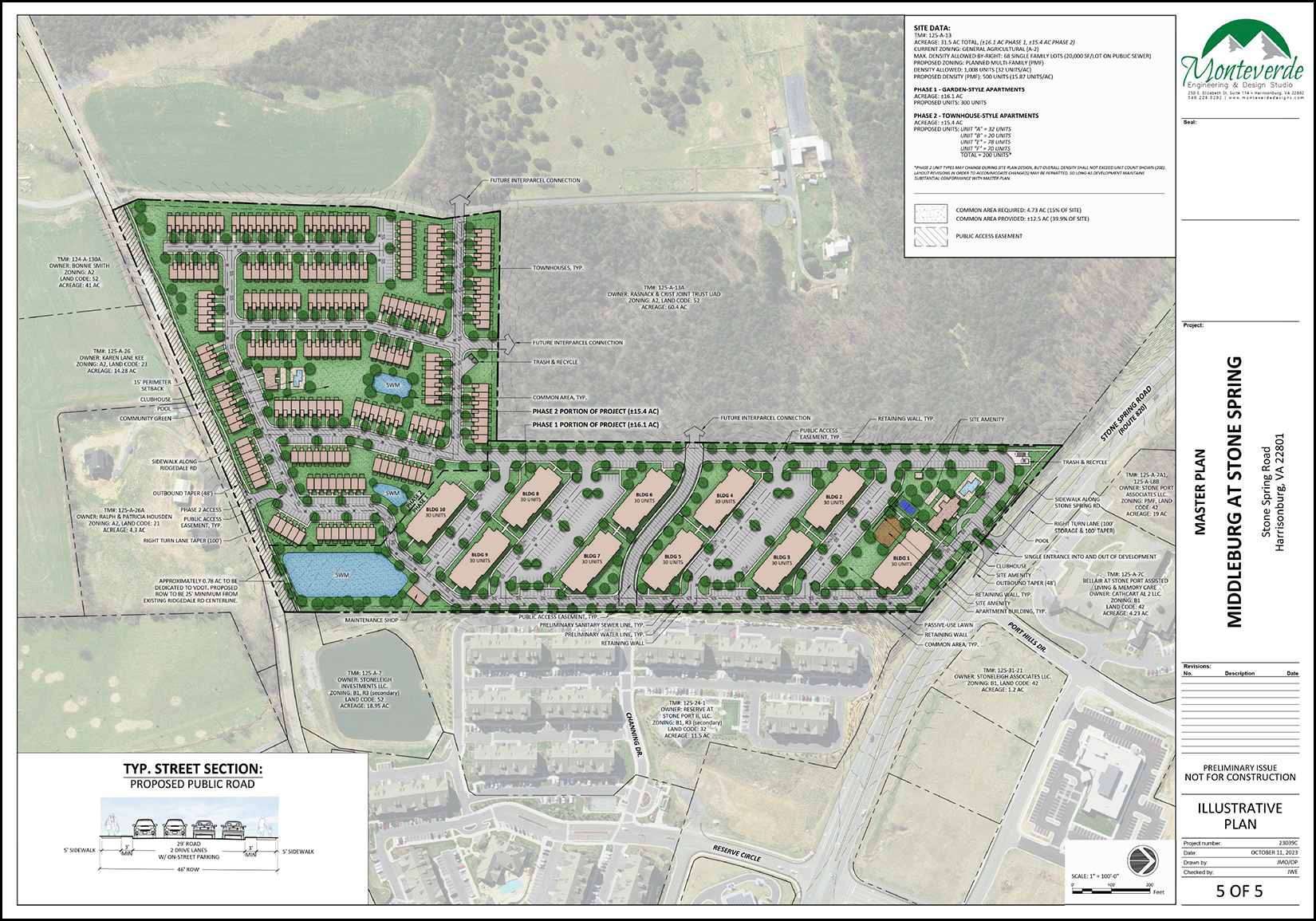 A common question when it comes to new developments is the impact on schools. Per Rockingham County calculations, this development is estimated to generate an additional 31 students at Peak View Elementary, 18 students at Montevideo Middle School and 22 students at Spotswood High School. The Rockingham County Planning Commission recommended denial of the rezoning request on November 8, 2023. The Board of Supervisors tabled the rezoning request in their meeting on November 15, 2023. This request will likely be reviewed again by the Board of Supervisors in the near future. Download the full rezoning application packet including a larger site plan here. | |
|
|
|
|
The High(er) Cost Of Money May Slow Down The Start Of Approved Residential Developments |
|
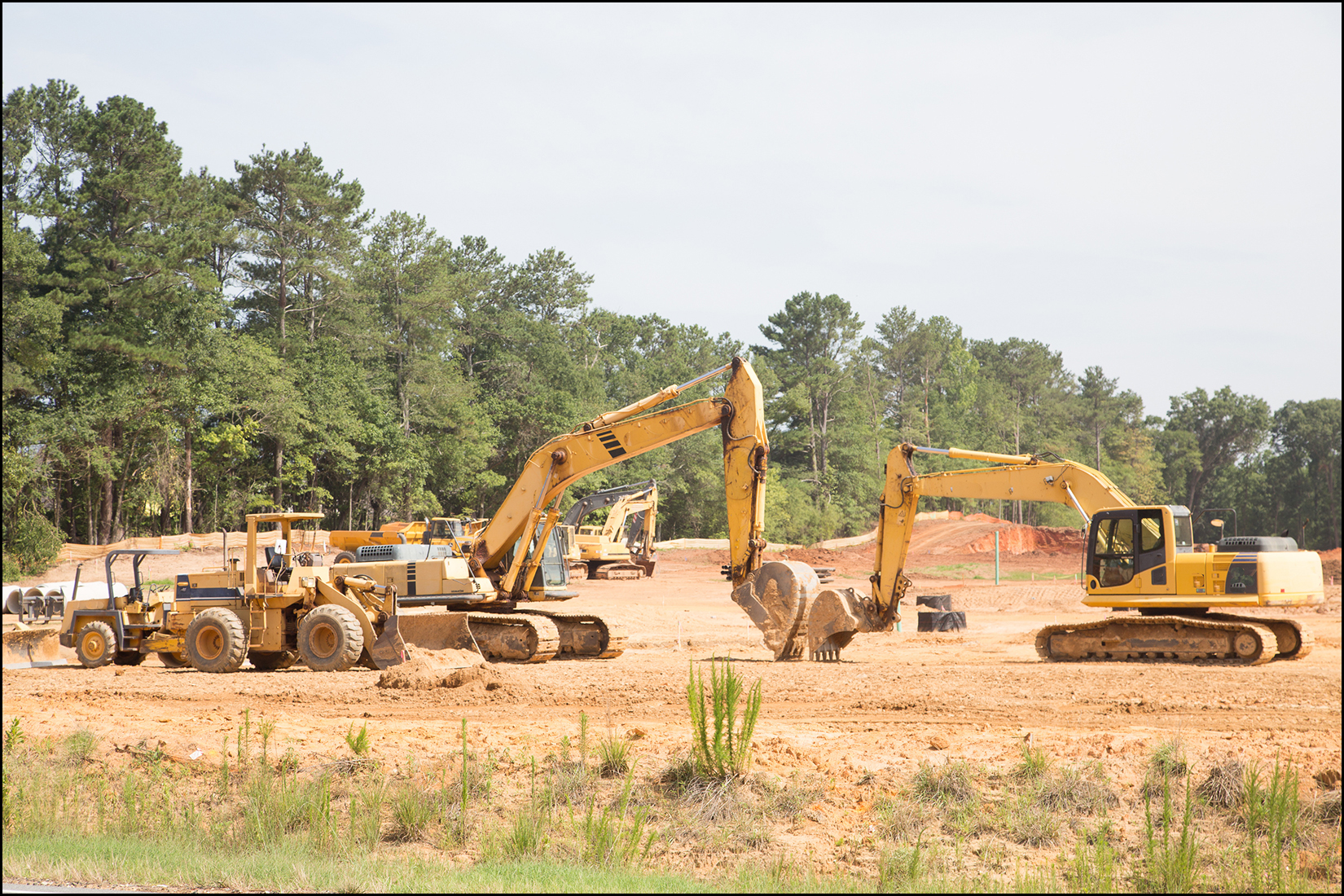 Over the past few years, thousands of potential new housing units have been proposed to be built in the City of Harrisonburg and Rockingham County. Some of these new developments are under construction, but many are sitting idle as undeveloped land that is approved for a new housing development but with no clear indication of if or when construction might begin on those new homes. One of the biggest potential limitations on when these new homes might be built is -- the high(er) cost of money -- current interest rates. Developers and builders are not going out to get traditional mortgages in order to build out these communities -- but they almost always do need to borrow money from a bank to start a new housing development. That money goes towards infrastructure (roads, water, sewer, sidewalks) as well as towards the construction of the housing units -- all of which are bills that have to be paid before the first home is sold or rented. So, will we see all of these thousands of proposed or approved new home developments be built over the next year or two? Almost certainly not... and one of the biggest things holding back the development of these new communities is the current economic climate with high(er) interest rates across the board. If/when interest rates start to decline, perhaps we'll then see some of or more of these new developments being built. | |
|
|
|
|
How Should Harrisonburg and Rockingham County Think About The School Impact Of Previously Approved, Unstarted, Residential Developments? |
|
 In reviewing a recently proposed rezoning request for a new residential development, I found this insightful comment from Rockingham County Public Schools... "This property is located in the Spotswood High School District. RCPS estimates this would generate an additional 25 students at Cub Run Elementary, 13 students at Montevideo Middle School, and 16 students at Spotswood High School. With proposed redistricting in the next year, each school will have the capacity to handle this increase in enrollment. However, it should be noted, that we estimate the cumulative effect of this development and others approved in the last 3 years once all are 100% built out would bring Cub Run near capacity." The last part is interesting and I don't know how the County plans to handle this situation... "However, it should be noted, that we estimate the cumulative effect of this development and others approved in the last 3 years once all are 100% built out would bring Cub Run near capacity." I believe this dynamic exists in both the City and County at the moment. If most or all residential developments that have been approved are built in the next few years then quite a few schools would likely be at or over capacity. I'm not sure how the County (or the City) should factor that dynamic into decisions about whether to approve additional proposed developments. Should the County and City assume that all approved developments will be built soon, and hesitate to approve more based on the theoretical potential cumulative impact of the developments that have not begun? Should the County and City ignore the potential cumulative impact of developments that have not begun and evaluate each new rezoning proposal based solely on the direct impact on schools for that one development? Perhaps they need to be somewhere in between these two extremes? Most new developments -- on their own -- won't cause a school or schools to be beyond capacity. If all approved and proposed new developments are built within the next few years it seems likely that some or many schools would be at or beyond capacity. But many (most?) approved developments have not been started... it is unclear if or when many of them will be developed. | |
|
|
|
|
Leighton Place, To Include 150 Townhomes And 180 Apartments Proposed On Stone Spring Road Across From Preston Lake |
|
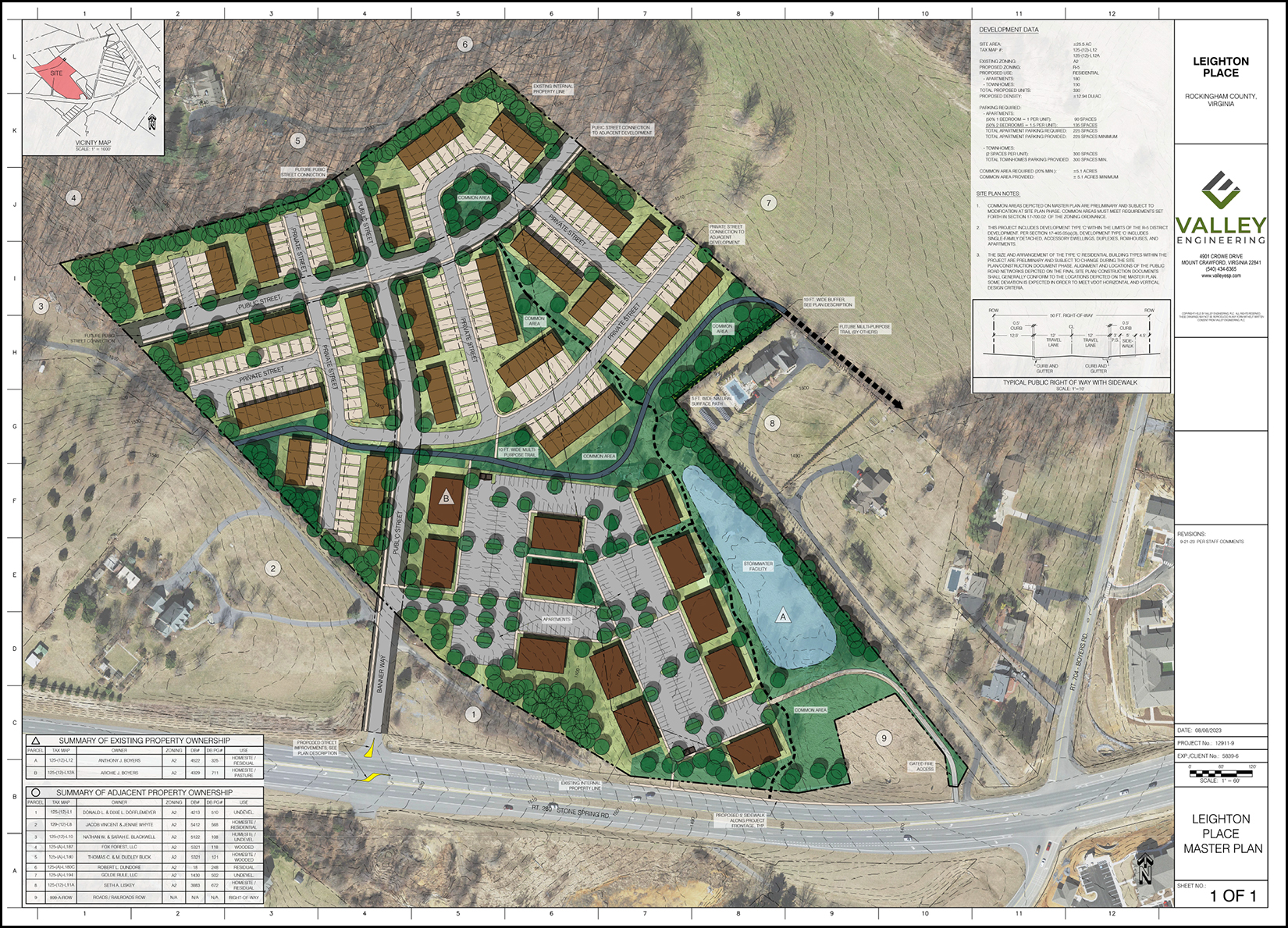 We may soon see another residential development near the intersection of Stone Spring Road and Spotswood Trail. Two parcels totaling 25.5 acres are currently zoned A-2 but a developer is proposing that they be rezoned R-5 to allow for the construction of 330 residential units to include 150 townhouses and 180 one and two bedroom apartments. Here's where the new development is being proposed... 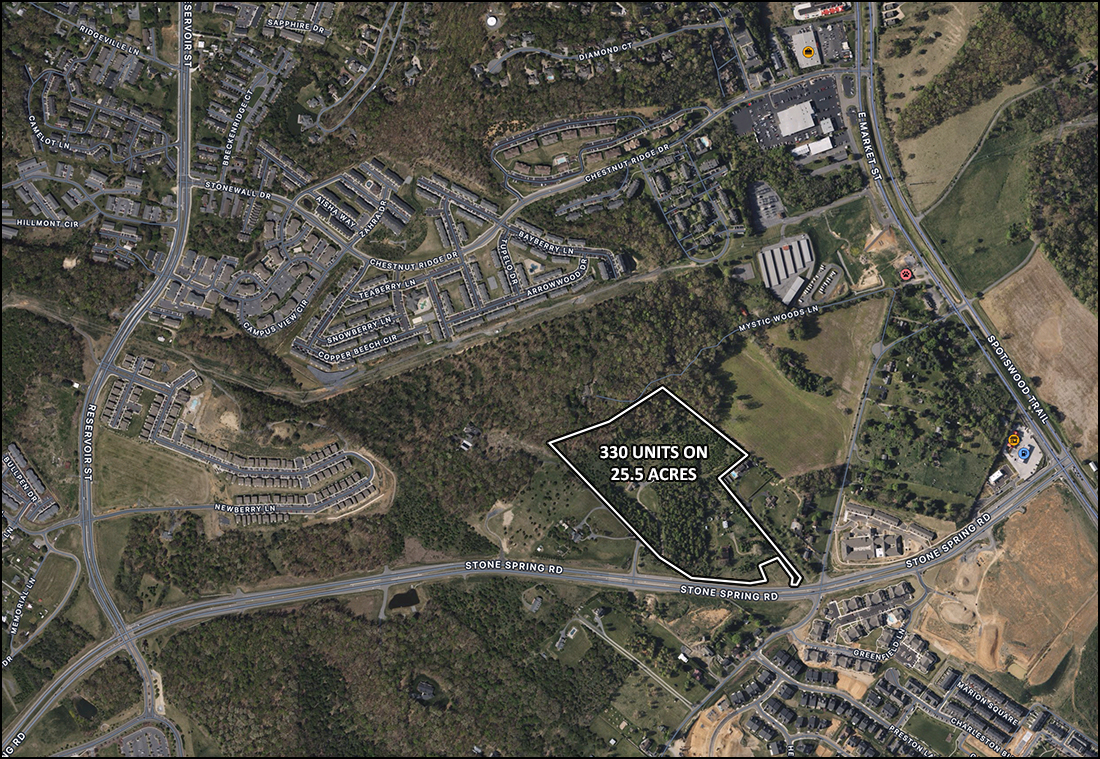 The rezoning application and other documents prepared by the County can be viewed here. This new proposed development -- Leighton Place -- is immediately adjacent to the 280 unit rental community, Stone Ridge Crossing, that was approved last month by the Board of Supervisors. | |
|
|
|
|
164 Apartments Proposed On Mosby Road As Affordable Housing, With More Likely To Be Proposed In The Future |
|
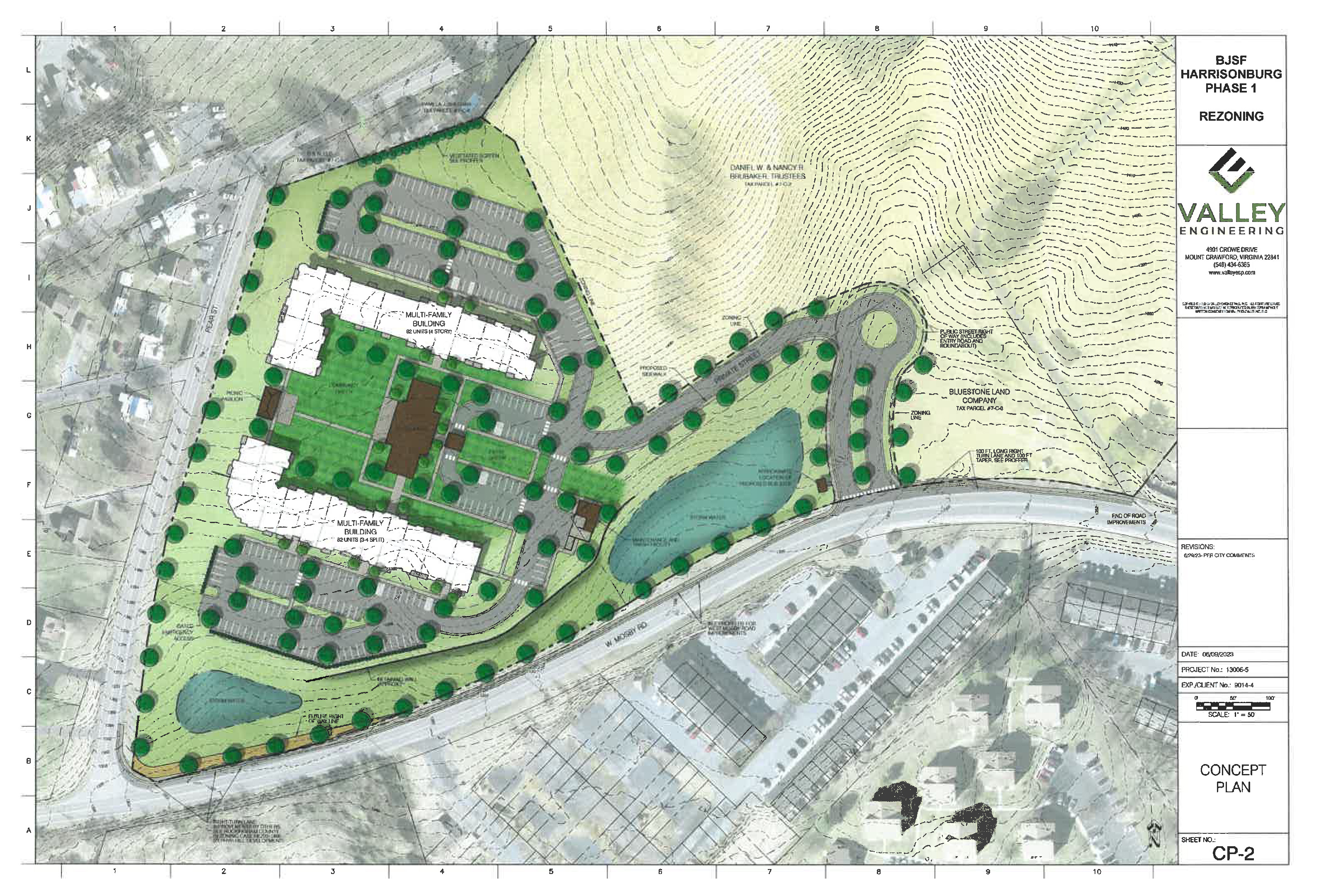 A developer out of Georgia, the Beverly J. Searles Foundation, is proposing to build a 164 unit apartment complex on West Mosby Road. The Harrisonburg Planning Commission will hold a public hearing related to this proposed development today, August 9, 2023. You can download the full packet of information to be reviewed and discussed at the planning commission meeting here. These are a few key points I have pulled out of the information packet... [1] The developer intends to build a "diverse and affordable residential community serving seniors and potentially workforce and other citizens qualifying for affordable housing options." [2] None of the apartments would have more than three bedrooms. [3] At least 25% of the apartments would be one bedroom apartments. [4] A minimum of 82 apartments would be age-restricted, such that at least one member of the household must be 55 years or older. [5] The developer plans to build some amenities that might include a dog run, gazebo, koi pond or picnic pavilion. A clubhouse would also be constructed with a minimum of 2500 square feet. [6] An important contextual note here is that the applicant (the developer from Georgia) is apparently intending to purchase around 28 acres of land that includes this 12 acres that they would like to rezone and develop right now. If the developer had proposed to rezone all 28 acres they would have been required to conduct a Traffic Impact Analysis (TIA) which would delayed the development beyond a timeframe when they could be elgible for the early Spring 2024 low-income housing tax credits. As such, the applicant is only requesting that 12 of the acres be rezoned... though the applicant seems likely to be returning in the future to request that the other 16 acres be rezoned as well for further development. City Staff is supportive of this application for a rezoning (and special use permit) and the Planning Commission will hold a public hearing regarding the proposal this evening. | |
|
|
|
|
119 Apartments, Convenience Store, Restaurant Proposed At Intersection Of Port Republic Road and Devon Lane |
|
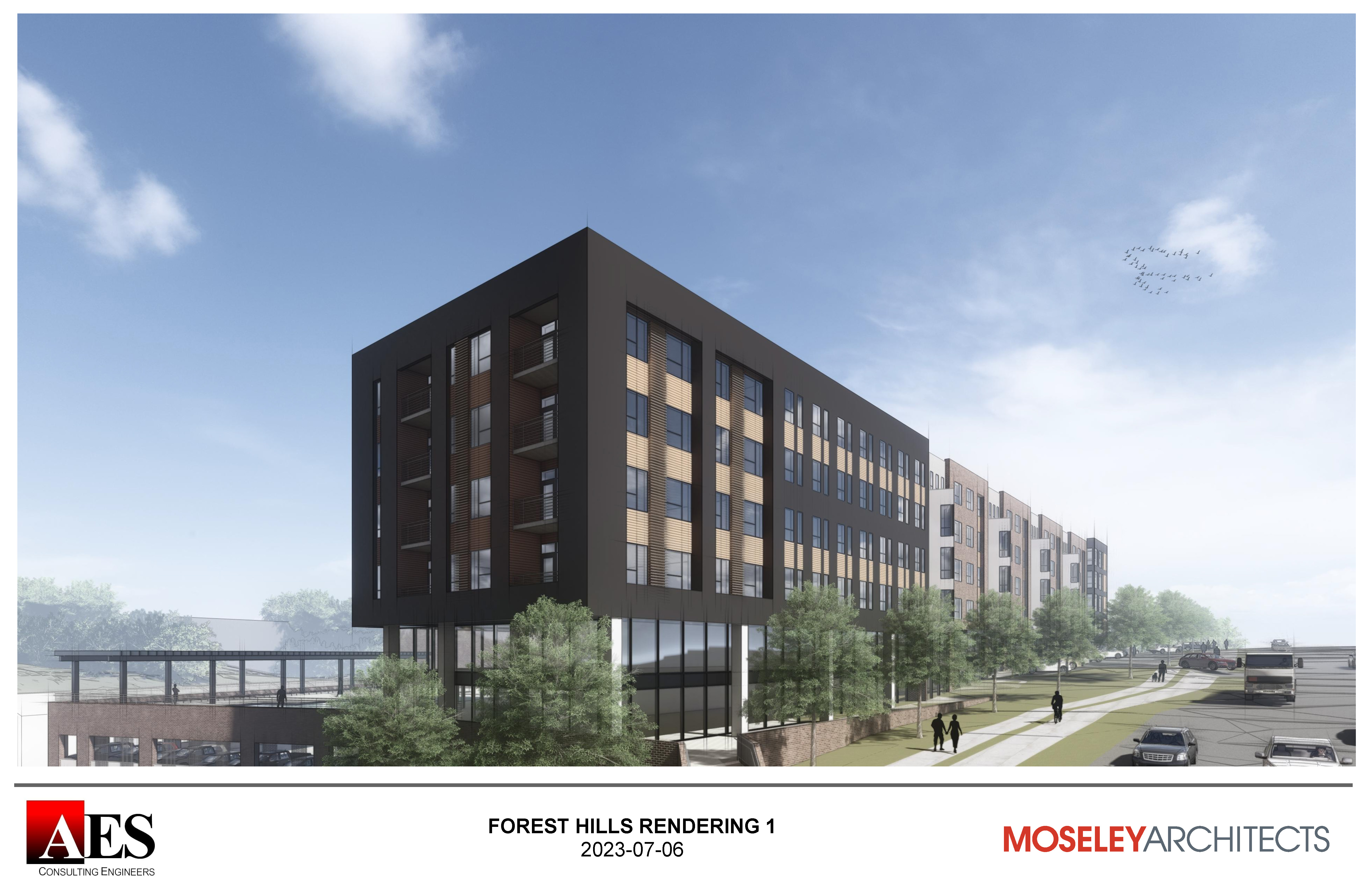 A new development, The Vista at Forest Hills, is being proposed at the intersection of Port Republic Road and Devon Lane, at the current location of a Citgo gas station. The applicant would like to redevelop the site to include a convenience store, restaurant and 119 student apartments. Per the letter from the developer's engineer... [1] The student apartments would consist of no more than 440 bedrooms. [2] The development would have up to three floors of parking garages. Here's another rendering of the proposed structure, from another angle... 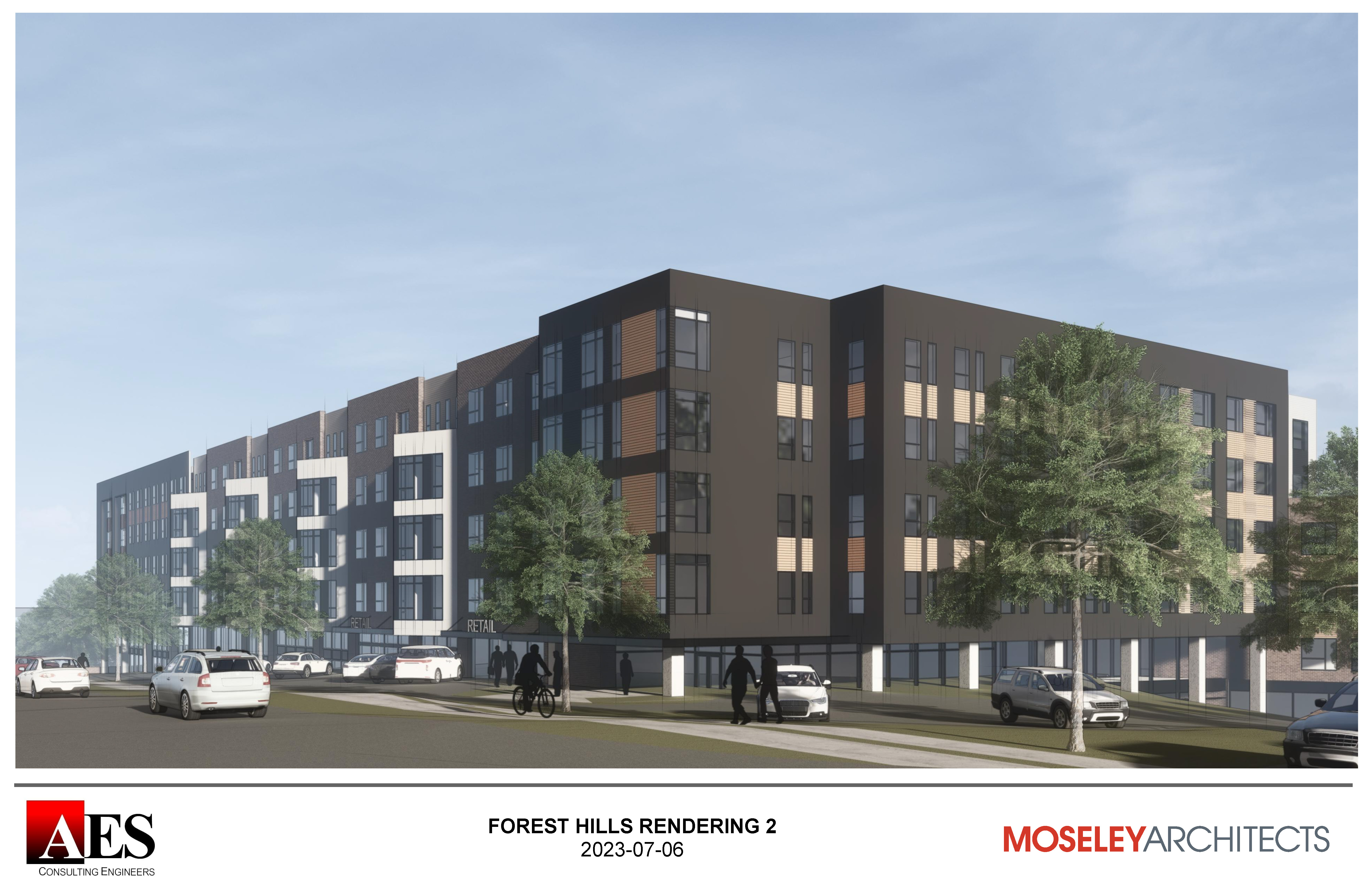 For one more vantage point, here are two elevations showing how the building will work with the grade of the site... 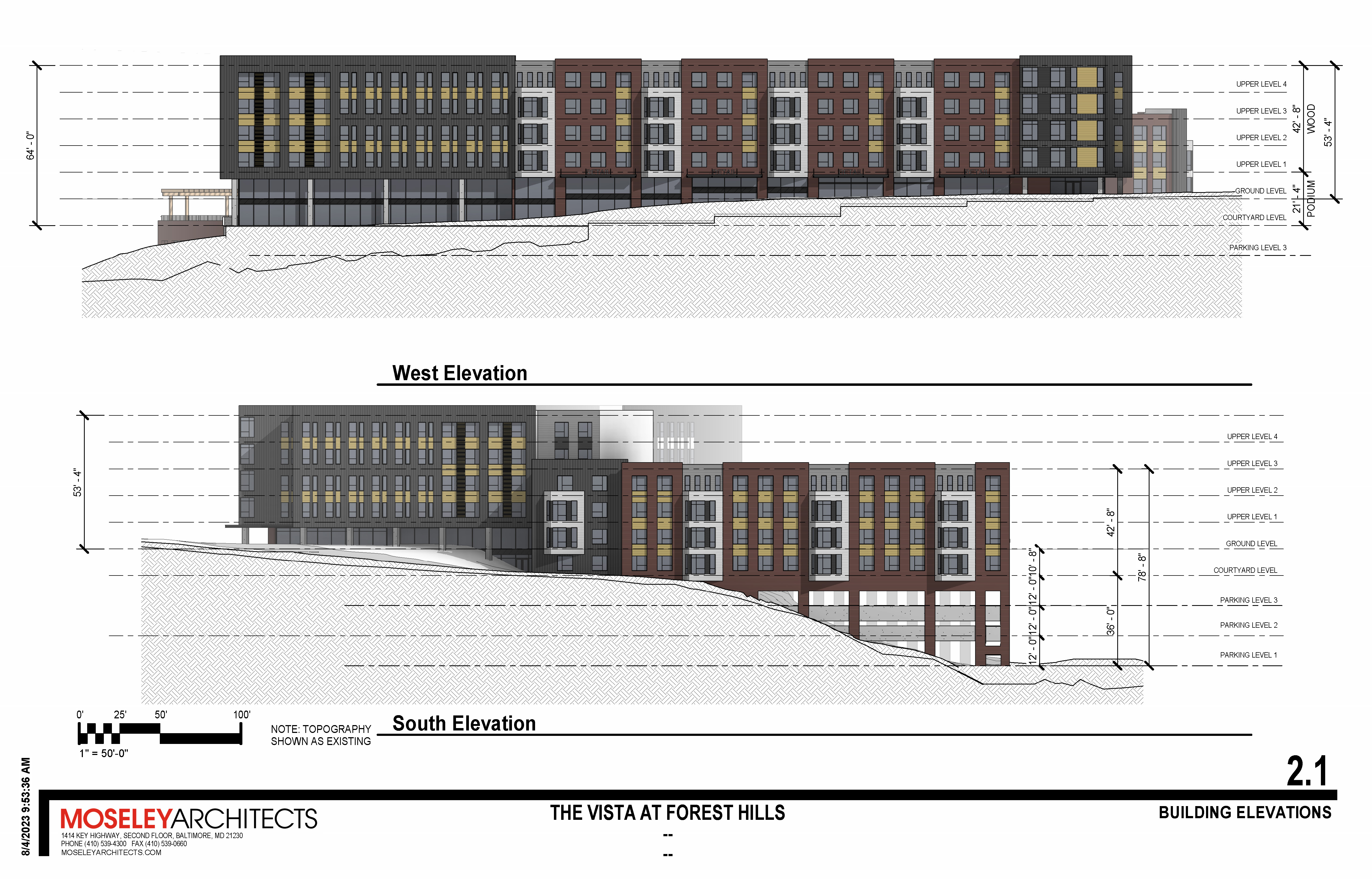 Finally, here's the site plan where you can see how this parcel relates to Port Republic Road, Devon Lane, Bradley Drive and Village Lane...  A public hearing will be held on August 9th (Wednesday) related to this proposed development during the City of Harrisonburg Planning Commission meeting. This proposed development would require both a rezoning and a special use permit. Per the Planning Commission packet, City staff has significant concerns about this proposed development regarding "compliance with the SUP development plan requirements and matters associated with the maximum height and minimum setback requirements, parking lot landscaping requirements, and questions regarding proffer statements." Staff is recommending that the Planning Commission hold the public hearing on August 9th but then table the request until their following meeting to allow staff to complete more analysis of the proposed plan and provide further feedback to Planning Commission. | |
|
|
|
|
280 Unit Rental Community, Stone Ridge Crossing, Proposed For North End Of Boyers Road |
|
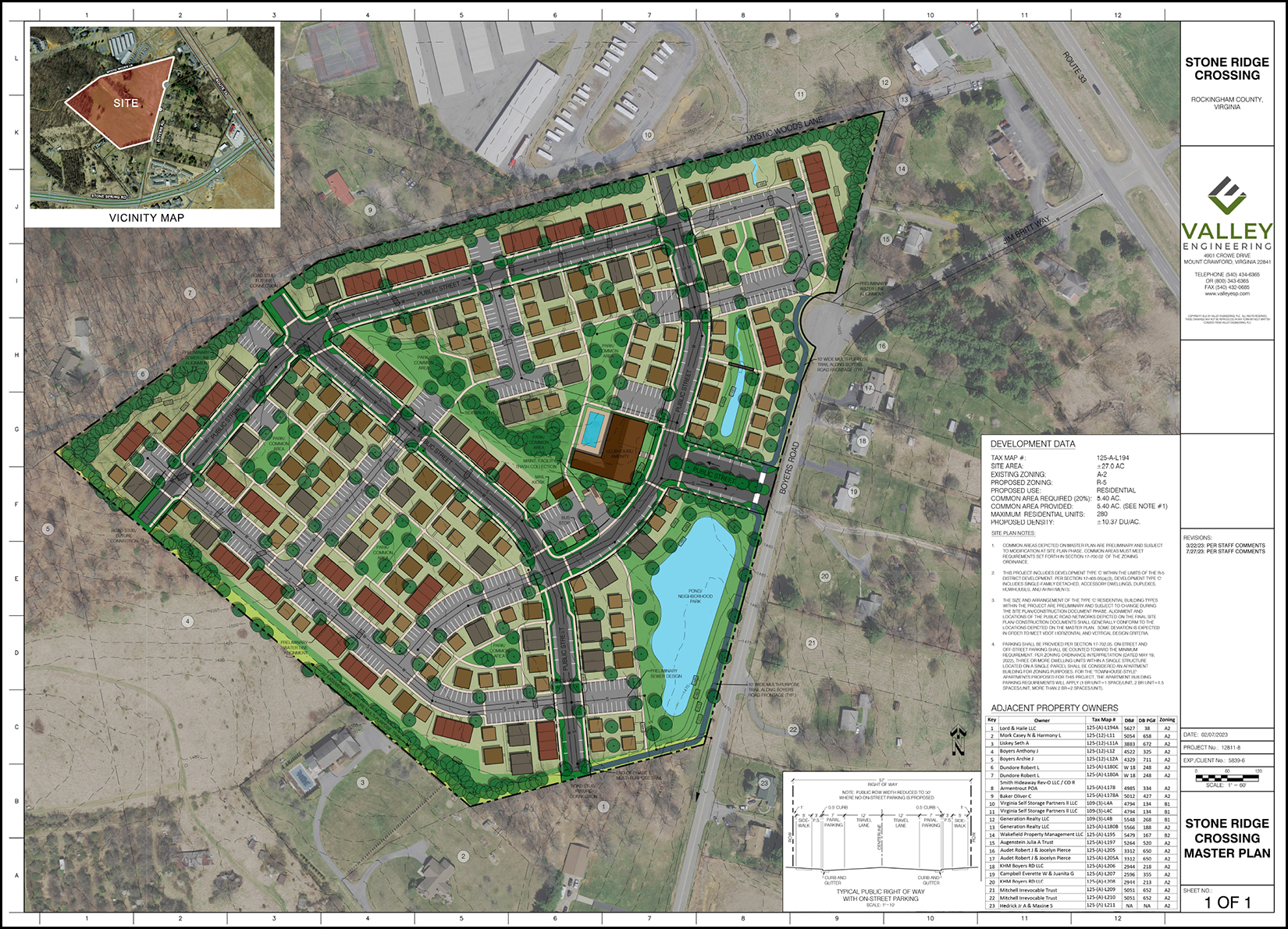 Remember the north end of Boyers Road? It used to be connected to Route 33 but now it ends in a cul-de-sac. The proposed development shown above, Stone Ridge Crossing, is proposed for the west side of the north end of Boyers Road. The proposed developer of this parcel is requesting that Rockingham County rezone 27 +/- acres from A-2 (agricultural) to R-5 (residential) to allow for the construction of this apartment style development. According to the developer's Plan Description in the Rezoning Application Packet in the Planning Commission Packet for August 1, 2023 (tonight), the actual residences will be a mix of single family detached, duplex and townhouse style apartment housing -- but they will all be owned by, and rented by, a single entity. As such, this 280 unit residential developments would all be rentals... with none of the residences offered for sale. The developer intends to include a clubhouse fitness facility, swimming pool, and multiple picnic areas, fire pit and grilling areas, as well as pocket parks. Of the proposed 280 residential units, no more than 33% of the units would be 3-bedroom units and none would be 4-bedroom (or more) units. This proposed development would include up to 280 residential rental units, which would join the list of approximately 3,368 other rental units that are already under construction, approved, planned or proposed in the City Harrisonburg and/or in the areas of Rockingham County just surrounding the City. Here are all of the other potential upcoming rental developments on that list of 3,368 potential new rentals...
I imagine many people in our local community would probably prefer that a new 280 unit residential development would be single family detached homes, duplexes and townhomes offered for sale -- instead of for rent -- but the developer who is proposing the rezoning prefers to keep the residences and rent them to tenants. It will be interesting to see how the Rockingham County staff, Planning Commission and Board of Supervisors respond to this request. The Planning Commission will have a public hearing regarding this proposed rezoning tonight, August 1, at 6:30 PM. | |
|
|
|
|
1,880 New Housing Units Approved At Massanutten Resort |
|
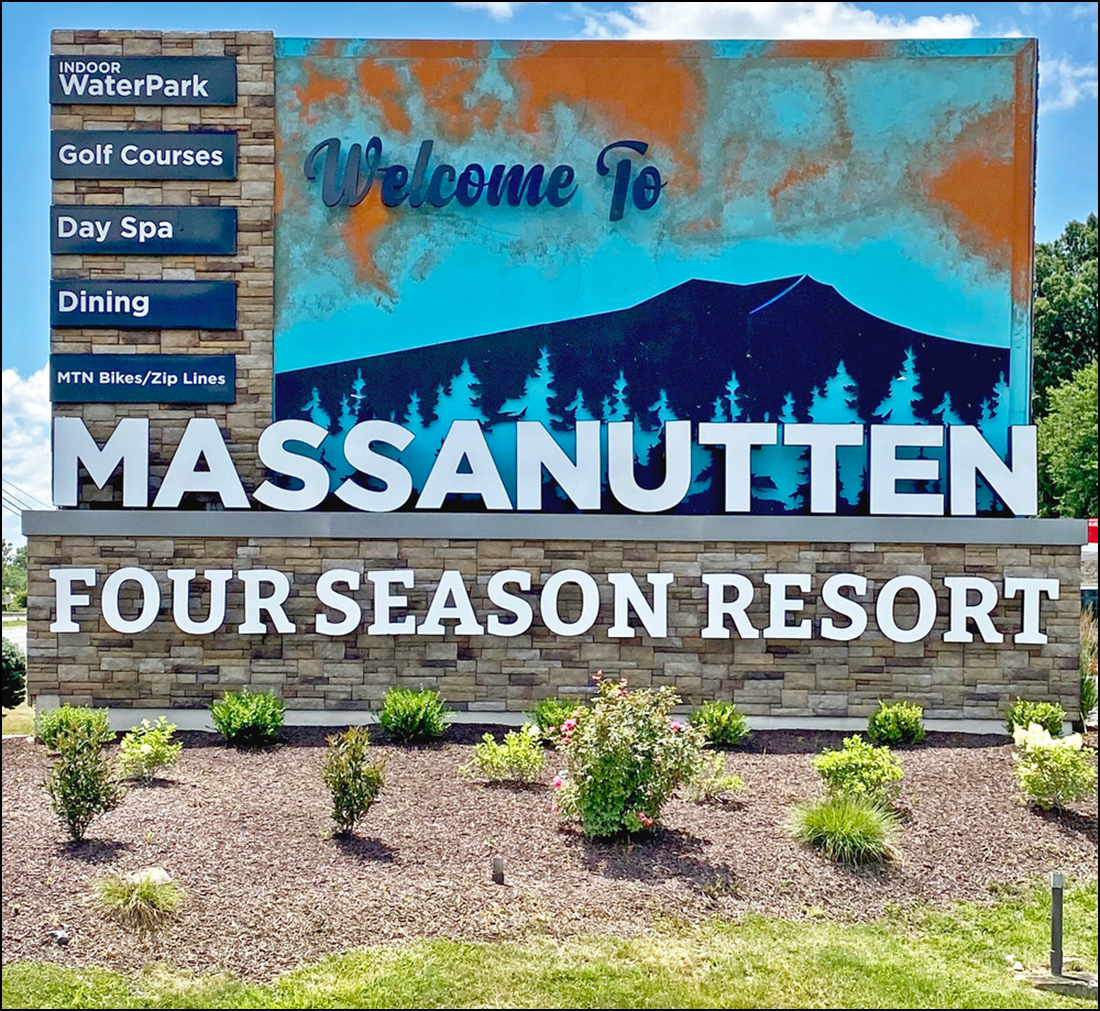 Last week the Rockingham County Board of Supervisors approved three rezoning requests from Great Eastern Resort Corporation that provides a roadmap for expanded development of Massanutten Resort over the next 15 to 20 years. As far as I can tell from reading through the rezoning request, this will amount to approximately 1,880 new residential units. Read on for an overview of the three rezoning requests. 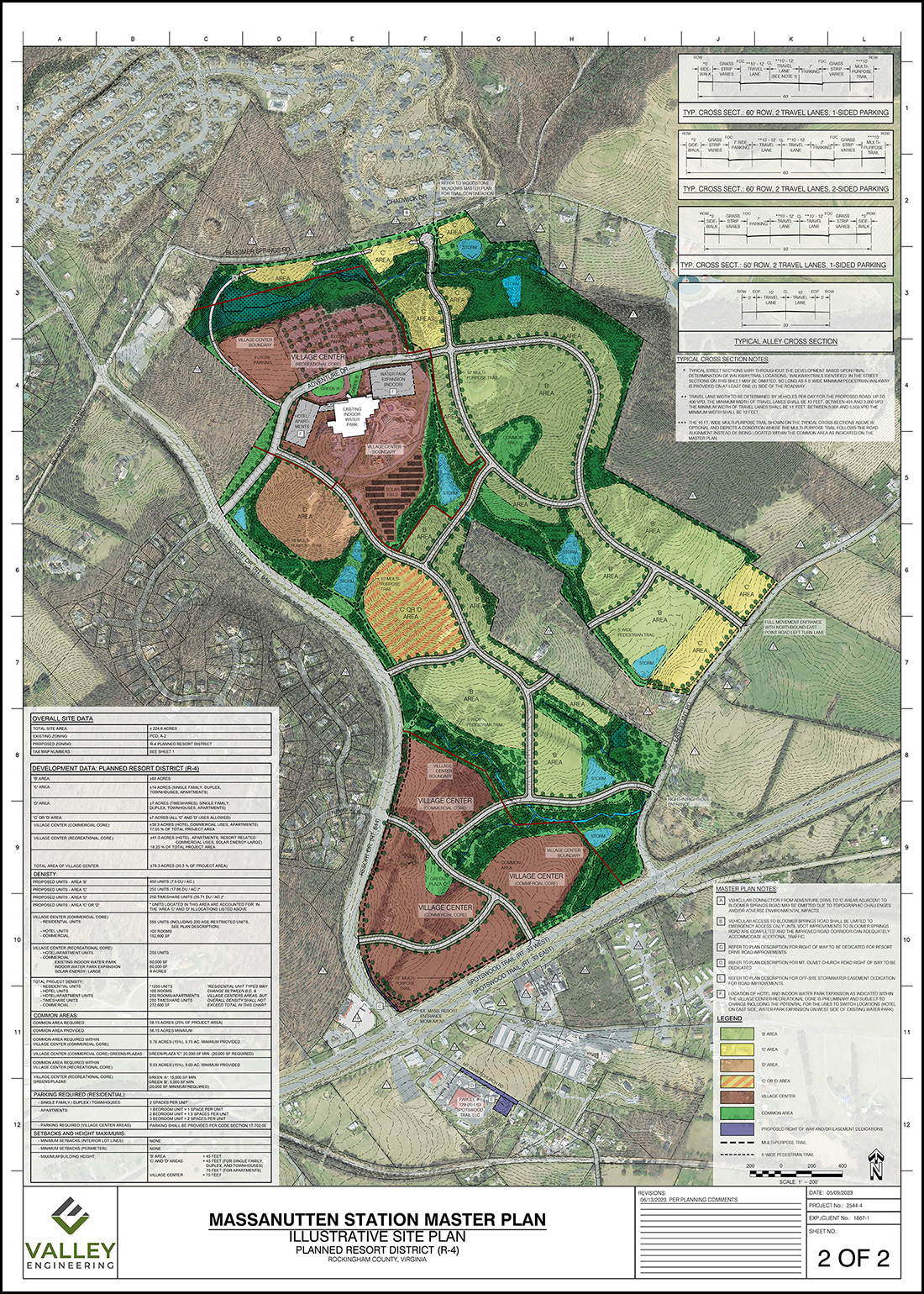 Rezoning #1 A total of 224.6 acres is now zoned R-4 (Planned Resort District) including the existing 67.3 acres of the Massanutten Station Master Plan, plus 80.1 acres of the Water Park Master Plan, along with 80 acres that were zoned A-2. This rezoning will allow for 1,255 residential units of various types including single family detached, duplexes, rowhouses and apartments. Of the 1,255 residential units, 250 will be timeshare units, 250 will be hotel/apartment units, 230 will be age-restricted and 100 will be hotel units. 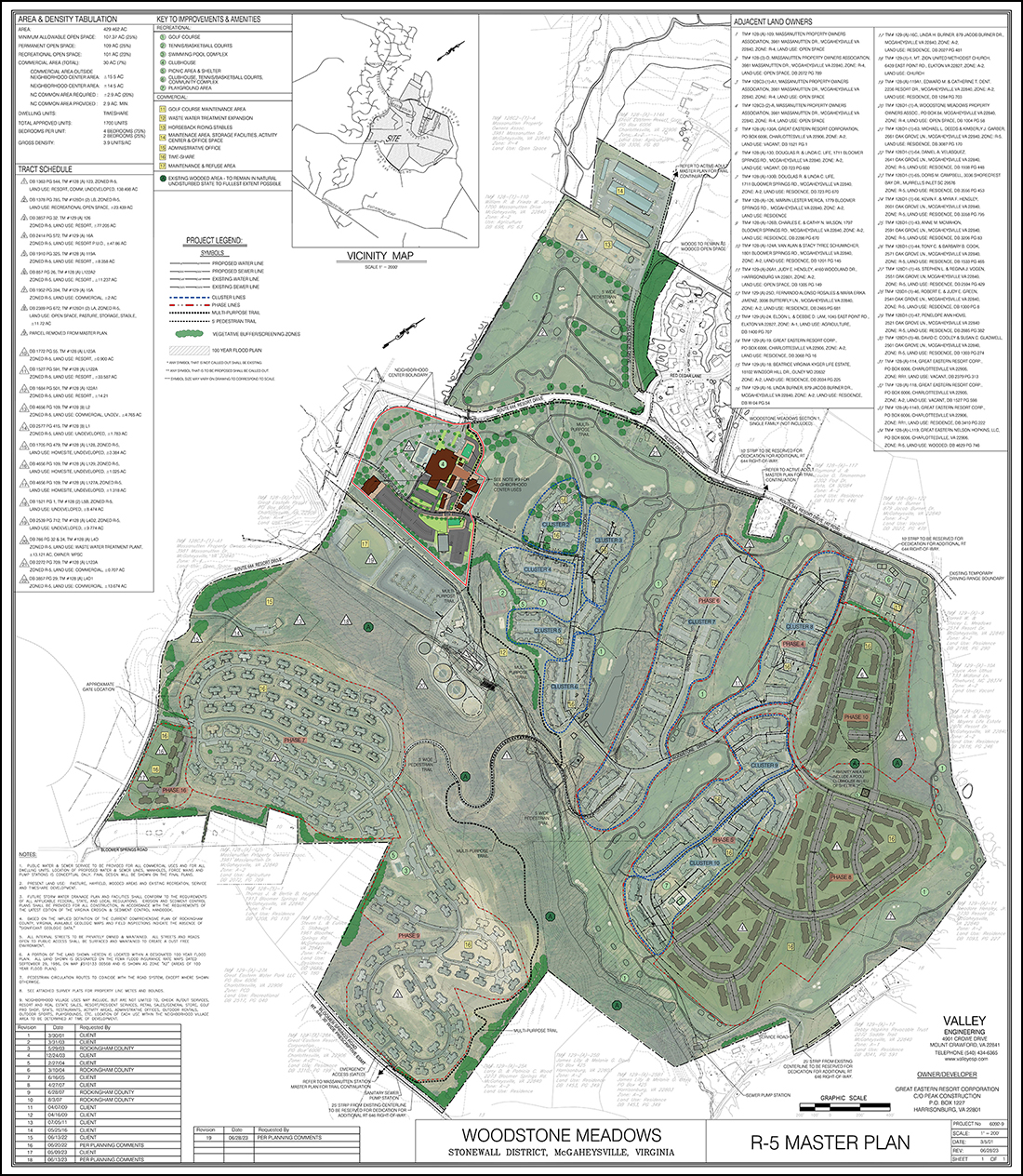 Rezoning #2 A total of 429.5 acres in the Woodstone Meadows Master Plan was zoned R-5 and is still zoned R-5 but the master plan has been updated. This 429.5 acre master plan includes 1,700 timeshares. 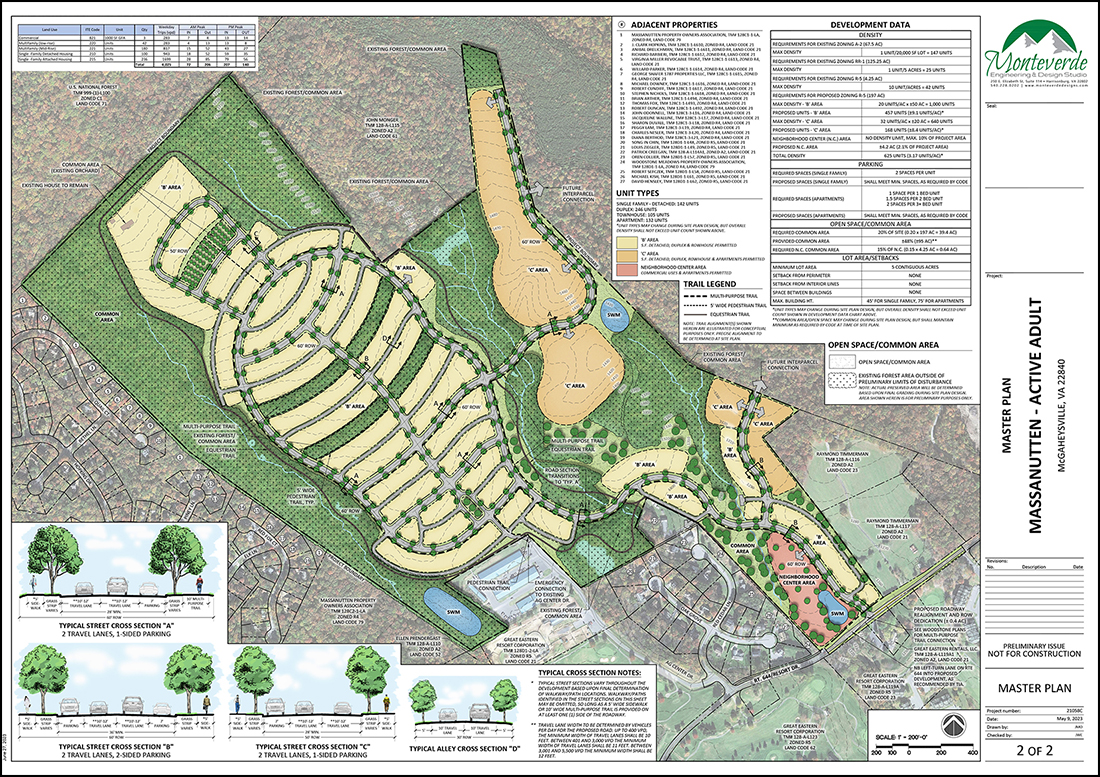 Rezoning #3 A total of 197.3 acres is now zoned R-5 to allow for 625 residential units with a mix of single-family detached, duplexes, rowhouses and apartments, all of which will be age-restricted to full-time residents who are 55 years old or older. Click on any plat above for a higher resolution version of the file and download the entire Board of Supervisor's packet here. | |
|
|
|
|
NERD Apartments LLC Proposes 20 Apartments In Five Story Building On Evelyn Byrd Avenue |
|
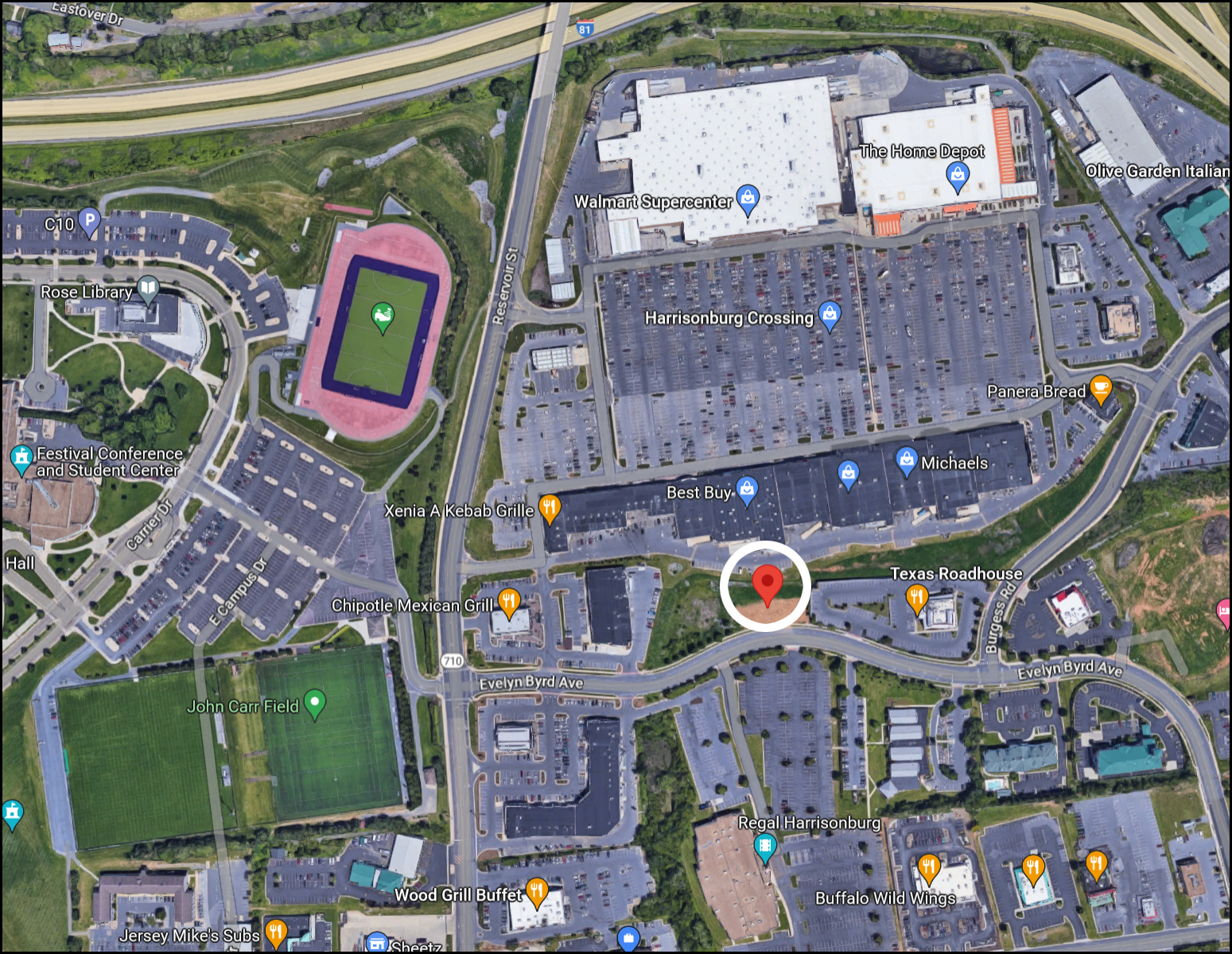 We may soon see the development of 20 apartments on Evelyn Byrd Avenue between Harrisonburg Crossing, Texas Roadhouse, Regal Cinema and Forbes Crossing. The developer is requesting a special use permit to allow multi-family dwellings and/or mixed use buildings in the B-2 district. A few details from the proposal include...
Read more in the proposal documents here. | |
|
|
|
|
16 Apartments, 4 Rowhouses Proposed For Final Phase Of Locust Grove Village |
|
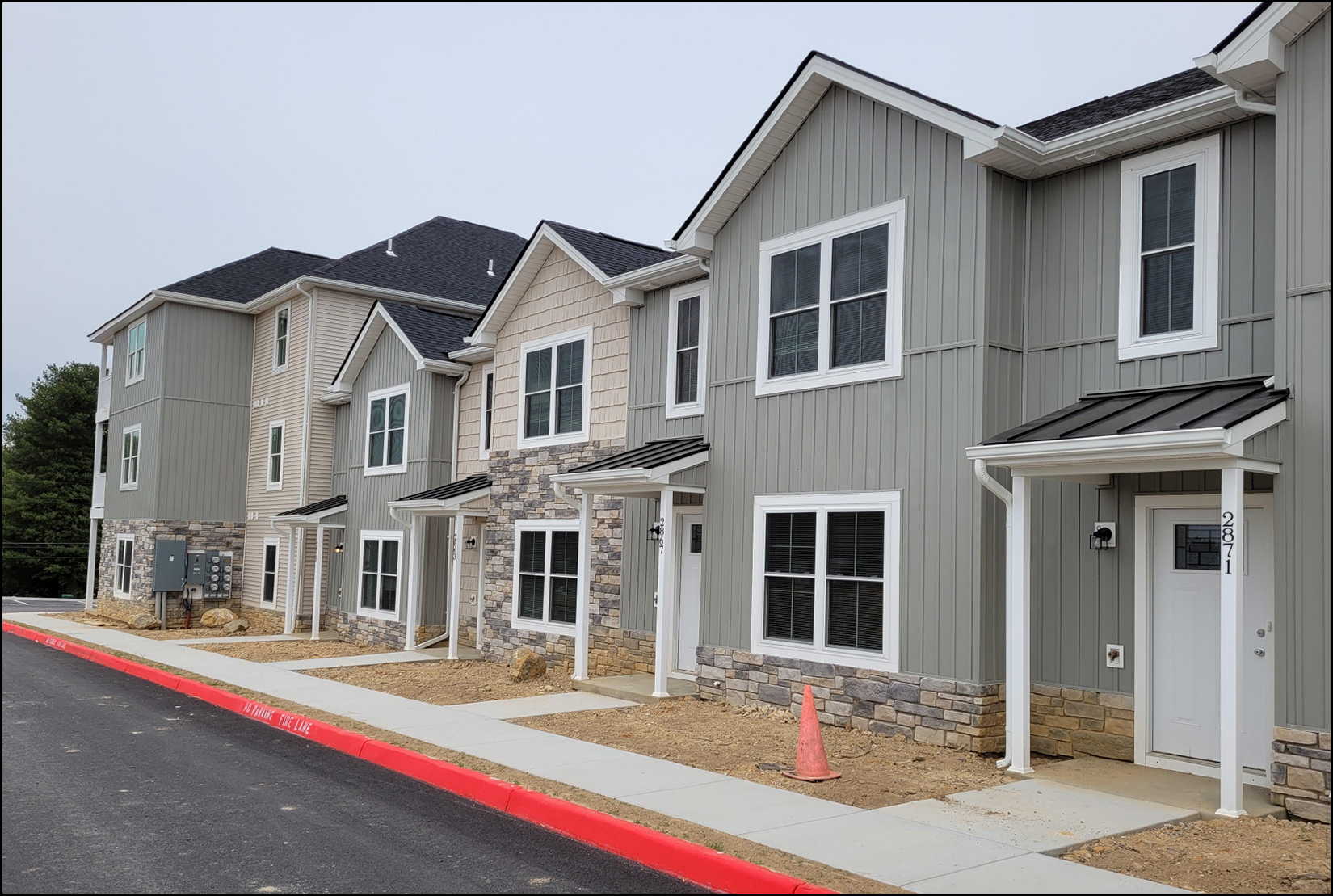 Locust Grove Village, located on Boyers Road, seems likely to be expanded from 86 residential units to 106 residential units. The final configuration will include 64 apartments and 42 rowhouses... 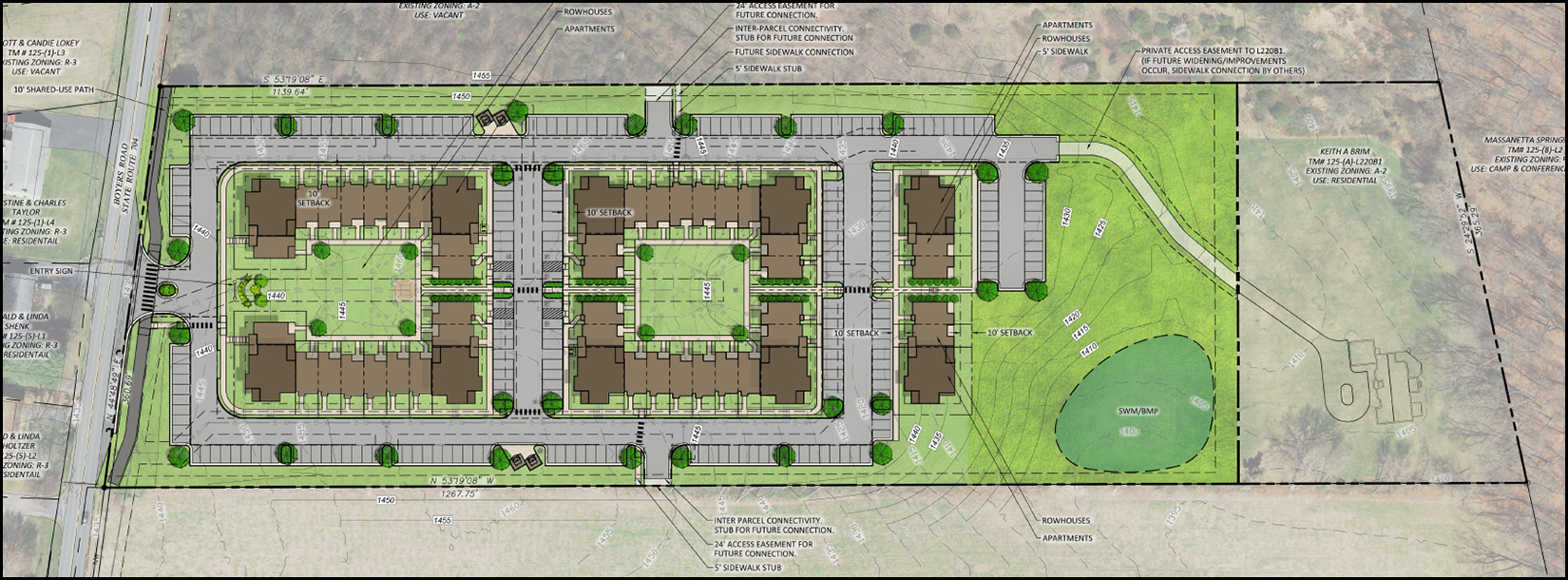 The townhouses (rowhouses) offer three bedrooms, two full bathrooms, one half bathroom, 1306 square feet and have recently been selling for $260,000. This is a minor expansion of a new residential development on Boyers Road compared to quite a few others that have been recently completed, are currently underway, or are getting ready to be proposed. Check out all (most?) current, planned and proposed new developments in and around Harrisonburg on a list and on a map. | |
|
|
| Older Posts |
Scott Rogers
Funkhouser Real
Estate Group
540-578-0102
scott@funkhousergroup.com
Licensed in the
Commonwealth of Virginia

Home Search
Housing Market Report
Harrisonburg Townhouses
Walk Through This Home
Investment Properties
Harrisonburg Foreclosures
Property Transfers
New Listings


