



Jmu
| Older Posts |
 |
 |
Kid Heads To College In Harrisonburg, Graduates, Stays, Parents Relocate Too |
|
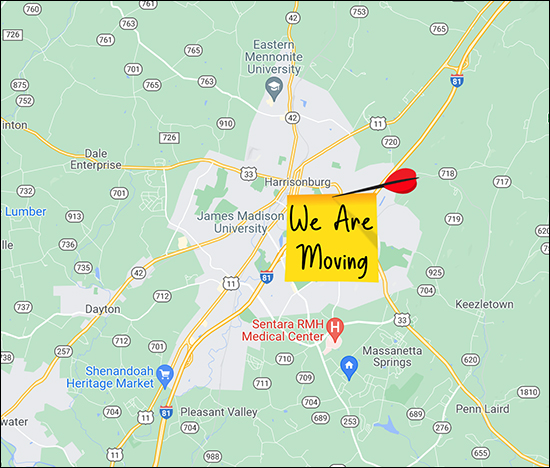 It's my story. It's my wife's story. It seems to be an ever more frequent story these days. I left Maryland back in 1996 to attend JMU. I graduated in 2000 and again in 2002 - got married in 2002 (19 years ago yesterday!) and Shaena and I decided to stay in Harrisonburg. Some years later both of my sisters (though not my brother) were also in Harrisonburg and it wasn't too much of a surprise that my parents relocated to Harrisonburg after my dad retired. With Shaena and her sister both living in Harrisonburg when their parents retired, it also wasn't too much of a surprise that they relocated to Harrisonburg after retiring. And so it seems to go for lots of folks these days. I frequently find myself working with home buyers who are the parents of JMU or EMU graduates who are either... [1] Buying a second home in Harrisonburg to be able to spend more time in Harrisonburg with their kids and grand kids. [2] Relocating to Harrisonburg after retiring to be able to spend more time in Harrisonburg with their kids and grand kids. ...and a newer trend... [3] Relocating to Harrisonburg before retiring -- because Covid created an opportunity for them to work remotely -- to be able to spend more time in Harrisonburg with their kids and grand kids. So, some part of the continuing strength of our local real estate market is the double impact of a local college student deciding to stay in this area after graduation. They become Harrisonburg area residents -- and there then ends up being a decent chance that their parents may end up being Harrisonburg area residents at some point as well! P.S. I can't understate the impact of the grandkids. Once the grandkids are on the scene, for some reason the grandparents are even more interested in considering relocating. :-) | |
 |
 |
|
|
Prices Are Skyrocketing At Camden Townes |
|
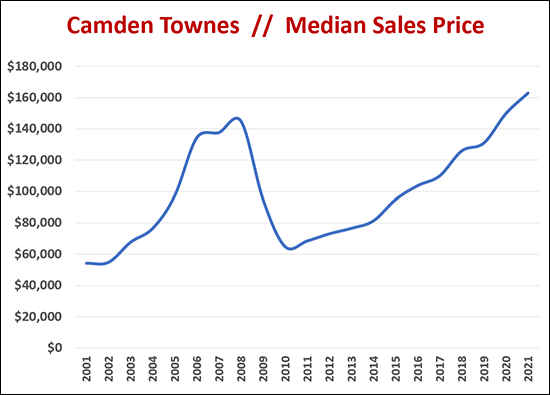 Camden Townes is a rental community on Port Republic Road within walking distance to the JMU campus. This community has historically been a student housing community and my understanding is that it is still primarily, but not entirely, students living in these properties. As shown above, the values at Camden Townes have been skyrocketing over the past several years. A few benchmarks...
I suspect many factors likely affect the values in this mostly-student housing community...
As to what values will be in Camden Townes in 2022 or 2023 or 2024 -- it's hard to say based on the turbulent past of values in this community. I suppose a counter-narrative to the "who knows" perspective would be that values have mostly always gone up except during the 2006-2010 housing boom and bust? | |
|
|
|
|
600 Bed Student Housing Development In Rockingham County Sold For $39.8 Million |
|
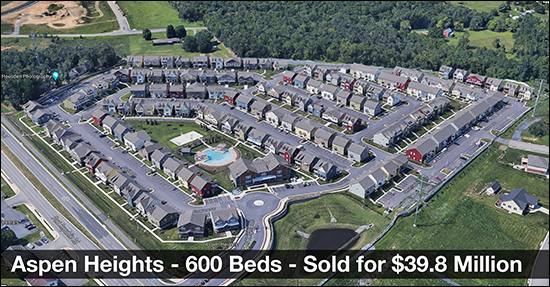 As detailed in the Daily News Record ("National Firm Buys Aspen Heights, Plans Rebrand") the 600 bed student housing development on Port Republic Road in Rockingham County - just outside the City of Harrisonburg - has been sold to Campus Apartments, a large student housing company that owns over $2 billion dollars of assets, near more than 50 colleges and universities in 15 states! Wow! Looking at the raw numbers...
Aspen Heights is located here. Read more in the Daily News Record article. | |
|
|
|
|
Are You The Parent Of A JMU Student Looking To Buy A House For Your Son Or Daughter To Live In With Friends? |
|
 With some regularity, I'll hear from parents of JMU students who are interested in buying a house in Harrisonburg, near the JMU campus, with the intent of having their son or daughter live in the house with friends. Not a bad idea, right? Instead of paying rent for several years, you (and the friends of your son or daughter) can be paying off the mortgage on your newly acquired house! But before you sign a contract to purchase a house, keep this in mind... Most (but not all) single family homes (as opposed to duplexes or townhomes) in Harrisonburg are zoned R-1 or R-2. This limits occupancy of the property to no more than to unrelated people - with one exception which I will mention below. So -- before you go buy a five bedroom house with the idea that Johnny and his four best buds can live there -- you should definitely check the zoning of the property. If the house is zoned R-1 or R-2, it will just be able to be Johnny and his best friend living at the house. But wait -- what if you put Johnny on the deed to the house, making him one of the owners of the house -- would this change anything? Why, yes, it would! While Johnny would not then be able to invite all four of his friends back into the fold, he would be able to have his two best friends living there at the house instead of just one friend. Stated more simply... An R-1 or R-2 property can only be occupied by two unrelated people if the owner is not living there, but it can be occupied by the owner plus two unrelated people if the owner is living there! You'll find all the details here. If you're a JMU parent, looking to buy a house off campus, I'm happy to help with the process -- but don't let Johnny get too many friends excited about the idea until you have reviewed the information above. A few final notes... 1. There are some properties in Harrisonburg that have been in non-conforming use (many unrelated people living in them) since before these current zoning regulations were put in place. Those properties are "grandfathered in" and can be continued to be rented in that (non-conforming) manner until/unless there is a 24 month interruption in the non-conforming use. So, technically, you could buy a house for Johnny and his four friends -- but we'd have to find a property that is grandfathered into that non-conforming use and those properties don't come on the market very often. 2. There are likely some property owners out there, now, who are renting their properties to more unrelated people than are legally allowed to live there. Before you jump to "well if they can do it, then I should also be able to do it" I will encourage you to only consider making an investment purchase that allows you to rent the house in a manner that is legal according to local zoning ordinances. It's not worth the risk to try to skirt the zoning regulations. | |
|
|
|
|
When Buying A House To Rent To Students, Call Community Development First! |
|
 With great regularity, potential buyers (either investors or parents of JMU students) will ask if a single family home can be purchased and rented to a group of JMU students -- often an intended group of four or more students. I let them know that it will be no problem at all -- the adjoining property owners in the quaint neighborhood probably won't mind as long as the students aren't too bothersome -- and the City doesn't mind at all if their zoning ordinances are violated, so long as it's just "nice college kids".... WAIT! NOT REALLY! READ ON!!!! It seems that some buyers are really getting that feedback of "sure, it will be fine" -- though I'm not sure if they're getting it from their Realtor, or from someone else advising them in the transaction, or if they just aren't thinking about whether their planned use of a property is allowable. The REAL answer, and the feedback that I ACTUALLY provide to my clients is.... 1. We need to check to see how this property is zoned, and whether that zoning classification allows for that number of unrelated people to live in the property. 2. We need to check to see if there are recorded restrictive covenants for this neighborhood that restrict the number of unrelated people who live in the property. A few notes.... 1. Most single family homes in the City of Harrisonburg are zoned R-1 or R-2 and do NOT allow for three or more unrelated people (students or otherwise) to live in the property. 2. If a property has been used in a non-conforming manner (for example, four students living in it) since before the zoning ordinance was put in place, without a 24 month gap in the non-confirming us, it MIGHT be possible to continue to use the property in that non-conforming manner. And, if #2 above is starting to get confusing, then we arrive at my main reason for writing today.... CALL COMMUNITY DEVELOPMENT TO UNDERSTAND ALLOWED USE OF A PROPERTY! Yes, in fact, there are very helpful City staff in the Community Development department -- who can very quickly help you understand whether a property can be legally used as you intend to use it. And it is imperative that you make this call BEFORE you buy the property, and even BEFORE you make an offer on the property! | |
|
|
|
|
JMU On Campus Enrollment Seemingly Plateauing Just Under 21K |
|
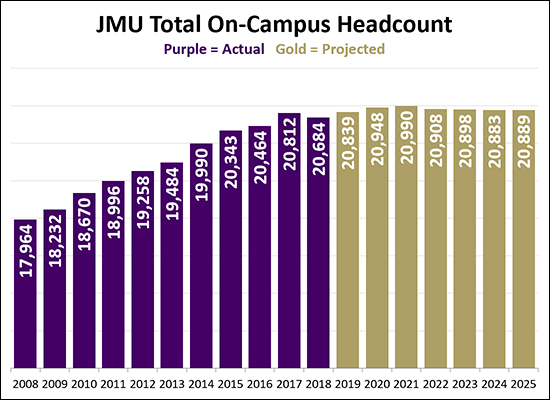 Based on JMU's enrollment projections approved by the State Council of High Education for Virginia, on campus enrollment...
These figures, and their changes over time, are the best numbers to be using when analyzing the need for off campus student housing in Harrisonburg -- and seem to be indicating that our local market does not need more student housing -- since enrollment is only anticipated to rise by 205 students between now and 2025. | |
|
|
|
|
Maybe JMU Bought Those Houses To Straighten Out A Road? |
|
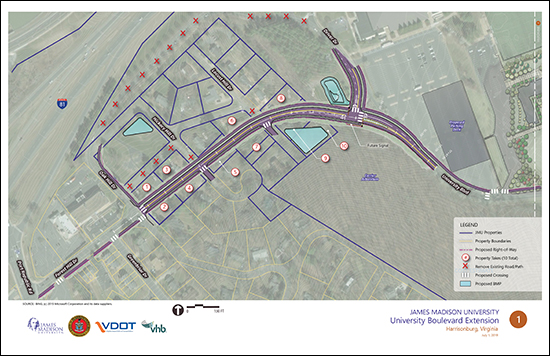 (click the map for a larger file) I'm not sure if it was the plan all along, but it seems JMU's acquisition (over quite a few years) of homes in the Forest Hills area has allowed it to now (potentially) partner with the City and Commonwealth to straight out the end of University Boulevard that has a big (slow) loop as it approaches the Days Inn. Here are the properties that JMU owns per my most recent accounting... 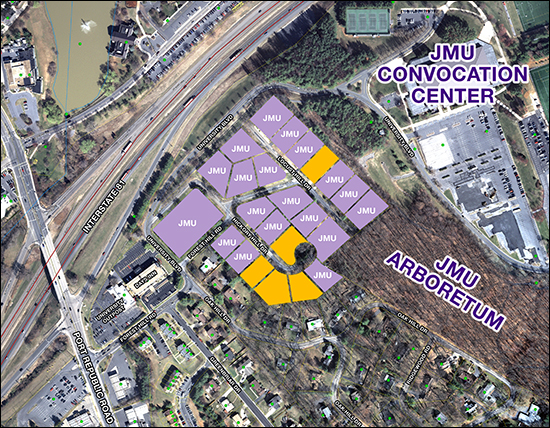 (click the map for a larger file) The most recent development, as covered by The Citizen (Council takes next step toward major re-routing of University Boulevard) is that the City Council approved the Department of Public Works' plan to seek money from the Commonwealth of Virginia to accomplish this project. Here's how it would go down...
If this funding request is approved, construction on this realignment of University Boulevard would not be complete until December 2023. So, stay tuned, but don't expect any changes to the road in the immediate future. | |
|
|
|
|
Risk and Reward in Buying College Student Housing Rental Properties |
|
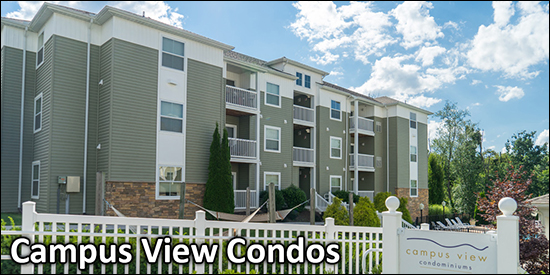 If you are looking to purchase a rental property for your JMU student to live in while they are a student at JMU, there are two basic paths you could go down....
Option 1 -- A property in a traditional student housing neighborhood. These will allow the most students to live in the property and will maximize the rental income per dollar spent on the purchase. However, it will also expose you to a more turbulent segment of the market, as rental rates and sales prices of these properties can vary quite a bit over time as the supply of competing student housing ebbs and flows based on large complexes being built by student housing developers. You can find purchase options in this category here. Option 2 -- A townhouse in a community that has many owner occupants, some non-student renters and some student renters. Many of these will not allow as many unrelated students to live in the property (per zoning regulation or restrictive covenant) and will not provide quite as much rental income per dollar spent on the purchase price. However, they will be in segment of the real estate market that is much more predictable and less volatile from a rental rate and/or sales price perspective. You can find purchase options in this category here and here. I work with parents of JMU students each year who go down each path outlined above, each for different reasons. Most of the time, though, it boils down to their tolerance for risk or their desire for reward. It can also be related to their intended time horizon for owning the property. If you are interested in buying a rental property for your son or daughter to live in while they are at student at JMU, let me know. Oh, and you might also want to read up here... | |
|
|
|
|
JMU Ownership In the Maplehurst Neighborhood |
|
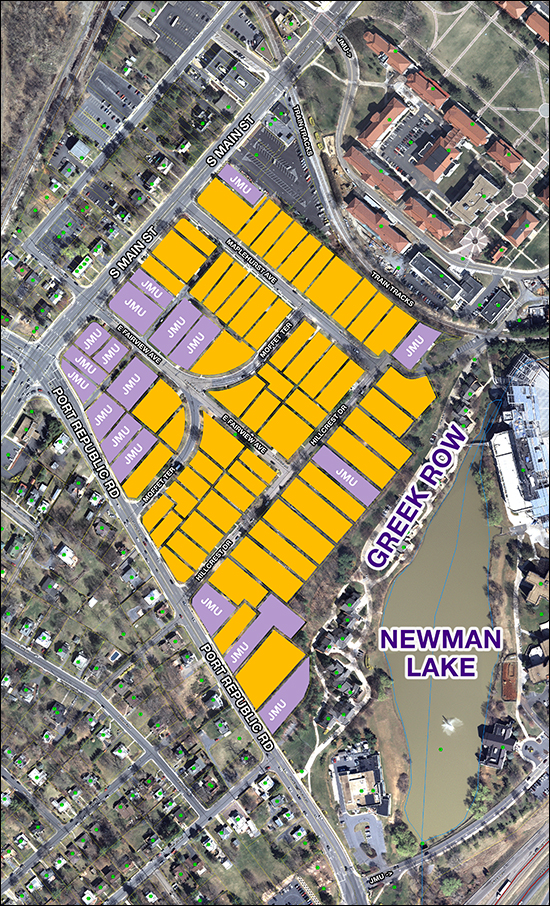 Download a larger map here. While it is not as expansive as JMU's ownership in the Forest Hills neighborhood -- it is interesting to see JMU continue to purchase properties in the Maplehurst neighborhood -- some of which have recently been turned into parking lots. Thus far, their focus seems to be mainly on the corner of South Main Street and Port Republic Road - though they now (as of a year ago) also own a property backing up to Greek Row. Download a larger map here. | |
|
|
|
|
Making Harrisonburg A Place Young Alums Can Call Home For Decades |
|
 I recently lamented that most new housing that is being built is student housing or rentals -- as opposed to homes that can be purchased by homeowners. And the "why" is because of the highest and best use for development land... "So long as there are student housing, rental housing or mixed use developers willing to buy land at a high price/acre AND/OR as long as owners of development land are willing to hold out for that high price/acre -- then land is not likely to be sold to developers or builders at a price/acre that would allow them to build homes for buyers to buy." Katherine took it one step further (thanks Katherine!) to draw home the "so what" of my observation... "Students are a lucrative and seemingly inexhaustible market, but it's short-sighted not to give some thought to how we can keep more young alumni in the community after graduation. Attractive, affordable starter homes are a piece of this puzzle, as are businesses and services geared toward professionals rather than college students. (And good jobs are, too, of course.) Excessive catering to the student population will make Harrisonburg a town people "remember fondly," not one they call home for decades." I agree wholeheartedly with this sentiment -- I want Harrisonburg to be a town that young alums can call home for decades. As Katherine points out, this is not just about housing - but housing is certainly a big part of it. It is not immediately clear what this could / should mean for the City of Harrisonburg -- but I do think we could look back 10 years from now and lament the fact that there weren't enough new developments built to allow for young alums to settle into jobs, buy their first home, and start establishing this as their home for decades. | |
|
|
|
|
JMU On Campus Headcount Likely To Exceed 22K in 2022 |
|
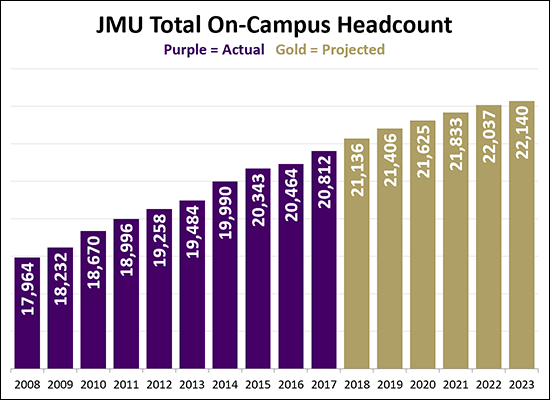 Based on enrollment projections approved by the State Council of High Education for Virginia, on campus enrollment is set to continue to increase in coming years....
| |
|
|
|
|
Risk, Reward and Buying College Student Housing Rental Properties |
|
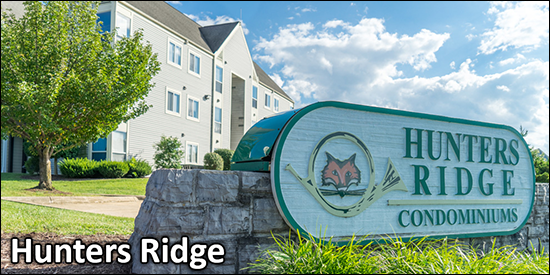 If you are looking to purchase a rental property for your JMU student to live in while they are a student at JMU, there are two basic paths you could go down.... Option 1 -- A property in a traditional student housing neighborhood. These will allow the most students to live in the property and will maximize the rental income per dollar spent on the purchase. However, it will also expose you to a more turbulent segment of the market, as rental rates and sales prices of these properties can vary quite a bit over time as the supply of competing student housing ebbs and flows based on large complexes being built by student housing developers. You can find purchase options in this category here. Option 2 -- A townhouse in a community that has many owner occupants, some non-student renters and some student renters. Many of these will not allow as many un-related students to live in the property (per zoning regulation or restrictive covenant) and will not provide quite as much rental income per dollar spent on the purchase price. However, they will be in segment of the real estate market that is much more predictable and less volatile from a rental rate and/or sales price perspective. You can find purchase options in this category here and here. I work with parents of JMU students each year who go down each path outlined above, each for different reasons. Most of the time, though, it boils down to their tolerance for risk or their desire for reward. It can also be related to their intended time horizon for owning the property. If you are interested in buying a rental property for your son or daughter to live in while they are at student at JMU, let me know. Oh, and you might also want to read up here... | |
|
|
|
|
College Student Housing Under Construction on Port Republic Road |
|
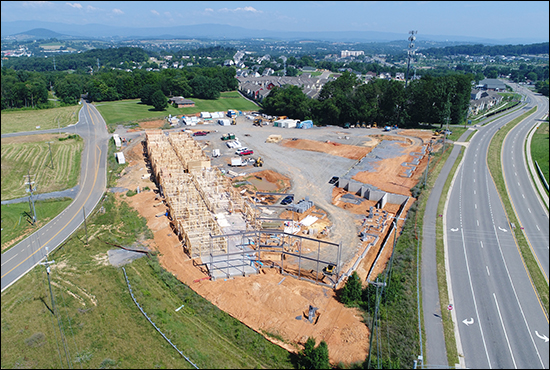 If you've driven on Port Republic Road lately, near Bojangles, you might have noticed construction starting to peek over the top of Port Republic Road. Above is an photo of the construction progress. And here are some images of the planned 425-bed college student housing community... 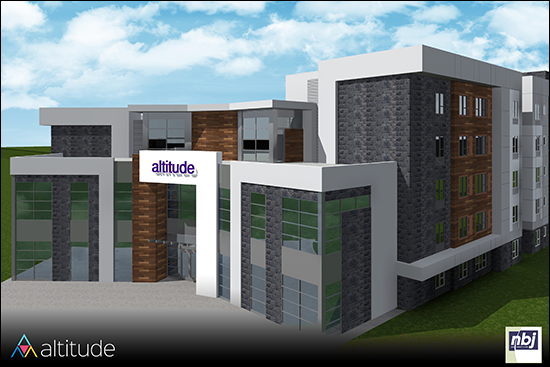 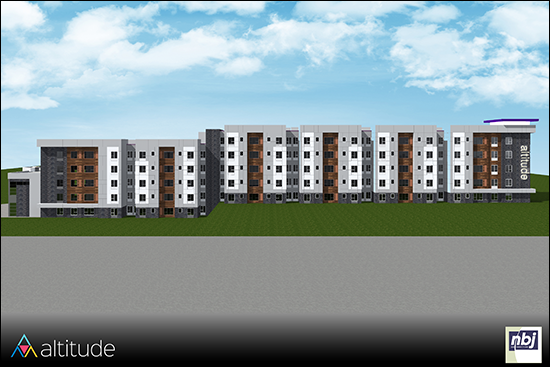 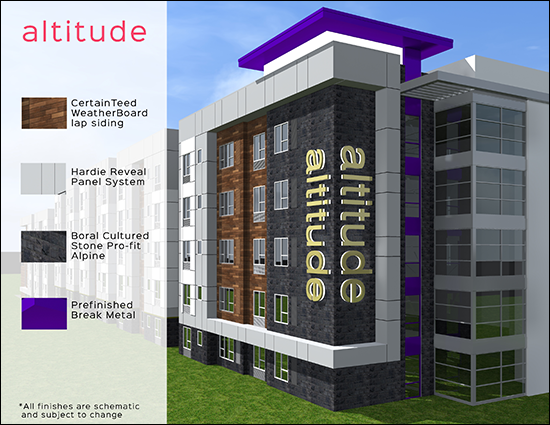 | |
|
|
|
|
Land for New High School Was To Be Student Housing, then Convocation Center |
|
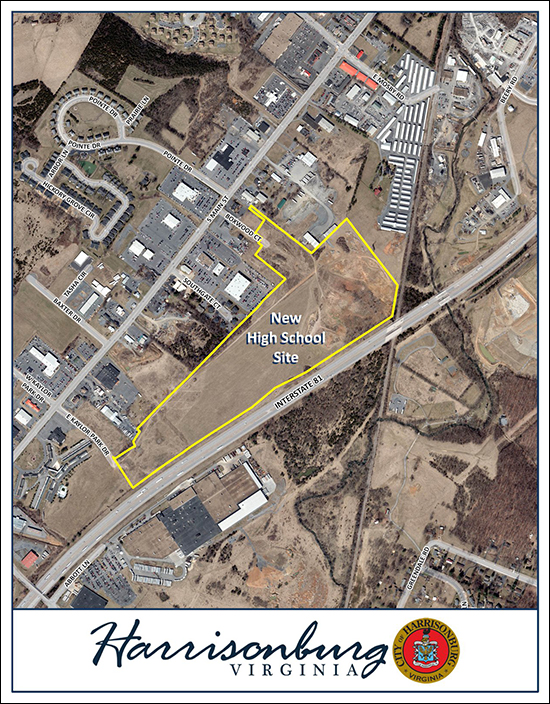 Have you heard Harrisonburg needs a second high school? The current (only) high school in the City is beyond capacity. As such, the City has been evaluated various pieces of land to find a suitable new site for the new high school -- and now they have made a decision. Background... Owners of median priced City homes might have to pay $26 more per month to fund new City high school So, back to the location... The parcel of land shown above is 60 acres located between South Main Street (Route 11) and Interstate 81. The City intends to purchase this land for five million dollars from JMU. But JMU has actually owned it for a few years. You see, this land was actually originally slated to be used for college student housing! More background... So... the land was originally going to house 466 apartments for college students... 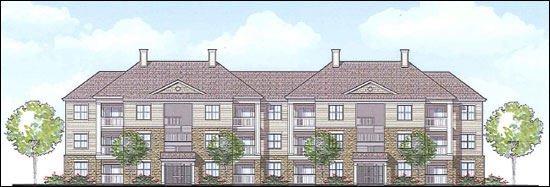 And then it was to be the site of JMU's new convocation center... 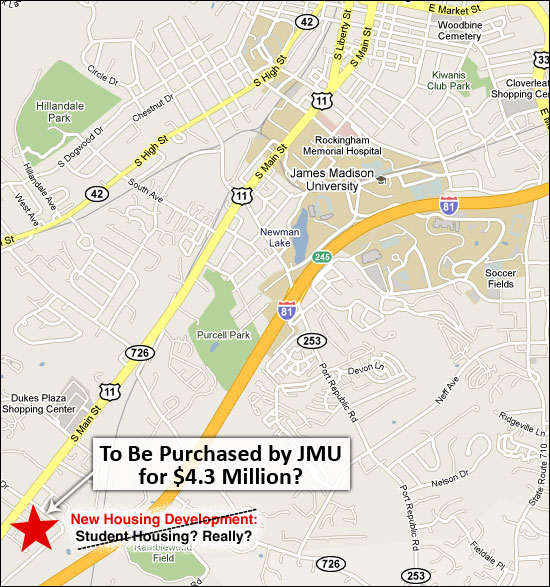 And now, the site of Harrisonburg's second high school. Read today's Daily News Record article for further context... | |
|
|
|
|
New Convocation Center Under Construction at JMU |
|
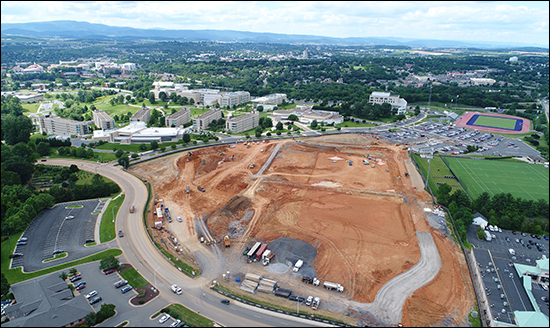 view a larger image here Curious about all of the dirt moving on the JMU Campus on University Boulevard across from Costco and Cinnamon Bear Bakery & Deli? A new convocation center is being built at JMU. Check out some beautiful renderings of this new facility here. The new Convocation Center will be the home of the men's and women's basketball programs along with university graduations and other large gatherings and on campus events. This facility will cost $88 million -- $12 million dollars of which is being raised from private supporters. | |
|
|
|
|
Can All Homes In Harrisonburg Be Rented To Groups of JMU Students? |
|
 With great regularity, potential buyers (either investors or parents of JMU students) will ask if a single family home can be purchased and rented to a group of JMU students -- often an intended group of four or more students.
I let them know that it will be no problem at all -- the adjoining property owners in the quaint neighborhood probably won't mind as long as the students aren't too bothersome -- and the City doesn't mind at all if their zoning ordinances are violated, so long as it's just "nice college kids".... WAIT! NOT REALLY! READ ON!!!! It seems that some buyers are really getting that feedback of "sure, it will be fine" -- though I'm not sure if they're getting it from their Realtor, or from someone else advising them in the transaction, or if they just aren't thinking about whether their planned use of a property is allowable. The REAL answer, and the feedback that I ACTUALLY provide to my clients is.... 1. We need to check to see how this property is zoned, and whether that zoning classification allows for that number of unrelated people to live in the property. 2. We need to check to see if there are recorded restrictive covenants for this neighborhood that restrict the number of unrelated people who live in the property. A few notes.... 1. Most single family homes in the City of Harrisonburg are zoned R-1 or R-2 and do NOT allow for three or more unrelated people (students or otherwise) to live in the property. 2. If a property has been used in a non-conforming manner (for example, four students living in it) since before the zoning ordinance was put in place, without a 24 month gap in the non-confirming us, it MIGHT be possible to continue to use the property in that non-conforming manner. And, if #2 above is starting to get confusing, then we arrive at my main reason for writing today.... CALL COMMUNITY DEVELOPMENT TO UNDERSTAND ALLOWED USE OF A PROPERTY! Yes, in fact, there are very helpful City staff in the Community Development department -- who can very quickly help you understand whether a property can be legally used as you intend to use it. And it is imperative that you make this call BEFORE you buy the property, and even BEFORE you make an offer on the property! | |
|
|
|
|
Where Will Recent JMU Graduates, Staying In Harrisonburg, Buy Houses? |
|
 It's a numbers games, folks.... Some percentage of each graduating class at JMU (and EMU, and Bridgewater College) will decide they want to stay in Harrisonburg and make it their home. These three institutions seem to graduate around 6,000 students each year. How many might decide to stay in Harrisonburg? In chatting with several folks about this yesterday, I pondered aloud whether enough new "for sale" housing is being built for recent grads to buy, once they decide they want to stick around and buy a home. Or, more broadly, is our housing stock growing as fast as our population. I suspect that it is not -- based on how quickly homes are selling and how low our inventory levels remain month after month. So, what are these recent (within the past few years) JMU grads to do? Perhaps make several offers on several properties, missing out on most because of multiple offer situations, and then eventually securing a contract to buy a home. Or, perhaps they just rent because there is so little to buy. But if many or most of them do rent, it is -- at least in the short term -- a net loss for our community. If they buy a home, they will be putting down roots, committing to stay in the area, investing even further in our local economy, etc. If they are renting, not so much on any of those fronts. Not so long ago (ok -- fine -- 16 years ago) I was a recent JMU graduate -- having just finished up my master's degree -- and my wife (fiancé at the time) and I decided we wanted to stay in this area. We were able to find a townhouse to buy, and were excited to make this our home. The landscape now, at least for recent graduates buying homes, is a bit different. | |
|
|
|
|
Analysis of JMU On Campus Housing |
|
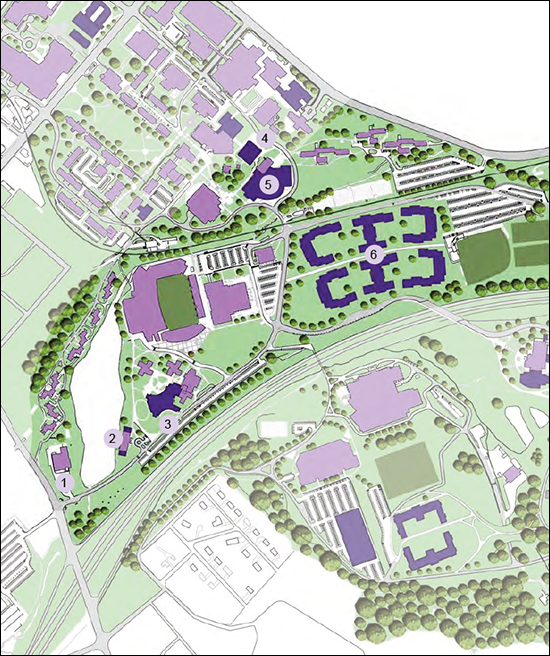 (Post updated afternoon of 3/26/2018 with additional notes per the second phase of the East Campus residence hall -- thanks Matt Phillippi) The updated Master Plan for James Madison University offers a fascinating read as to the future plans of this institution that is a central part of Harrisonburg. Download the full master plan here. One area of interest from a housing perspective is JMU's analysis of current housing offerings and demand. 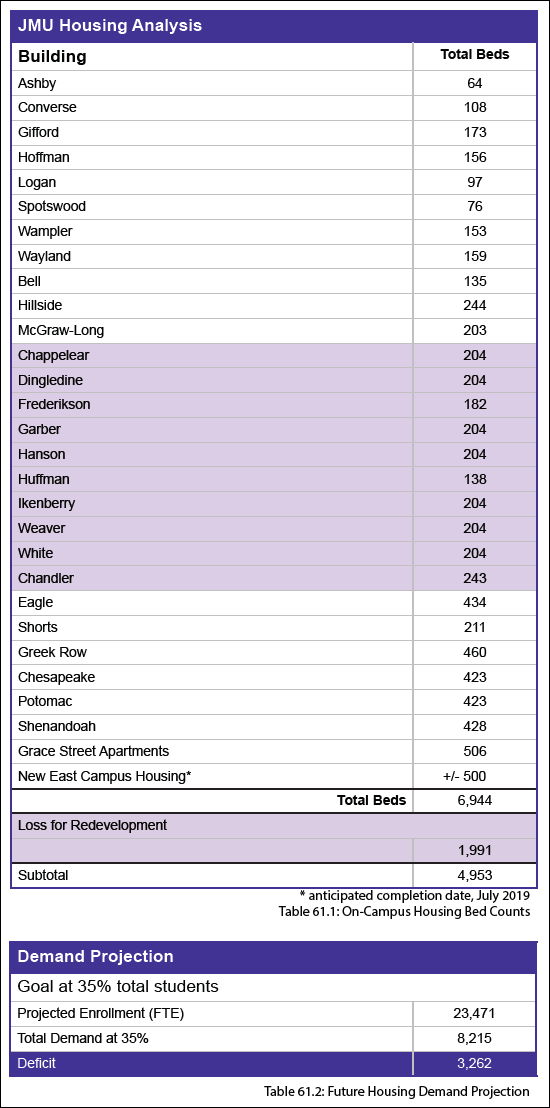 As shown above....
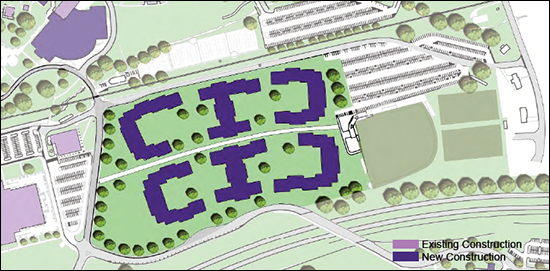
New layout of Village area residence halls....
| |
|
|
|
|
JMU purchases another property in Forest Hills |
|
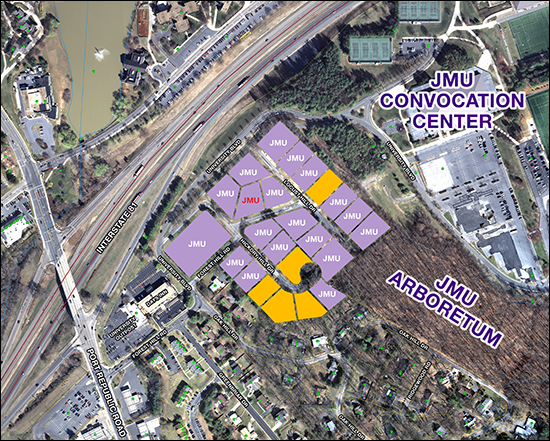 JMU has purchased another property in the Forest Hills neighborhood -- as shown above, in purple, with red "JMU" letters. Click here for a larger, updated, version of this map. As per HarrisonburgPropertyTransfers.com.... August 3, 2017 - Richard L. Sheppard to The Visitors of James Madison University, lot at the intersection of Forest Hill Road and Hickory Hill Drive, $308,000.As per my previous article, per The Breeze....
| |
|
|
|
|
Harrisonburg could never have enough student housing! |
|
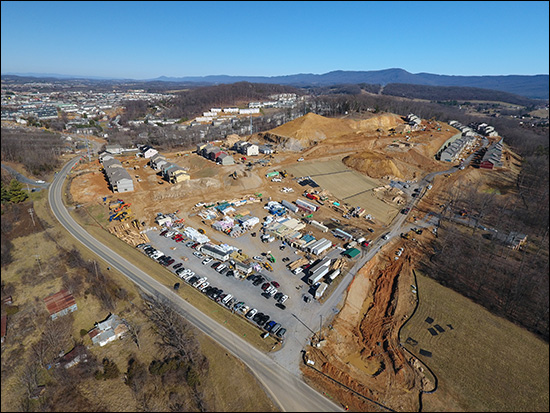 OK, OK, that's probably not true -- Harrisonburg probably does not have an infinite need for student housing. Just consider my title, then, to be an intro to all of the alternative perspectives that have been shared with me since I wrote these two posts.... Does Harrisonburg need more Off Campus Student Housing? Does New College Student Housing Increase the Demands on Local Elementary Schools? OK -- here goes -- all the reasons I might be wrong, and all of this new student housing might be OK, or even a good thing.... 1. JMU is growing! All of this student housing is necessary -- JMU is continuing to grow, and they are not building on campus fast enough for their growth, so the private sector must build and rent housing to students in order to meet that growing demand. 2. Denying growth just pushes it elsewhere. If the City decided to stop permitting new student housing communities to be built, that would just push developers to build them in the County, or push students to live in otherwise owner occupied neighborhoods. 3. This is an affordable way to get workforce housing. There isn't much truly affordable rental housing being built -- and older student housing complexes being effectively turned into workforce housing by virtue of students being attracted to new student housing communities is not necessarily a bad thing. It may be the most affordable way to create affordable or workforce housing. 4. Bring on the wrecking ball. If even more student housing is built, the rental rates will fall even lower on the oldest complexes, devaluing those properties to the point where it will make sense to just knock them down and build new housing -- thus, eliminating the older, outdated housing. 5. How much regulation do you want "the government" to do? If the government (planning commission, city council, staff) should start making judgement calls about how much student housing is too much student -- and thus regulating what landowners (and student housing developers) can and cannot do -- should they also start governing other segments of the private sector? Should they regulate how many hair salons exist? How many banks are permitted to operate? How many restaurants can open? How many Realtors can sell homes? :) OK -- again -- I don't necessarily agree with all of the perspectives above, but I believe it is important to consider these counterpoints when thinking about how our community should be planning for the future as it pertains to student housing, land use, property taxes, schools, etc. And, as I mentioned to a reader in response to their comments.... I don't know if new student housing projects should or should not be denied - but I think the local community needs to fully understand the impact of continuing to approve more student housing communities. If older student housing communities become workforce housing, great, no problem -- but let's realize that this is the result of approving new student housing communities, and make sure that infrastructure (schools, for example) are in place for the new workforce housing that we have indirectly created. | |
|
|
| Older Posts |
Scott Rogers
Funkhouser Real
Estate Group
540-578-0102
scott@funkhousergroup.com
Licensed in the
Commonwealth of Virginia

Home Search
Housing Market Report
Harrisonburg Townhouses
Walk Through This Home
Investment Properties
Harrisonburg Foreclosures
Property Transfers
New Listings


