



Archive for January 2009
 |
 |
Don't forget about the $7,500 tax credit |
|
 In talking to one of my clients today, he commented that he thinks a lot of potential buyers have forgotten all about the $7,500 tax credit. I agree! Here is a quick reminder of the basics... If you haven't owned a home in the past three years, you have a great opportunity to save $7,500 on your 2009 income taxes. To pull of this credit you'll need to buy a home before July 1, and you'll then be able to claim the $7,500 tax credit on your return that you would file at the beginning of next year. There is some fine print, available at the IRS web site, which includes the fact that you will be paying the $7,500 back over a 15 year period. It is rumored that the repayment aspect of this tax credit may disappear as a result of upcoming economic stimulus changes, and even if it doesn't, you still will have a net savings of over $4,000. | |
 |
 |
|
|
Looking even closer at home values over time |
|
 The Daily News Record ran an interesting article yesterday which reinforces what I have been stating in my monthly home sales reports for quite some time now --- sales volume is down, median and average sales prices are stable. Ex. December 2008 Report. However, the comments in the DNR article were of quite a different persuasion -- the commentators were quite sure the assertion of stable home values was bogus. Here's where I stand on the issue:
Today I'm going to take a closer look at one very narrow property type to examine value trends over time.... New-ish (2000+) two-story townhomes in the City of Harrisonburg with 1200-1500 s.f., without basements or garages. This includes developments such as Avalon Woods, Beacon Hill, Liberty Square, Harmony Heights, Meadow Point and Wellington Park. 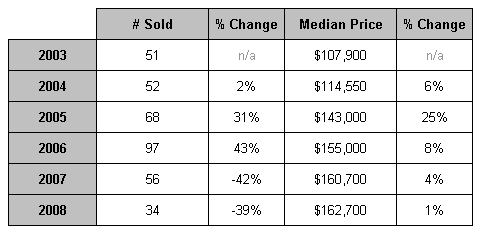 Prior to this analysis, my assumption was that tracking median price trends across our entire market (which show stability) does not reveal true value trends. I suspected that we would see the median price trend analysis break down if we limited it solely to one very specific property type. However, as seen above, median prices of very similar townhouses in Harrisonburg have stayed stable over the last year. I was wrong! But perhaps the most interesting part of this segment of the market is not found by looking at sold properties, but by examining those currently offered for sale. A few observations:
Still think this data or analysis is bogus, or missing some critical perspective? Tell me about it! Use the comment field below, or e-mail me at scott@cbfunkhouser.com. | |
|
|
|
|
Understanding long term home sales trends |
|
Below is one of the graphs I generate each month in my monthly market report. This graph shows an overall trend for residential sales in Harrisonburg and Rockingham County by computing the rolling sum of the previous twelve months of market activity. To explain a bit more clearly, here are a few examples:
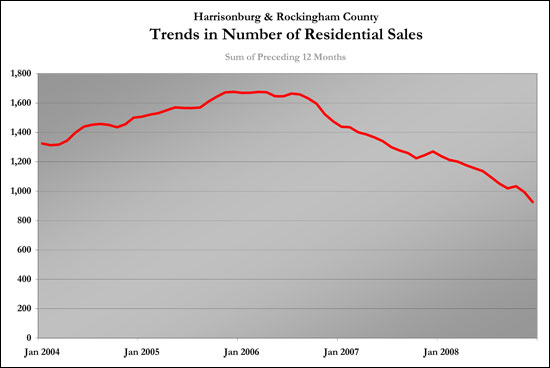 To go a bit futher, I broke down the data between different sizes of homes (0-1499 SF, 1500-2499 SF, 2500+ SF). This can show us trends in how each size of home is selling, and it will be interesting to see when each of the individual trendlines turns positive, and when the collective trendline turns positive. 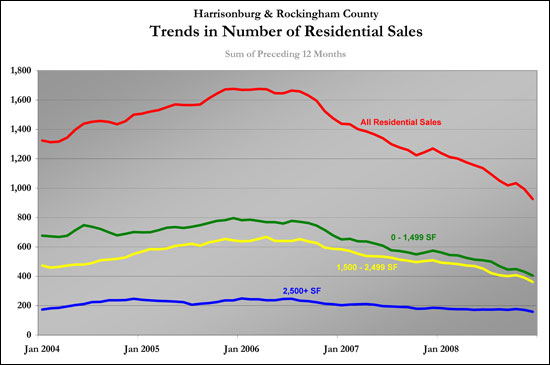 The graph above shows all residential sales, and then shows each of the other size ranges of homes (0-1499 SF in green, 1500-2499 SF in yellow, 2500+ in blue). 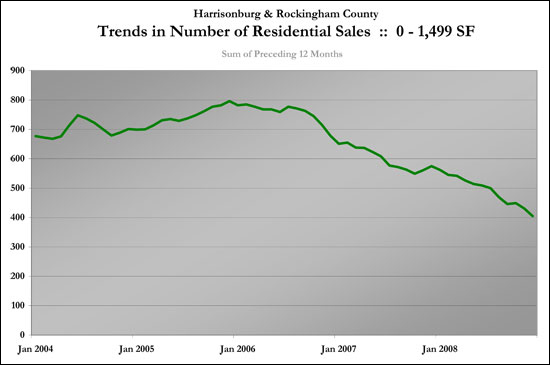 This graph shows the trendline for homes (single family and townhomes) with less than 1500 square feet. With a somewhat smaller data set we see more volatility in this trendline, even with rolling twelve month sums, but it can still give us a good idea of long term trends in this type of housing. 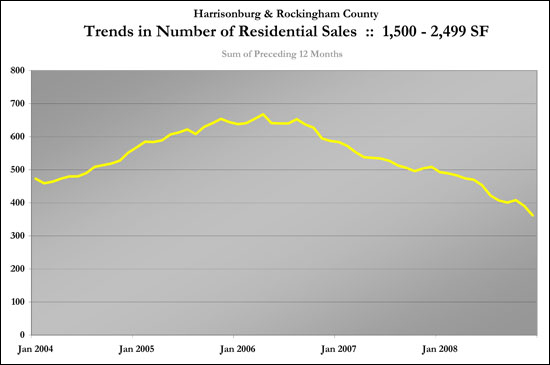 The graph above shows the changes in sales activity for mid-range homes (1500-2499 SF). This trendline doesn't have as much volatility, and mimicks more closely the overall trendline. 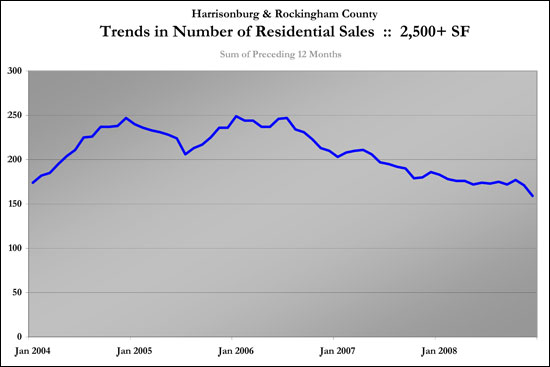 This graph shows the trendline for larger homes, with at least 2500 square feet. There was a good bit of volatility in this trendline during 2003 and 2004, but it has now returned to a trendline much more similar to the overall market trend. | |
|
|
|
|
Home value trends in Harrisonburg, Rockingham County |
|
Question everything! Below is an excerpt from an e-mail that I received from one of my clients about a month ago. She asks a fantastic question, and one that I believe is on many people's minds these days... On your website (as well as many other local realty sites) people keep saying home prices are stable. How is that determination made? I understand (& am happy) that we have not experienced the free fall some places have in home values - but as someone who has been watching the local market I am starting to wonder if saying that about the local market is accurate. So, how do we figure out what is happening with home values in Harrisonburg and Rockingham County? Below are a variety of ways that you could come to some conclusion --- some are better indicators than others. 1. Median & Average Sales Price I use this measure quite regularly in my monthly market report, and this metric indicates that home values are holding (relatively) steady in Harrisonburg and Rockingham County. When comparing the 2008 median sales price ($195,000) to the 2007 median sales price ($195,100) we see only a 0.05% decrease. When comparing the 2008 average sales price ($223,668) to the 2007 median sales price ($224,394) we see only a 0.32% decrease. These metrics are often used for observing value trends because they are easy to calculate, and in theory give an all encompassing view of market conditions. However, in a smaller market, they can be greatly affected by what happens to be selling. As an one example of the imperfection of these metrics -- there has been a 40% decline in single family home sales (H'burg & Rock Co) between 2004 and 2008 --- but there has been a 32% increase in single family home sales with sales prices over $400,000. This shift in what is actually selling, can greatly affect the average and median figures, making them less meaningful. Another example of the imperfection of these metrics is found by examining single family homes at or larger than 2,500 s.f. sold in the City of Harrisonburg. In 2007, there were 36 such homes selling at an average sales price of $351,547 and a median sales price of $327,500. In 2008, there were 31 such homes selling at an average sales price of $336,357 (4.3% decrease) and a median sales price of $305,000 (6.9% decrease). In a market of our size, average and median home sales prices are useful for observing value trends, but can be quite off the mark for actual market trends. 2. List to Sell Ratio Most people would assume that sellers probably aren't getting anywhere near what they used to for their homes expressed as a percentage of their asking price. I have asked several people to guess, and the general consensus was that sellers were probably getting 99% of their asking price in the "hot market" of 2004 and 2005, and are probably getting only 90% now. In 2004, a total of 1,507 homes sold in Harrisonburg and Rockingham County at an average of 99.13% of the asking price. In 2008, a total of 932 homes sold in Harrisonburg and Rockingham County at an average of 96.86% of the asking price. This shows us that buyers are able to negotiate more off of the sales price, but the difference is not as dramatic as you might suspect. This metric is most helpful in judging whether the market is a buyer's market or a seller's market. 3. Changes in Asking Price on Specific Properties This is an interesting one, and one that my client was quite instrumental in helping me to observe. She has been observing the market for the past year and a half (roughly) and has seen a dramatic shift in the asking prices of specific homes. Changes in the asking price of specific homes can't necessarily reveal any particular market trend, because sellers don't necessarily price their homes at the price the market would suggest. If an appraiser conducted a full appraisal of every home in our area before it went on the market, and the home was listed at the appraised value, then if we saw a shift in asking prices, it would be very meaningful. As it stands, a home seller may price their home well above the market to start, and then continue to lower the price over time after not being able to sell at an above-market price. Then, because the home sat on the market for so long, buyers are skeptical, and the seller has to lower the price "below-market" in order to sell it. Some (many?) observed changes in asking prices on specific homes are an indication of pricing mistakes, rather than market trends. However, while asking price trends on specific houses won't give as a true indicator of value trends, if we expand this metric to specific neighborhoods or property types we can begin to observe real market trends. 4. Changes in Asking Prices in Neighborhoods or Property Types If owners of homes in Belmont (for example) used to be asking $350,000 - $400,000 for their homes, and are now asking $300,000 to $350,000 that may be a good indicator of a change in value. If owners of two-story townhomes in the City of Harrisonburg built since 2000 used to be asking $160,000 for their townhomes, and are now asking $140,000, that may be a good indicator of a change in value. This metric is getting close to being a good indicator of market trends, but can be improved if we look at sales prices in specific neighborhoods or property types instead of asking prices. 5. Changes in Sales Prices in Neighborhoods of Property Types Again, if we can narrow down the market to a specific neighborhood, property type, age range, square footage range, etc., and then observe average sales prices over time, we will have a very good idea of what is happening with home values in our market. One challenge here is that we probably want to eventually get back to the "big picture" of what is happening in our entire market --- and it would be quite arduous to create 20-30 (or more) profiles of market segments, calculate changes in average sales prices, and then try to come to some broader conclusions about the entire market. But remember --- we came to this as a metric for understanding changes in home values, because we realized (or at least I asserted) that the average (or median) sales price for our entire market isn't necessarily an indicator of what is happening with home values. 6. What could I have sold my home for, and what can I sell it for now? This is a very inexact concept, and one that often confounds, frustrates and depresses homeowners. Part of the problem with understanding changes in home values within this context is that the first data point (what I could have sold my house for) is often a very rough personal assessment. For example, "I am sure I could have sold my house for $250,000 a year ago" --- regardless of whether comparable sales data would actually support that. However, if we take emotional, and imperfect "self assessments" out of the equation, this is a very valuable metric. If you live in a neighborhood where the homes are all very similar, you can probably have a very good idea of what you could have sold your house for a year ago, and what you could sell it for now. CONCLUSION I believe my client's question, and many homeowners' concerns are based on the conflict between several of the metrics above. Homeowners sense that there has been a decrease in home values in general, and their home value specifically, but average/median sales price suggest that they have not. Based on my analysis above, I believe that average and median home sales price are not very helpful in understanding changes in home values in our market. However, because of the complexity of a true analysis of home values (using criteria #5 and #6 above), we may never have a better sense of what is happening with home values in our market in general, beyond using the quite inexact metrics of average and median home sales prices. Homeowners (or prospective homeowners), should take the time to understand how their home value has changed over time. It is not an easy or exact analysis, but it will give you a much better sense of where you have been, where you are now, and where you may be headed in the near future. I welcome any and all dissenting views, alternative perspectives, suggestions for other value analysis criteria, etc! Feel free to e-mail me (scott@cbfunkhouser.com), call me (540-578-0102) or leave a comment below. | |
|
|
|
|
Attention Inauguration Travelers! |
|
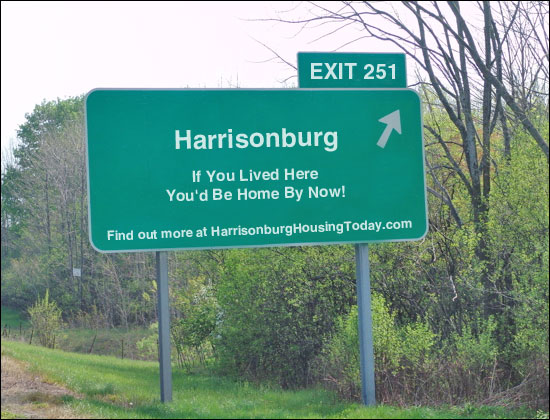 The top-notch newshounds at Crocktown must have been out early this morning to see the results of my new partnership with VDOT, as they already broke the story! | |
|
|
|
|
However unreasonable, I expect perfection from lenders! |
|
Buying a home is a big deal, and a huge part of the process is finding and securing financing for that purchase. Thus, it is essential that your lender does their job extremely well. If a lender does a great job on 99 loans out of 100, that doesn't make it any better for that 100th buyer who has a terrible experience. One of my clients is to close on their new home tomorrow morning (Jan 20, 2009) at 9:00 a.m. On Friday afternoon/evening (the last business day before the 9:00 a.m. closing, because today is a holiday), she received a phone call indicating that there were a few minor changes on her loan:
Many buyers ask for my recommendations for a lender, and I now have one fewer that I will recommend -- at least for now. The lenders I recommend to my buyer clients are those who:
| |
|
|
|
|
What is an EarthCraft House? |
|
Before I attended an EarthCraft training this week, I had heard of EarthCraft homes, and had been in EarthCraft homes, but I couldn't have given a very good definition of what they are, and what makes such a home different from a traditionally built home. Here's what I now know about homes that are certified as "EarthCraft Houses"...
| |
|
|
|
|
How to build a green home in Harrisonburg |
|
I spent the day today at an EarthCraft certification course learning about how to build higher quality homes, that are healthier, more comfortable, and have lower utility costs for homeowners. Click below to watch a brief interview with Aaron Yoder, the president of the Green Building Committee of the Shenandoah Valley Builders Association. | |
|
|
|
|
Framing Nearly Complete on Condos in Downtown Harrisonburg |
|
Check out the latest construction photos to see the progress at Urban Exchange. 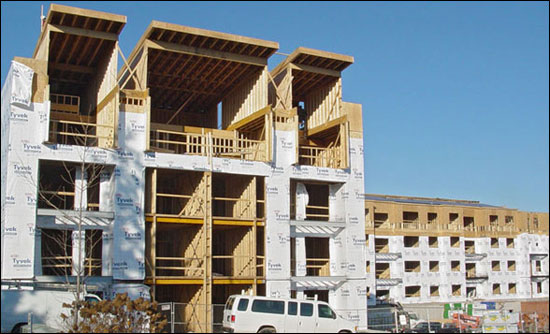 East Tower Update Framing is complete on the East Tower, which will house apartments for rent, and the roof is being constructed this week, as shown above. West Tower Update Most of the 2nd floor of the West Tower (condos for sale) has been framed, and over the next few weeks the final two floors will be completed. Very soon you will be able to walk through any of the units in either tower to see the views, and get a feel for the layout. Are you interested in living in downtown Harrisonburg? To view the prices/rates while exploring the floor plans, click here.
| |
|
|
|
|
What a difference a low interest rate can make! |
|
Some of the agents in my office remember when interest rates were as high as 15% for a 30 year fixed rate mortgage. Wow! Who could afford to buy at those rates!? 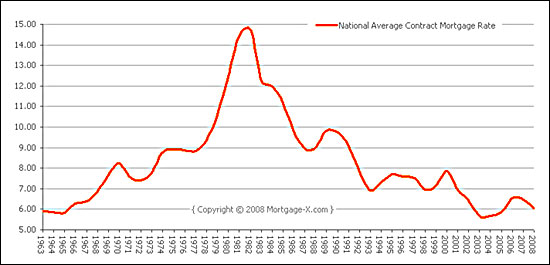 Today's rates, roughly 4.75% on a 30 year fixed rate mortgage, provide for great opportunities for those considering a home purchase. Here are a few examples of how this rate would affect a monthly payment, as compared to an interest rate of 6.5%, which we saw not too long ago! First time buyer of a city townhome at $155,900 (100% financing): Principal & Interest at 6.5% = $985 / month Principal & Interest at 4.75% = $813 / month Savings = $172 / month = $2,064 / year! Upper-end Barrington Home at $459,000 (80% financing): Principal & Interest at 6.5% = $2,261 / month Principal & Interest at 4.75% = $1,915 / month Savings = $346 / month = $4,152 / year! As you can see, these low interest rates can make a significant difference in a buyer's monthly budget! | |
|
|
|
|
Heritage Estates - 55+ living in Harrisonburg! |
|
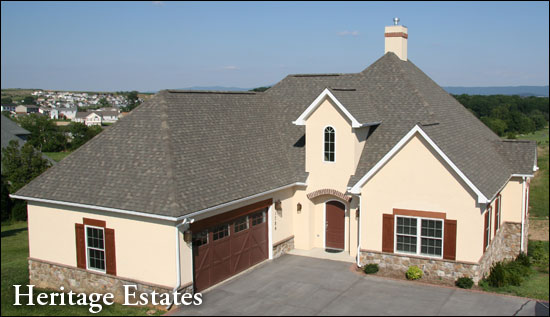 As Harrisonburg has grown, we have begun to see an increasing number of housing trends from across the country find their way to Harrisonburg, for example, Harrisonburg's first downtown condo project. The beautiful home pictured above is another example of a first --- a 55+ community in Harrisonburg! Here are some high points of Heritage Estates, a stunning new community on Garbers Church Road, on the western edge of Harrisonburg:
Heritage Estates is being developed and built by Scripture Communities, and marketed and sold by Coldwell Banker Funkhouser Realtors. | |
|
|
|
|
Signs of Resilience in the Local Real Estate Market - December 2008 Real Estate Market Report |
|
The December 2008 Real Estate Market Report for Harrisonburg and Rockingham County is now available. Click here for a printable PDF of this report. 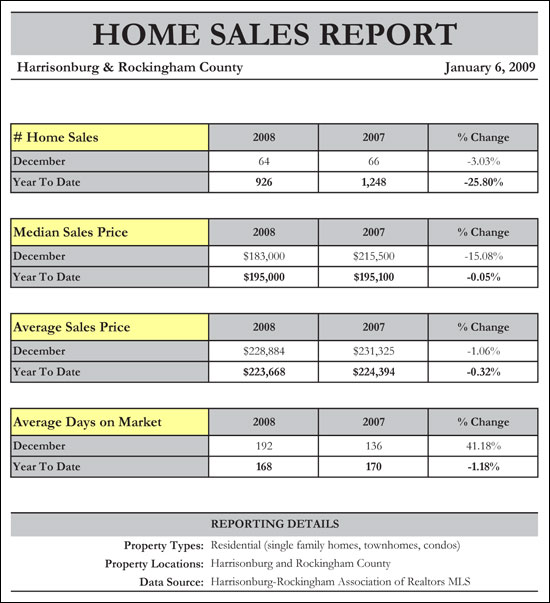 The local market showed a 26% decline (year over year) in sales pace, and yet a December to December comparison only shows a 3% drop in sales pace. This could be a good indicator of the pace of market activity increasing. While December to December comparisons of Median Sales Price and Average Days on Market show some abnormalities, full-year data (2008 vs. 2007) does not show a significant shift in Median Sales Price, Average Sales Price or Average Days on Market. Given the current national economic stresses, this is a sign of a resilient local real estate market. 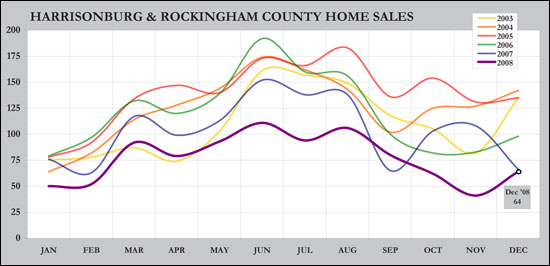 Harrisonburg and Rockingham County home sales finished the year out strong in 2008, with 64 residential sales. This brings the December 2008 sales pace up almost to last December's pace of 66 sales, and is also a 56% increase in sales as compared to the 41 home sales in November 2008. Do note, however, that both November 2008 sales and December 2007 sales were abnormally low in comparison to their surrounding months. 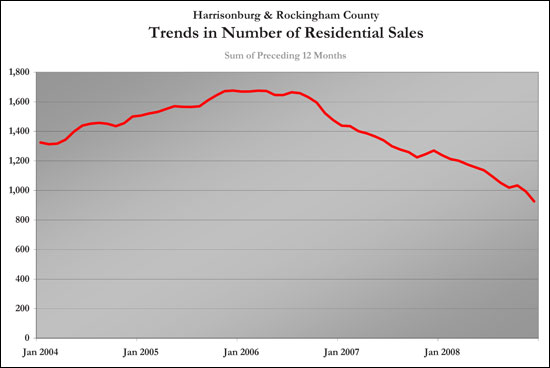 This graph shows a normalized trend of home sales by charting the ongoing sum of the preceding 12 months' sales. As can be expected, the long term sales trend continues to show a decline in home sales activity as we finish out 2008. 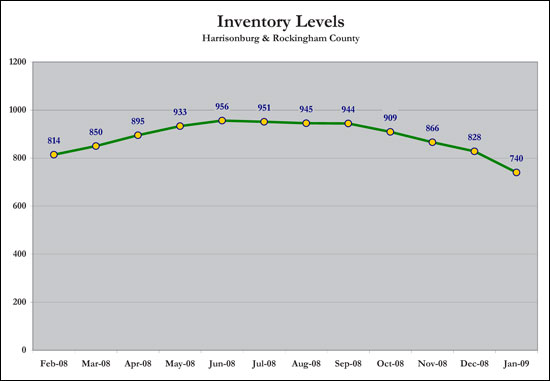 One sign that our market is returning to a somewhat healthier state is that inventory continues to decline -- as a result of home sales as well as homes being taken off the market. We are now well below inventory levels from 11 months ago, with no end to this decline in sight. 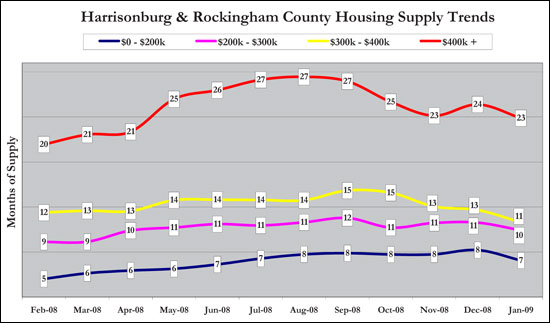 As inventory levels fell over the past month, so has the months of supply of all price ranges. This trend will also help our real estate market return to a healthier balance. Six months of supply is considered by many to be a healthy supply that favors neither buyers nor sellers. Again, here is a printable PDF of the December 2008 Real Estate Market Report for Harrisonburg and Rockingham County. | |
|
|
Scott Rogers
Funkhouser Real
Estate Group
540-578-0102
scott@funkhousergroup.com
Licensed in the
Commonwealth of Virginia

Home Search
Housing Market Report
Harrisonburg Townhouses
Walk Through This Home
Investment Properties
Harrisonburg Foreclosures
Property Transfers
New Listings


