



| Older Posts |
 |
 |
Million Dollar Home Sales Peaked In 2021, 2022 |
|
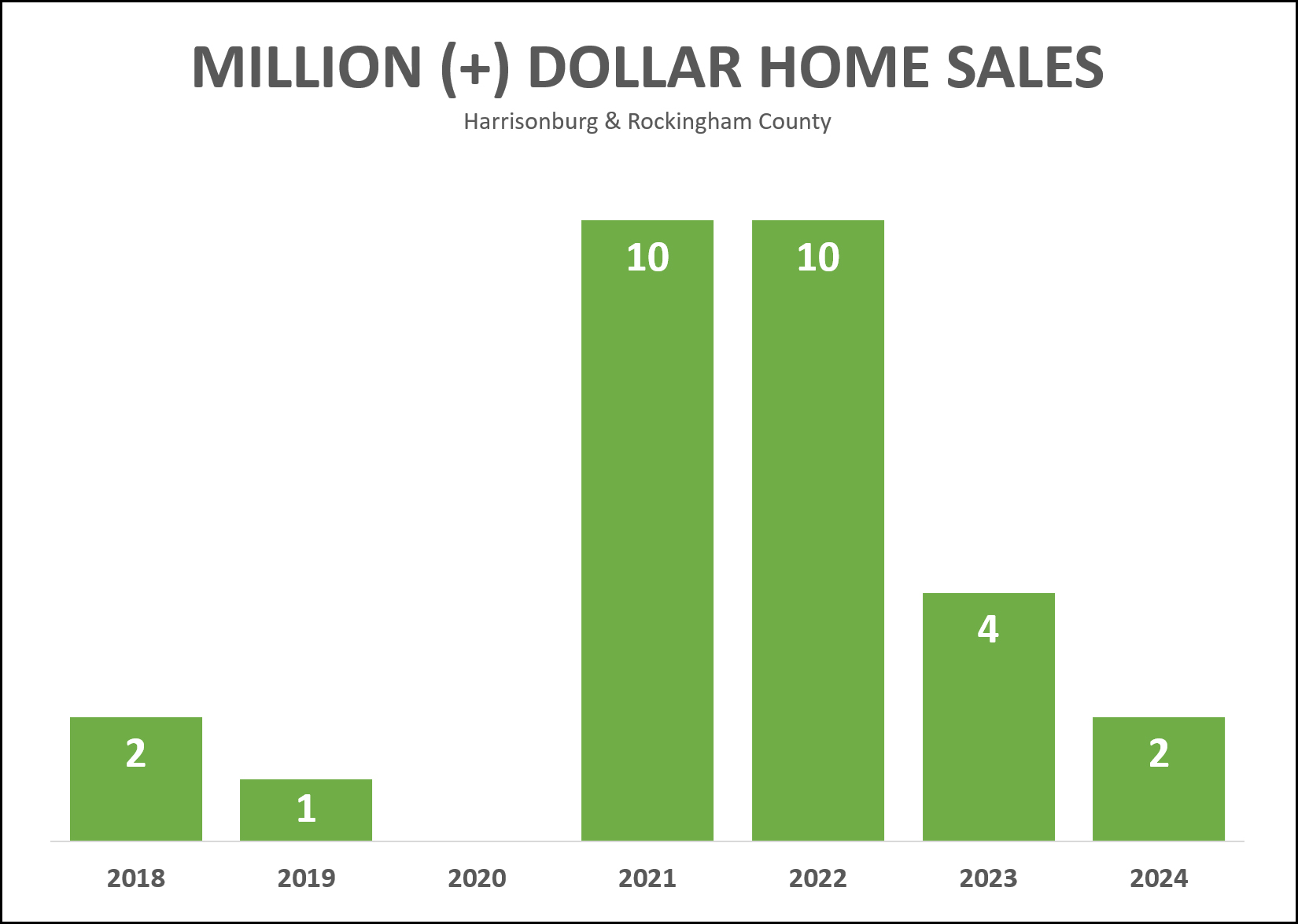 Between 2018 and 2020 there were only three million dollar home sales in Harrisonburg and Rockingham County area as recorded in the HRAR MLS. Then, in 2021, we saw (10) million dollar (+) home sales, and then (10) more such sales in 2022! Home prices were certainly increasing between 2018 and 2021, so one of the reasons we saw more million dollar home sales was certainly because of increases in those home values. But then -- we only saw (4) such sales in 2023. One theory here is that the increase in mortgage interest rates in 2022 and then 2023 resulted in fewer buyers being willing to pay a million bucks (or more) for a home. Thus far in 2024, we have seen two of these million dollar (+) home sales in the first four(ish) months of the year -- though there are four other million (+) dollar listings that are under contract and waiting to make it to closing. If you're eager to purchase a million dollar home in Harrisonburg or Rockingham County, these are your (14) current options. | |
 |
 |
|
|
How Much Will Your Mortgage Payment Change If You Sell Your Home And Buy A New One? |
|
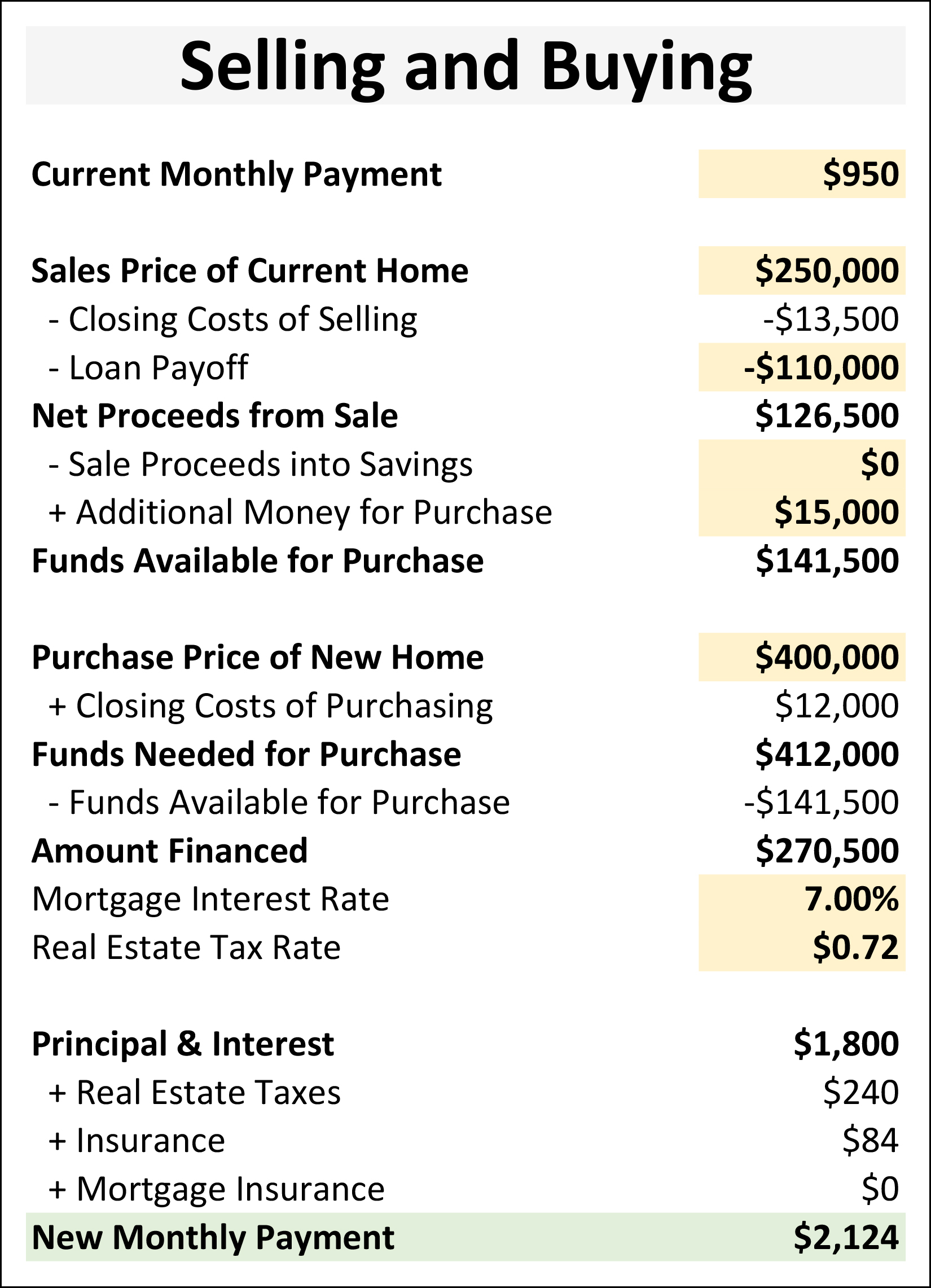 If you will be selling your home to buy another, there are a lot of numbers floating around....
Above you will see a spreadsheet I put together to help you think about some of these numbers as you are evaluating if and when you will make a move to a new house. In yellow, are all of the inputs you will need to provide, or that you and I can determine together, such as your current payment, your home's current value, your mortgage payoff, whether you will be putting any additional money into the transaction, etc. In green, I have identified your potential future mortgage payment and the net change in your monthly payment. All of the numbers without a background color will automatically calculate for you. Click here to download this worksheet as an editable Excel file. | |
|
|
|
|
Many (Or Most?) Home Sellers Prioritize Certainty Over Price |
|
 When a seller signs a contract with a buyer, they want to be as certain as possible that the contract will proceed to settlement. The king of all offers, providing the most certainty to a seller would be a cash offer with no contingencies whatsoever. As each of the contingencies below are added to a contract, the seller's certainty decreases...
It is important, as a buyer, to remember that most sellers are thinking about certainty alongside price. Which of these offers is likely to succeed?
When presented with these three offers I think many or most sellers would choose offer #1 even though it is $1K or $5K lower than the other two offers in hand. Give careful thought to the contingencies you do and do not include in your offer and understand how they affect the seller's view of the certainty that your contract will make it to settlement. | |
|
|
|
|
Strong Contract Activity Continues Into April |
|
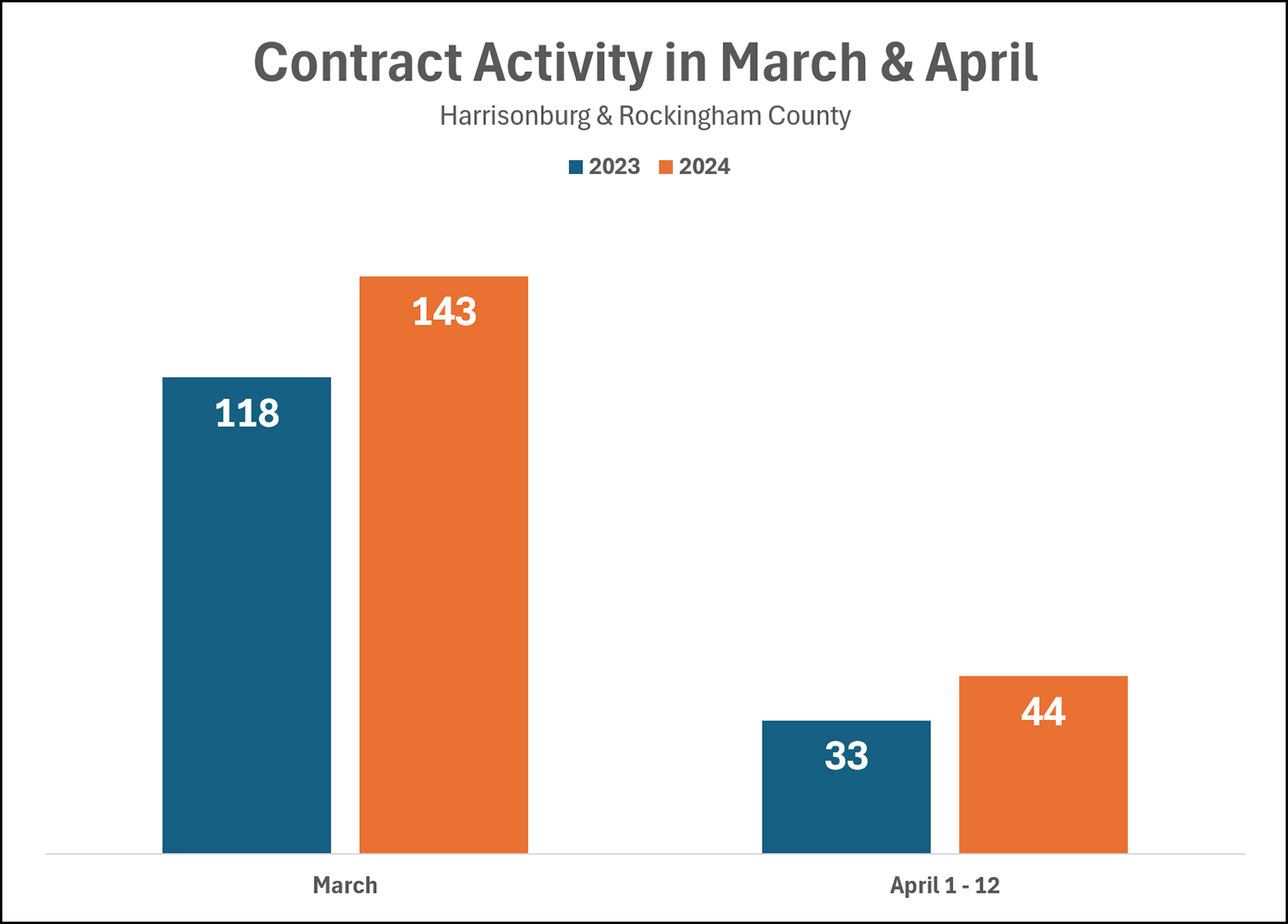 We saw a surprisingly high number of homes go under contract in March this year... 143 of them, compared to only 118 last March. And... this April is also starting off strong compared to last April. In the first 12 days of this month (through this past Friday) we saw 44 houses go under contract in Harrisonburg and Rockingham County compared to only 33 last April. It is turning into a busy spring in the local housing market! | |
|
|
|
|
How Long Will You Stay In Your Home? |
|
 It seems homeowners are staying in their homes much longer now than they did two decades ago... with the median homeowner tenure having risen from 6.5 years in 2006 to 11.9 years today. This analysis of homeowner tenure is thanks to a recent analysis by Redfin... A few reasons for this increase in homeowner tenure seem to include... [1] Older Americans staying in their homes longer. [2] More recently, the sticky-ness of low fixed mortgage interest rates. A few results of this increase in homeowner tenure seem to include... [1] Lower inventory levels of resale homes. [2] Continued increases in home values. When I ask folks that I encounter on a day to day basis how long they will stay in their current homes, I often am told that they will stay in their current homes for a very long time, if not forever. This is largely because... [1] They bought their home when home values were lower or significantly lower than they are now, and they are enjoying a relatively low mortgage balance compared to current home values. [2] They bought their home when mortgage interest rates were below 4%... or they refinanced their mortgage when interest rates were below 4%, and they do not want their housing payments to increase if they obtain a new mortgage above 6%. How long will you stay in your home? I plan to stay in mine for quite a while! | |
|
|
|
|
How To Think About The Market Value Of Your Home When There Have been No Recent Sales In Your Neighborhood |
|
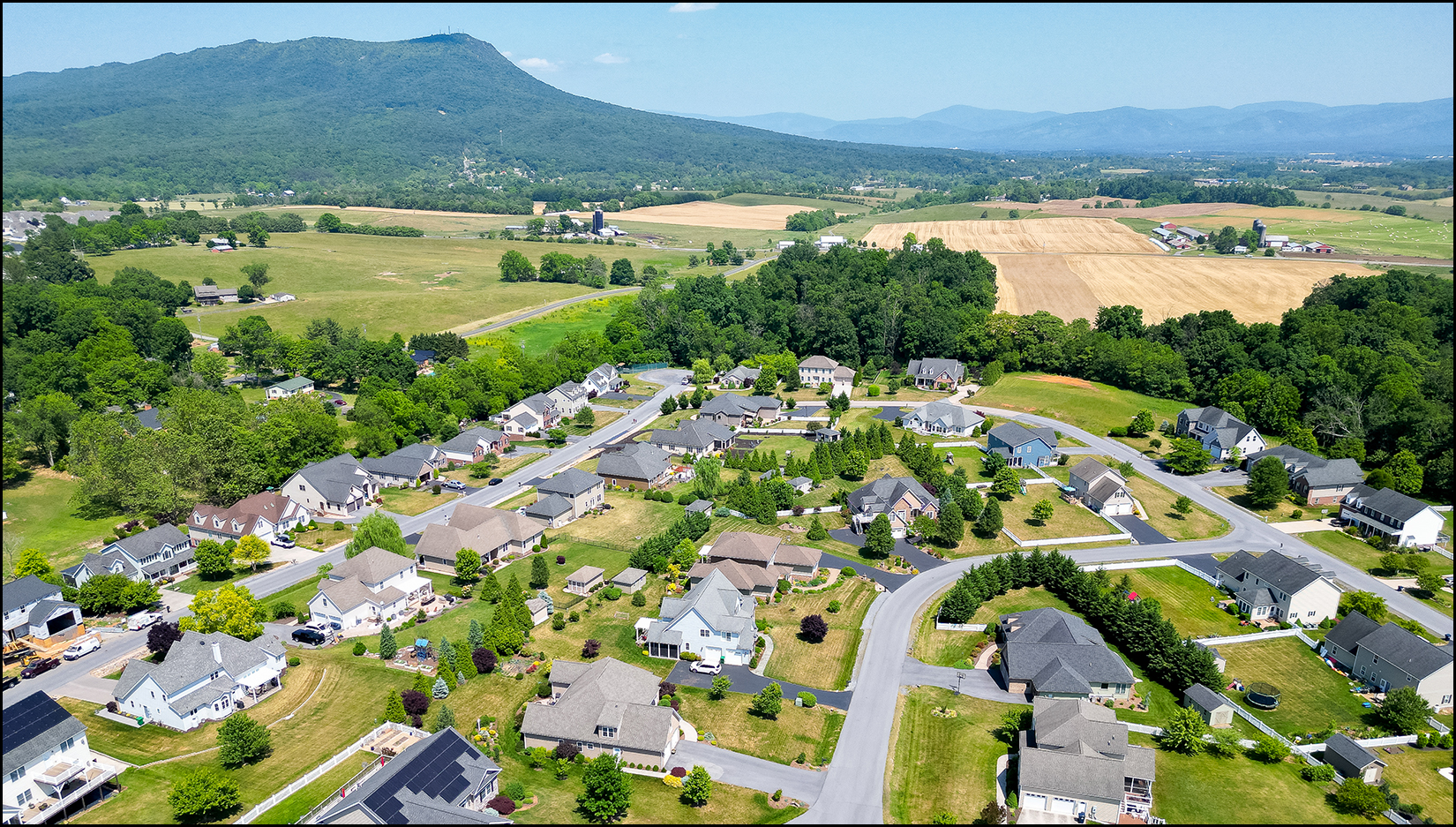 I think this is going to be a more common phenomenon over the next few years... In preparing to list your home for sale we start to take a look, together, at recent sales of similar homes to predict the price a buyer will be willing to pay for your home. But... there have been no sales in your neighborhood over the past year... or two years... or three years!?! What does one then do? It's probably best not to focus on sales prices in your neighborhood from more than two or three years ago as they won't be a very accurate indicator of the value of your home in the current market. We'll likely need to work to identify comparable sales outside of your neighborhood that are as similar to your home as possible to potentially include... [1] the same school district [2] a similar size home [3] a similar structure of home (one story vs. two story) [4] a similar age of a home [5] a home with similar interior and exterior materials and finishes We will then make adjustment to the sales prices of each comparable property based on differences in both the neighborhood and the other attributes listed above. It is certainly ideal when there are highly similar comparable sales right in your very own neighborhood to use as reference points when pricing your home -- but that is not always going to be our current context right now given that fewer homeowners are selling from year to year. | |
|
|
|
|
Home Sellers In Many Price Ranges Still Need To Plan To Be Kicked Out Of Their Houses For A Few Days |
|
 Plenty has changed since the times of real estate during a pandemic... [1] Mortgage interest rates are now 6% instead of 3%. [2] Sellers are often receiving a few offers instead of a flurry of offers. [3] Homes are often selling at or just above asking, instead of waaaay above asking. But some things have not changed... Home sellers in many price ranges (and locations and property types) still need to be plan to be kicked out of their homes for a few days when they list them for sale. Is this happening for all new listings? No Are all or most of the showings turning into offers? No Can it get a bit logistically challenging for sellers to have so many showings within the first few days on the market? Yes Do most sellers decide it is worth it? Yes Happy Spring, and let me know if you want to get kicked out of your home for a few days... ;-) | |
|
|
|
|
Would You, As A Seller, Turn Down A Solid Offer In Hand For The Possibility Of One To Come? |
|
 As usual, context matters, which I'll get to below, but... If you listed your home a few days ago and you have a solid offer... but are being told you might receive another offer in a day or two... would you turn down the solid offer? Or would you go ahead and decide to move forward. Let's add some context that might point us in a few different directions... House #1 - Listed for $750K (upper end of the market), three showings over five days, a full price offer with reasonable contingencies is received on the fifth day, and one of the other buyers that viewed the home says they might make an offer within a day or two, and no other showings are scheduled. Most sellers in this situation would probably go ahead and move forward with the solid offer - even though another offer might materialize. House #2 - Listed for $350K (highly active segment of the market), 15 showings scheduled over the first three days of being on the market, a full price offer with reasonable contingencies is received on the first day, after the third showing, and the buyer is anxious to have a response. Many or most sellers would hold off on responding to that first (solid) offer, for at least a day, given the other showings that are about to take place. These are two examples that are a bit more clear cut than many situations that sellers find themselves in -- having to balance the value of the solid offer in hand compared to the possibility of other offers to (maybe) come along soon. As we think through a response (or no response yet) we'll consider the context of your price range, the size of your market, the number of scheduled showings, the feedback we are getting from the showings, the length of time your house has been on the market and more. But there certainly is always plenty of value in the solid offer in hand! | |
|
|
|
|
Home Prices In Harrisonburg, Rockingham County Might Not Shoot Upwards Quickly If Or When Mortgage Interest Rates Fall Because Prices Did Not Drop When Rates Rose |
|
 If or as mortgage interest rates drop, will we see home prices shoot upwards? Let's back up a few steps... When mortgage interest rates rose from 3.2% to 7.1% within 10 months (Jan 2022 - Oct 2022) some housing markets saw home prices decline. Understandably, if the mortgage interest rate doubles, a buyer's monthly housing payments will be much higher than the previous year -- directly and immediately affecting housing affordability. Thus, some markets saw prices decline during 2022 at least partially as a result of higher mortgage interest rates. Harrisonburg and Rockingham County, notably, did not see a decline in the median sales price during that (2022) timeframe. Many people in markets (often larger cities) where home prices did decline are now (reasonably) wondering if home prices will spike upwards if or when mortgage interest rates fall. If you are in a market where home prices dropped as interest rates rose... then yes, it is reasonable to think you'll see home prices rise (or rise faster) if or as mortgage interest rates drop. But... back to Harrisonburg and Rockingham County... I am not expecting that we will see an uptick in home prices if or as mortgage rates decline... mainly because we did not see prices drop when rates rose. This is not to say that home prices won't continue to rise in this area -- I think they will -- but I don't think we'll see an increase in home prices specifically related to mortgage rates dropping. | |
|
|
|
|
If Or As Mortgage Interest Rates Decline, Buyers Will Likely Jump Back In Sooner Than Sellers |
|
 Mortgage interest rates peaked this past Fall at 7.79% and have been mostly declining since that time, to current levels of 6.74%. But, 6.74% can still feel high after interest rates were below 5% for 13 years... and below 4% for three years. As mortgage interest rates potentially continue to decline, perhaps back down to 6%, what will we see happening in the market? Will the lower mortgage interest rates spur on more home sales activity? Maybe, but perhaps not as much as you would likely expect. If / when / as mortgage interest rates move back down towards 6% -- or the low 6%'s or the high 5%'s we are likely to see more would be home buyers interested in buying. They will be able to afford higher sales prices and/or their monthly mortgage payment will be lower. But... in order for a home sale to take place... we need both a buyer AND a seller. Many homeowners (would be sellers) have mortgage interest rates below 4%. Quite a few have interest rates below 3%. Will a homeowner sell, paying off their mortgage that has a 2.75% or 3.5% rate... to then buy another home with a 6% mortgage interest rate? Somewhere between no and probably not? Will a homeowner sell, paying off their mortgage that has a 2.75% or 3.5% rate... to then buy another home with a 5.5% mortgage interest rate? Somewhere between probably not and maybe? Will a homeowner sell, paying off their mortgage that has a 2.75% or 3.5% rate... to then buy another home with a 4.99% mortgage interest rate? Maybe? I expect that as we move through 2024 and 2025, and as mortgage interest rates (likely?) continue to decline (at least somewhat) we are likely to see more buyers jumping back into the market before sellers are doing the same. Which means... that we are likely to still see a competitive market... if buyer demand rises more quickly than seller supply. | |
|
|
|
|
Consider The Size Of The Buyer Pool When Pricing Your Home |
|
 This isn't an exact science, as I'll explain below, but... When you are pricing your home, it is important to consider the size of the pool of buyers who might be considering your home. If you're selling a townhouse in the City of Harrisonburg for less than $250K that's a pretty big pool of buyers -- there were 93 such sales over the past year. If you're selling a townhouse or duplex in the Spotswood High School district for more than $500K, that's a much smaller pool of buyers -- there were only 5 such sales over the past year. If you're selling a detached home in the Turner Ashby school district for less than $400K, that's a pretty big pool of buyers -- there were 82 such sales over the past year. If you're selling a detached home in the Turner Ashby High School district for more than $700K, that's a much smaller pool of buyers -- there were only 4 such sales over the past year. So, as you consider a pricing strategy for your home, we will want to dial in on how many buyers are paying that sort of a price for your sort of a home in a given timeframe so that we have reasonable expectations related to how much interest we will have in your home and how quickly it might sell. Two significant(ish) caveats... [1] We'll be predicting future demand based on past demand which is usually a reasonable estimate, but it's quite possible that -- for example -- 40 buyers wanted to buy your sort of home over the past year, but only 25 buyers will want to do so in the coming year. [2] Sometimes a seemingly small pool of buyers is actually a supply-side constraint. When we see that only five buyers paid over $500K for an attached home in the Spotswood High School district in a year's time part of that may be a result of only five buyers wanting to buy such a property, but it is quite possible (or even likely) that it is also a result of only five sellers being willing to sell such a property during that timeframe. Regardless of the caveats, it is important to understand how many buyers will potentially be considering your home when it hits the market based on how many buyers have bought such a home over the past 6 to 12 months. | |
|
|
|
|
What Improvements Should You Make Before Selling Your Home? |
|
 Unfortunately, there isn't a magic answer to what improvements you should make before selling your home. I can't universally say that all homeowners should do X, Y and Z before selling their home. As with most topics I discuss with prospective home sellers, it depends... Here are a few ways to think about this topic... RETURN ON INVESTMENT Some improvements will cost more than others and some will make more of an impact than others. We can brainstorm a list of potential improvements together and then estimate the cost of each - or obtain quotes for each. With pricing in hand we can evaluate whether is is worthwhile to spend $___ to improve ___ in order to potentially sell for $___ more than you would otherwise. One other thing to keep in mind as we consider the return on the financial investment - is the time that it will take to make the improvement(s) and whether that delay is acceptable given when you want your home to hit the market for sale. COMPETING WELL If most homes in your neighborhood (or price range) have upgraded their ___ and you have not, it may make sense to make that improvement. As we look at improvements that you might make to your home, we should think about them in the context of what your competition is offering. If you haven't improved ___ and every other home that we'll be competing with once you are on the market has improved ___ then we won't compete well. YOU DON'T HAVE TO MAKE IMPROVEMENTS You may not actually want to make the improvements that we consider and discuss. You might not have the money in hand to pay for those improvements, or you might not want to delay getting your house on the market, or you might not want to deal with the logistics of making the improvements while still trying to live in your home and deal with all of life's other logistics. This approach (not making the improvements) is OK as well -- we will just need to understand or predict the impact that this decision will have on either the price at which you will be able to sell your home, or the time that it will take to sell your home, or both. | |
|
|
|
|
Spring Is Coming, And Perhaps More New Listings Too |
|
 Spring is coming. We had to wait one extra day this year, but March will be here tomorrow. With spring officially starting in about 20 days -- many would be home buyers in Harrisonburg and Rockingham County are wondering if we will start to see more resale listings popping onto the market as or once spring begins. I suspect that... [1] Yes, we'll see more new (resale) listings hitting the market this spring (Mar, Apr, May) than we have seen over the past few months. [2] We will likely see fewer new (resale) listings this spring than last spring. [3] There will likely be fewer new (resale) listings this spring than there are buyers who would like to buy said homes. While the above may differ a bit from price range to price range or from location to location, this likely means that... BUYERS should go see new listings quickly when they hit the market and be ready to make a decision and an offer quickly if you like the house. SELLERS should be relatively optimistic that if your house is prepared well, priced appropriately and marketed thoroughly that you will likely still see it go under contract within the first few weeks, if not the first few days. I'm ready for spring! Are you? | |
|
|
|
|
Instead Of Thinking About If It Is THE Right Time To Buy Or Sell, Think About If It Is YOUR Right Time |
|
 It's a great time to buy a home. It's a great time to sell a home. Those words are often tossed about, in a balanced market, in a strong buyer's market and in a strong seller's market. Is it always a great time to buy a home or to sell a home? How could that be possible? Forget all of that. Don't get stuck on whether it is THE right time to buy or sell a home. Instead, we ought to be focusing on whether it is YOUR right time to buy or sell a home. There are plenty of times when it is definitely the right time for you to buy a home -- and some when it is not. For example, if you don't have stability in your job or if you might want to move out of the area for a job advancement, it probably is not your right time to buy a home. There are plenty of times when it is definitely the right time for you to sell your home -- and some when it is not. For example, if you don't know where you'll go next after you sell, we certainly shouldn't be getting all geared up to sell your home. So... let's focus less on whether this, right now, is THE right time (or THE best time) to buy or sell a home. Instead... let's focus on whether this is YOUR right time. If the time is right for you to buy or sell, let's get down to it. If it's not your time, don't let the market or other influences make you think that you should be buying or selling. | |
|
|
|
|
Should You Price Your Home $10K To $20K Above Where You Hope To Sell? |
|
 In the current local housing market, it is not advisable to price your home $10K to $20K above the price point where you hope to sell -- with the one caveat being that it depends on the price range. If you hope to sell for $250K, I don't recommend pricing your home at $260K or $270K. If you hope to sell for $410K, I don't recommend pricing your home at $420K or $430K. I suppose if you hope to sell for $760K, might matter a bit less (maybe) if you price your home at $770K or $780K. But, back to the first premise... here's why I don't recommend a list price of $260K or $270K if you hope to sell for $250K. Let's say you price your home at $265,000 - hoping to sell for $250,000. If five buyers come to see your home in the first few days it is on the market, and they all like the house, but conclude that it is likely worth $250,000... ...they are likely to not even make an offer. After all, they may very well think they would need to offer $235,000 or $240,000 in order to hope to negotiate you down to $250,000. And when a home has been on the market for just a few days, most buyers won't make a $235K or $240K offer if the list price is $265K. So... in almost all cases, your list price should be very close (or a touch above or a touch below) the price point where you hope to sell. | |
|
|
|
|
Especially After Recent Increases In Property Values, Home Sellers Will Be Considering More Than Just The Offer Price |
|
 Imagine you are a home seller... ...you purchased your home 10 years ago for $250K... ...you are ready to sell and hope it might sell for $340K... ...you list it for sale for $350K. After a few days on the market, you have three offers to consider... [1] Offer of $350K contingent on the buyer financing 80% of the purchase price. [2] Offer of $355K contingent on the buyer financing 95% of the purchase price. [3] Offer of $365K contingent on the buyer financing 97% of the purchase price and requesting a $5K closing cost credit. The first offer would get you $350K, the second $355K and the third $360K. Ignoring any other differences in the offer terms, which of these offers would you accept? Many buyers might think (or hope) that the highest offer price will win... but especially when home values have increased as much as they have over the past five years, home sellers might not always pick the highest sales price. Fictional Seller described above was hoping to sell for $340K, so all three of the offer are great -- they all results in higher prices than the goal of $340K. To pick on the third offer first, it provides for the highest sales price but the buyer has the least amount of funds to put into the transaction and is even asking the seller to pay for part of their closing costs. The artificially inflated sales price (to incorporate the closing cost credit) will mean that the property must appraise for $5K higher than it would otherwise. Furthermore, if there is an inspection contingency, this buyer seems likely to be the most concerned about any small or medium sized issues, as they do not appear to have a lot of funds to put towards the home purchase. The second offer ($355K with 95% financing) is certainly stronger than the first ($350K with 80% financing) but again, the smaller down payment can be an indication that something could go awry within the transaction to cause it not to make it to closing, such as discovering needed home repairs during the home inspection process. Thus, many sellers in this situation would end up choosing the lowest (!!) offer -- selling for $350K instead of $355K or $360K -- because of the greater certainty of the buyer successfully making it to closing given their seemingly more secure and stable financing situation. This is just one example of how home sellers these days will be comparing more than just the proposed purchase price when reviewing multiple offers -- especially if they bought their home 5+ years ago and have seen a sizable increase in their property value. | |
|
|
|
|
How Much Are Home Buyers Paying For Houses? |
|
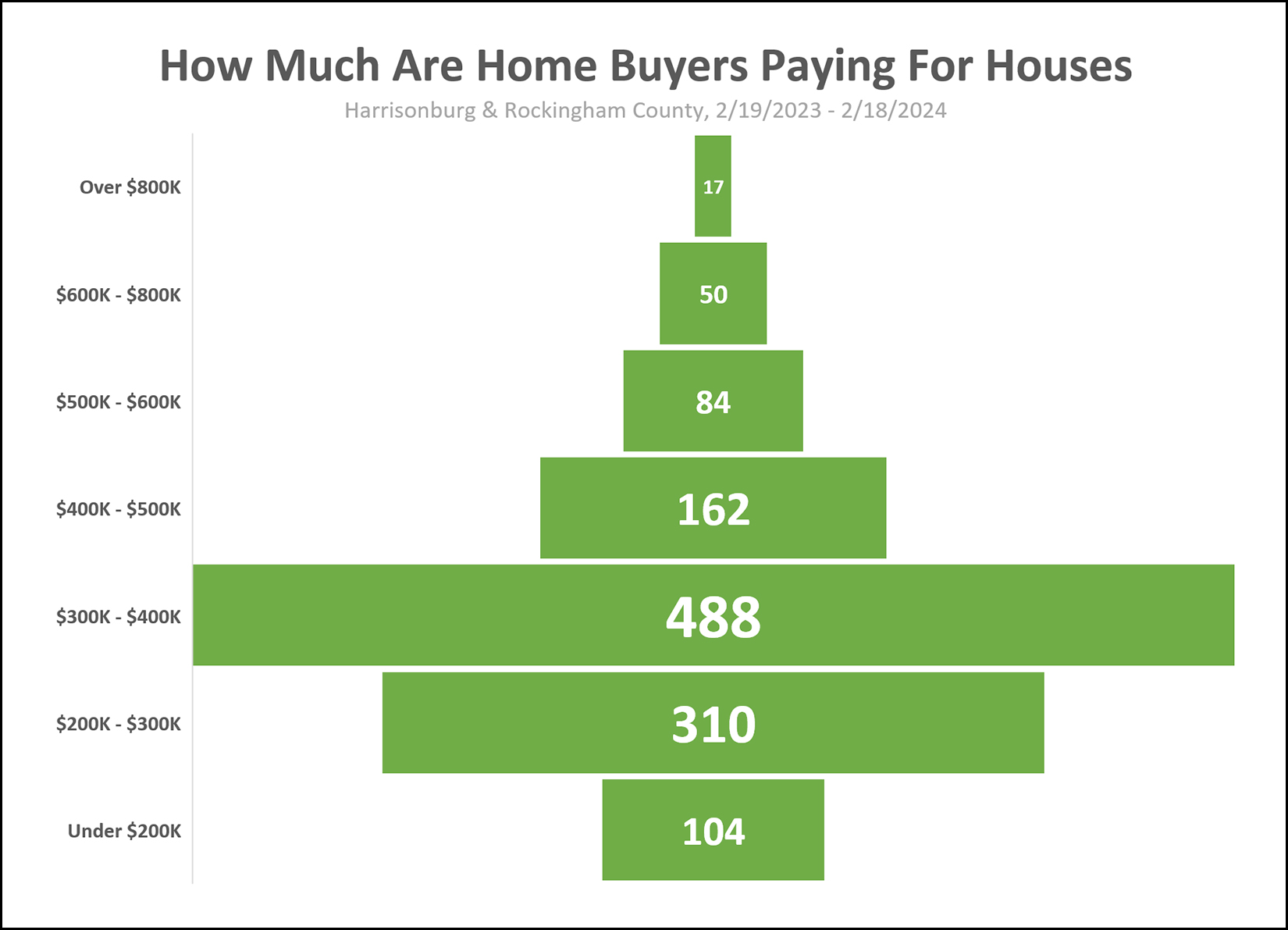 How many buyers in the past year have been able to purchase a property for less than $200K? 104 buyers... or 9% of the buyers who bought in the past year. How many buyers paid more than half a million dollars for their homes? 151 buyers... or 12% of the buyers who bought in the past year. In what price range are the largest number of buyers buying? Just over 40% of home buyers paid $300K - $400K over the past year. As you prepare to sell your home you should take time to understand the size of the pool of buyers who will be potentially interested in buying your home. | |
|
|
|
|
Almost Half Of Homes For Sale Are New Homes |
|
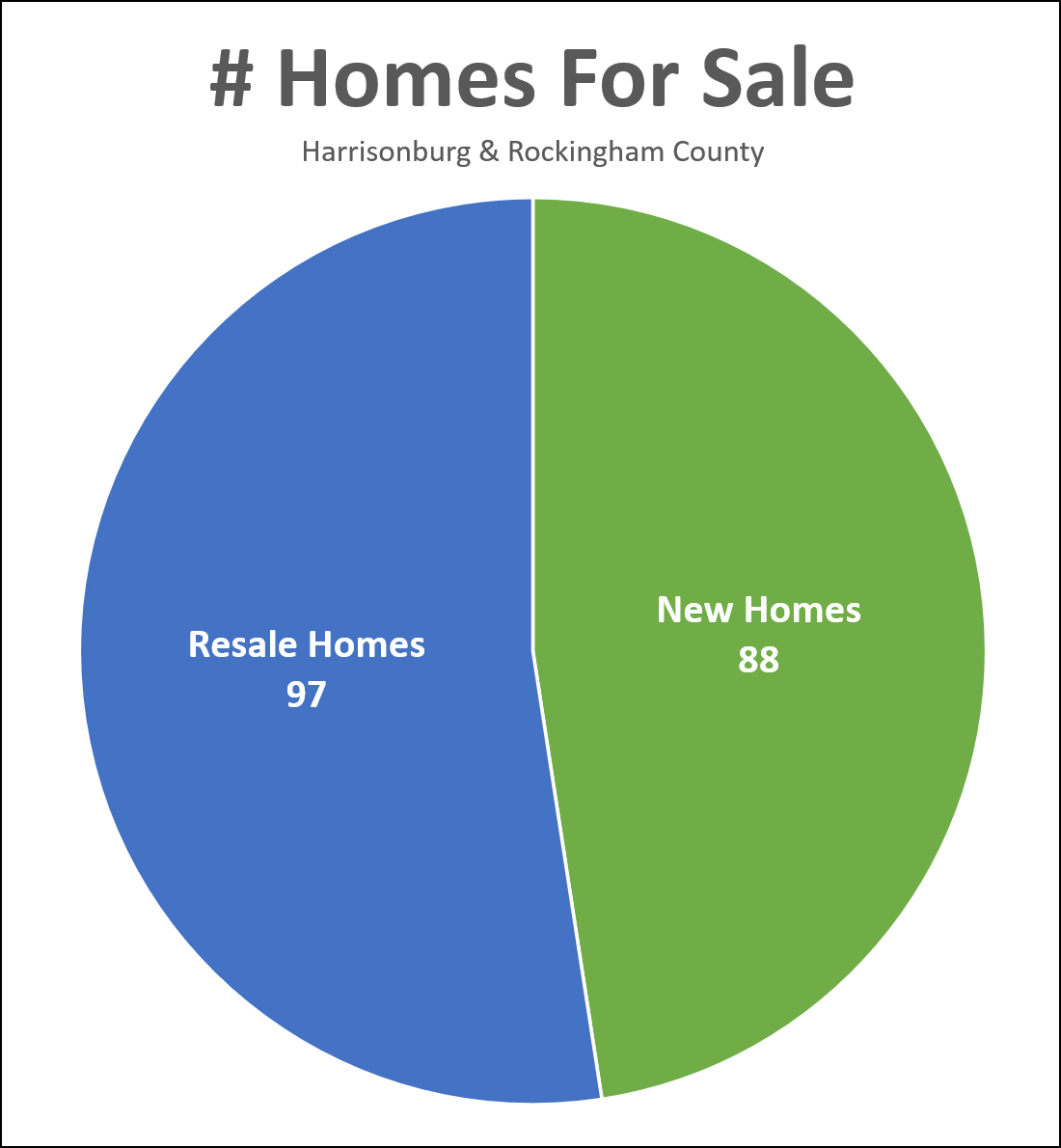 There are SOOOO many homes for sale... 185 of them right now, compared to only 109 a year ago. But... maybe there aren't as many homes for sale as you might think!?! As shown above, almost half of the homes currently listed for sale are new homes! New Homes For Sale = 88 Resale Homes For Sale = 97 So, even before we get to any price or location limitations, if you aren't looking to buy in a new home community you will only actually have 97 homes from which to choose, not 185 homes. These new homes for sale are mostly in these neighborhoods... | |
|
|
|
|
I Will Never Sell My House, He Exclaimed |
|
 I think more of us might be in this category than anyone realizes. About 80% of homeowners have a mortgage rate below 5%. About 60% of homeowners have a mortgage rate below 4%. With current mortgage interest rates in the 6-point-something range, why would any of those homeowners want to sell their home!? I think we will continue to see depressed (lower) numbers of resale listings in 2024 as plenty of homeowners decide to keep making their current home work, given their very low mortgage interest rate. Or, as the guy said earlier this week who has an interest rate below 3%... "I Will Never Sell My House!" If you're in the market to buy a home right now, we are likely to see more resale listings coming on the market in the spring, but there will likely be fewer such listings than there are buyers who want to buy them, so competition will likely remain fierce especially in some price ranges and locations. | |
|
|
|
|
Some Houses Are Still Selling Super Fast With Many Offers |
|
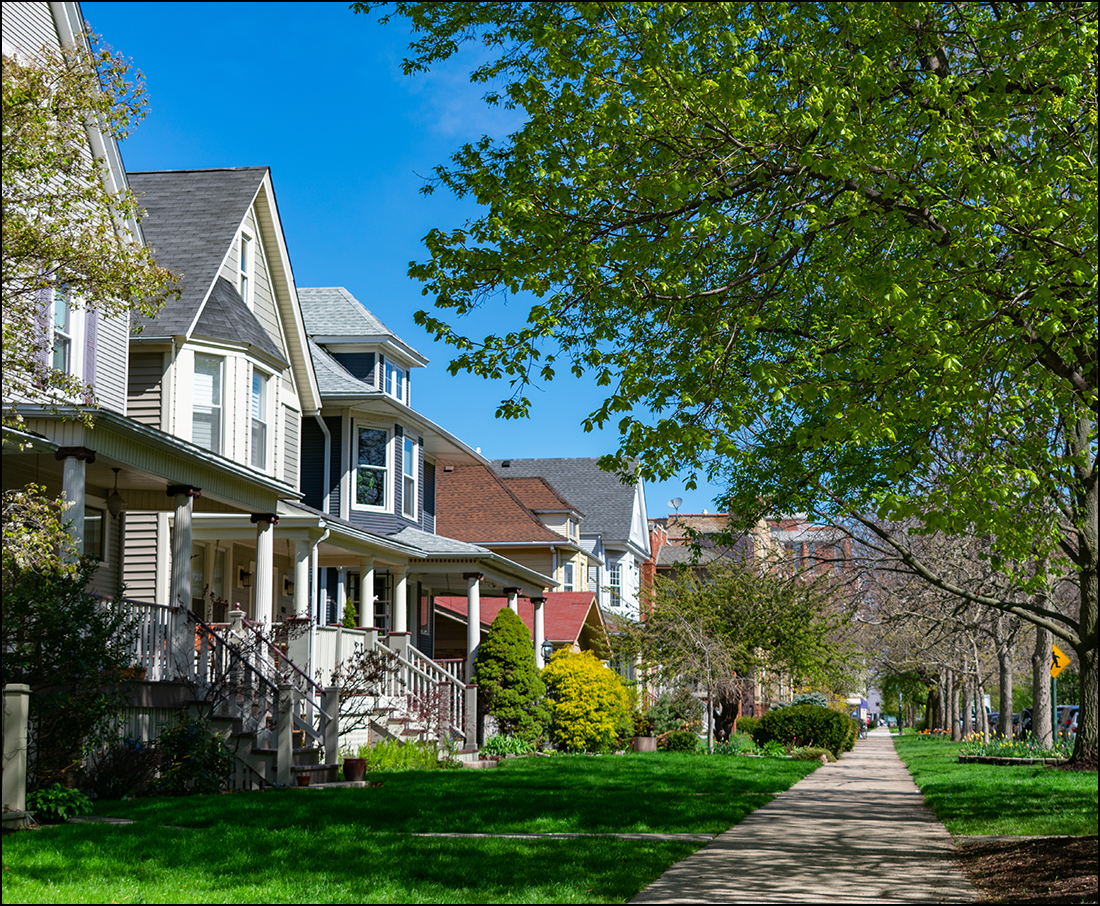 Plenty of houses are taking a while to sell these days... sometimes weeks and even months. But... some are selling VERY fast, with LOTS of offers. Case in point - a house that shall not be named - with 12 offers within three days of being listed. Some would-be sellers thus wonder --- will my house be a three month sale or a three day sale. Oversimplifying a bit... it's all about supply and demand. If a house is listed for sale in a neighborhood where there are already two houses for sale and there are very few buyers looking for the combination of features that the house offers -- it might take a bit for the house to sell. If a house is listed for sale in a neighborhood where homes have rarely been listed for sale over the past two years and there are a ton of buyers who would love to live in that neighborhood -- it might take just a few days for the house to sell. We ought to analyze and evaluate the type of market your house might fit into (of the two general types above) before we list your home for sale -- but we won't really know with certainty how the market will respond until we list your home for sale. | |
|
|
| Older Posts |
Scott Rogers
Funkhouser Real
Estate Group
540-578-0102
scott@funkhousergroup.com
Licensed in the
Commonwealth of Virginia

Home Search
Housing Market Report
Harrisonburg Townhouses
Walk Through This Home
Investment Properties
Harrisonburg Foreclosures
Property Transfers
New Listings


