



 |
 |
Zero Energy Home Training event in Harrisonburg |
|
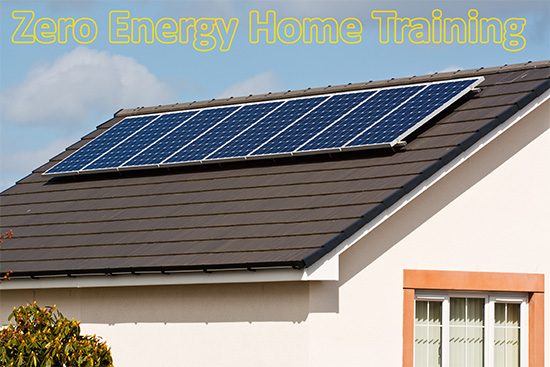 How can your next home use ZERO electricity? It is possible! Calling all builders (and other interested parties) --- there will be a "Zero Energy Home Training" event in Harrisonburg on November 10th at the Ice House from 8:00 AM - 12:00 PM. Information covered in this free training session will answer these questions (and more)....
| |
 |
 |
|
|
Sustainability Conference to be held in Harrisonburg in September |
|
 Registration is now open for the Mid-Atlantic Sustainability Conference. A special offer to the first 30 people to register will get a free copy of the National Green Building Standard ICC 700-2012. This conference features industry experts in the subjects of sustainable sites, alternative energy, legal green, building science, energy code, design solutions, energy modeling, HVAC design, indoor air quality, and zero energy homes. Speakers include Allison Bailes, Sam Rashkin, Ross Spiegel, and Peter Yost just to name a few. Sign up today for the Mid-Atlantic Sustainability Conference, to take place on September 4 - 6 at James Madison University. | |
|
|
|
|
THE ICE HOUSE, an innovative mixed-use redevelopment project in Downtown Harrisonburg is officially underway |
|
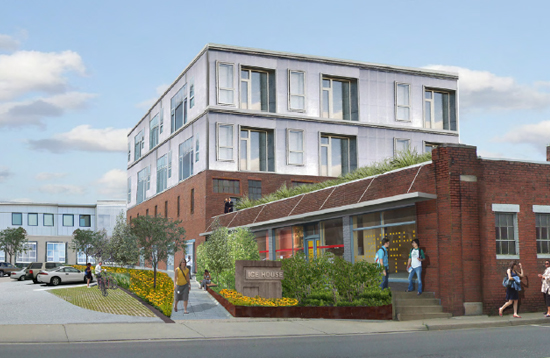 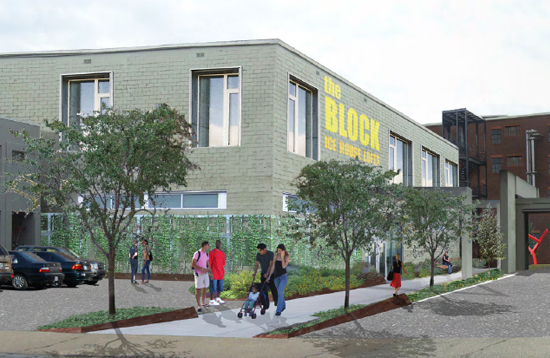 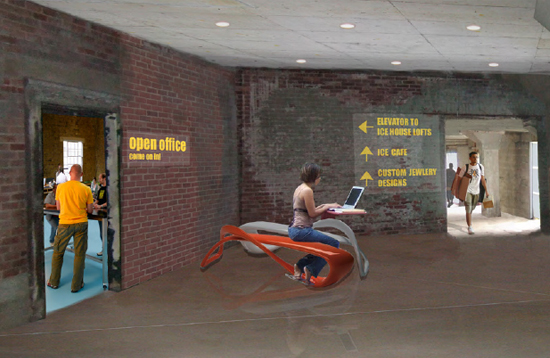 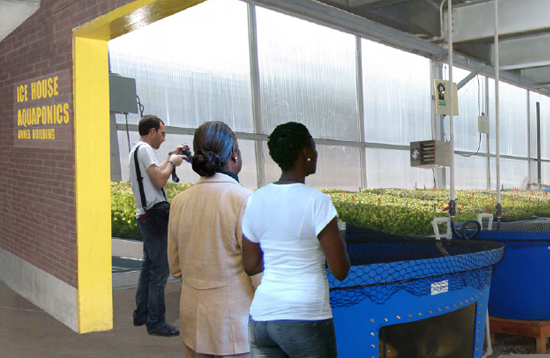 Local developers, Barry Kelley and Andrew Forward, are at it again -- transforming a downtown structure into an inspiring new space. Some of Barry and Andrew's past projects include City Exchange, Urban Exchange and The Walton Hotel. VISION - Some of the ideas that have been discussed for The Ice House include:
 LOCATION - The Ice House will be a transformation of the former Cassco ice plant located at 217 S. Liberty Street. As you can see, it's not a very exciting sight right now.... 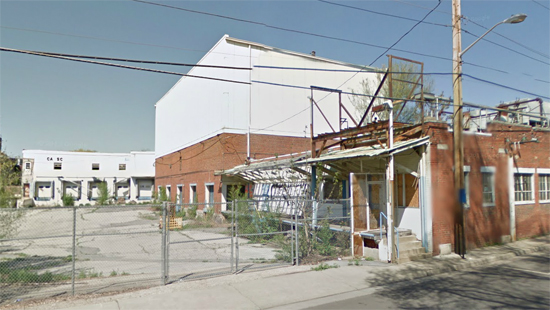 ZONING - The City of Harrisonburg has approved a rezoning request for 217 S. Liberty Street and the adjacent building, 115 W. Bruce Street. HISTORICAL TAX CREDITS; GRANT - One of the only reasons that this project is able to move forward is because of the historical tax credits available for the project. INDUSTRIAL REVITALIZATION FUND GRANT - Harrisonburg received a $500,000 grant from the Virginia Department of Housing and Community Development's Industrial Revitalization Fund. This grant is effectively a low-cost loan that will be available for the development of The Ice House. COMMERCIAL TENANTS - Conversations are ongoing, but James Madison University has confirmed that they will occupy some of the space in The Ice House. One of the JMU offices that will relocate to The Ice House is communications, marketing and public affairs. Additional current plans for the commercial space include a restaurant, a mint operation and a yoga studio. SCOPE, TIMING - The transformation of this 80,000 square foot building is estimated to cost $10 million and the aim is to have it substantially complete by the end of 2014. STATUS - A detailed master plan is currently being developed to include 217 S. Liberty Street, 115 W. Bruce Street, as well as a 104-space parking lot on a parcel diagonally across West Bruce Street.  | |
|
|
|
|
Green Terminology |
|
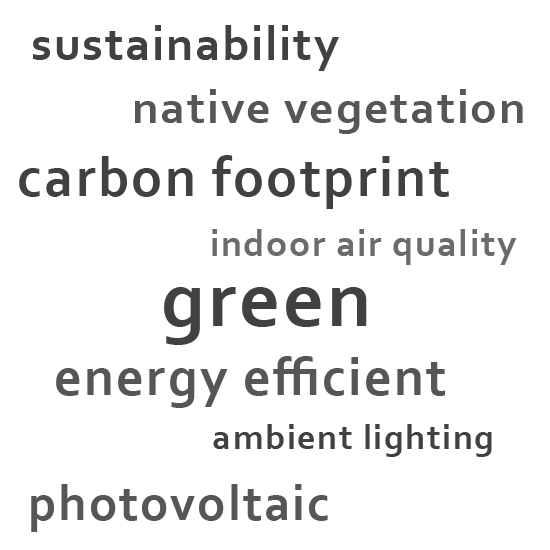 Are you dizzy from all of the green terminology being used these days? Check out this beginner's guide from The Gaines Group.... Confused by all the Green Terms that get tossed around, here is a beginners guide to get you started. | |
|
|
|
|
Harrisonburg's Green Expo at EMU Tomorrow |
|
 Harrisonburg's Green Expo invites you to participate in a great day of workshops, exhibits, demonstrations, food and children's activities. Beginners and experts alike can visit with local companies and non-profits to learn about growing a vibrant community with clean water, clean air, healthy living, renewable energy, and green building. Mark your calendars and join us at Eastern Mennonite University's Commons TOMORROW (Saturday, Nov 10) from 9A-4P, presented by the Shenandoah Valley Builder's Association. This year the Harrisonburg Green Expo has a little of everything....
| |
|
|
|
|
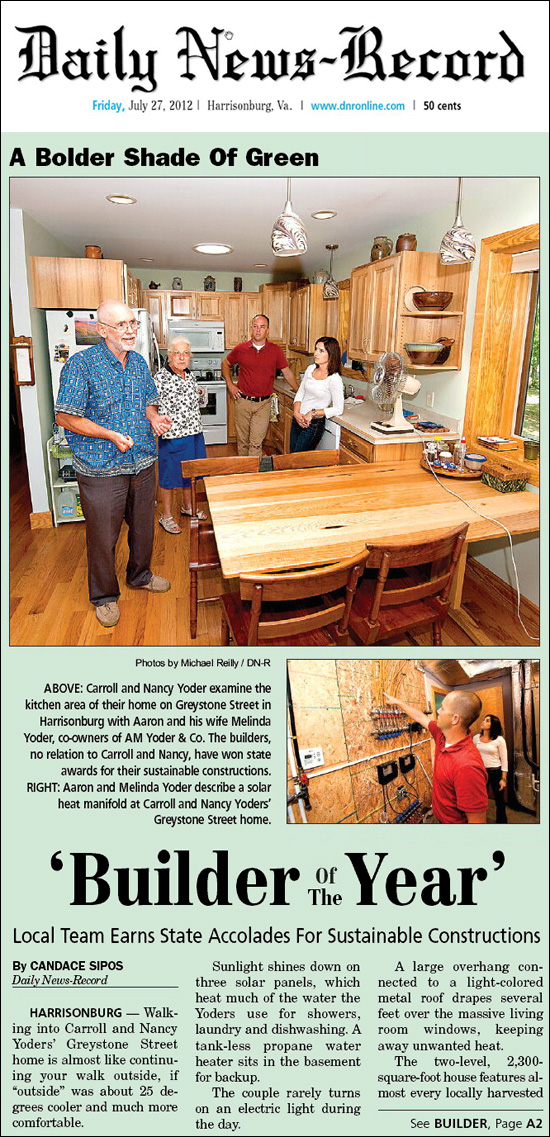
AM Yoder & Company Earns State Accolades For Sustainable Construction |
|
|
|
|
|
This Saturday: Harrisonburg's Green Innovations Tour |
|
 THIS SATURDAY, enjoy a behind-the-scenes tour of over 15 sites featuring downtown's energy efficient buildings, ongoing historic preservation, local food, and open green spaces. Demonstrations and presentations at select locations. Guided Tours will start at 1:30PM and 3:30PM, starting at the Turner Pavilion (Harrisonburg Farmers Market) and led by the Shenandoah Valley Builders Associations' Green Building Committee. The self-guided tours include:
And, there will even be children's activities at the Turner Pavilion and at select venues downtown! Click on the image below for the tour brochure with a map. 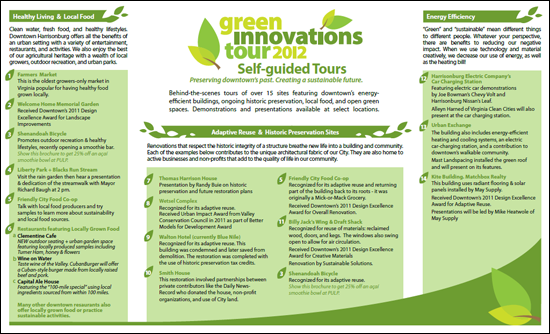 Click here for an article about the tour from the Staunton News Leader. | |
|
|
|
|
Why is this house blue? |
|
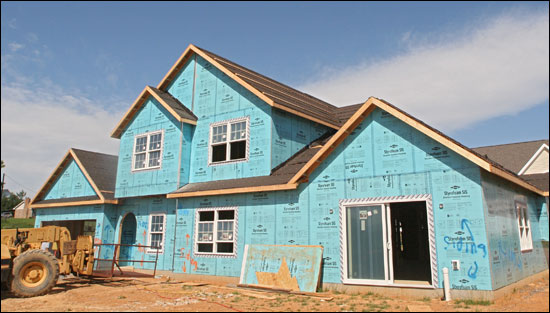 The home pictured above, being built at The Glen at Cross Keys, has an exterior shell of SIS board (structural insulated sheathing). This relatively new product from DOW offers structural support, insulation and water resistance. In contrast, most other homes have an exterior shell of OSB (oriented strand board) and house wrap, as pictured below. 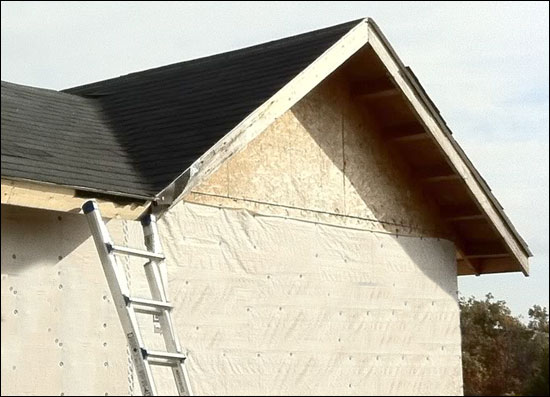 If you are building a home, you should consider having your builder use an SIS board exterior to provide greater comfort in your home through a well insulated exterior. You'll also find structural insulated sheathing at Heritage Estates, The Cottages at Stone Spring and Founders Way! | |
|
|
|
|
We are clueless on how to save energy (just ask NPR), but this Saturday you can learn how! |
|
 As reported by NPR, Columbia University recently conducted a study where they asked people about the most effective ways were to save energy --- and as a general public, we're well off the mark! From NPR.... CHIOTAKIS: So what the study found is when it comes to energy savings, we're all idiots? HILL: Yeah, pretty much. Basically researchers asked people what one thing they could do that would be the most effective thing to save energy and people said turning off the lights. CHIOTAKIS: Well that makes sense, what's wrong with that? HILL: Well, turning off the lights and other curtailment activities, as researchers like to call them, may not save as much energy as we think. A better choice might be making efficiency improvements, like installing energy-efficient light bulbs or driving non-gas guzzlers. CHIOTAKIS: So what are the things, Adriene, we do that we think save more energy than they actually save? HILL: Well, so there's turning off the lights. There's driving slower on the highway -- maybe stepping it down to 55, people think that saves more energy than it actually does. Unplugging your phone charger -- again, these things do save energy, but not as much as people guess. CHIOTAKIS: And what do we under-rate? What saves more than most people think they save? HILL: Driving cars that get better mileage, using room air conditioners instead of central air, and running more efficient appliances. BUT WAIT! THERE'S GOOD NEWS . . . This Saturday (September 25) from 9am to 4pm you can learn all about saving energy, and living sustainably at Harrisonburg's First Annual Green Expo. Don't waste the next few months doing web searches and making phone calls to try to learn about improvements you could make to your home, or technologies or products you could use in a new home. This Saturday you can spend an hour or two going from booth to booth speaking directly to the experts! Take a look at the long list of companies that will be present! Plus, you can learn a lot about these four notable speakers!
| |
|
|
|
|
What Is HardiePlank Siding, And Is It Being Used In Harrisonburg? |
|
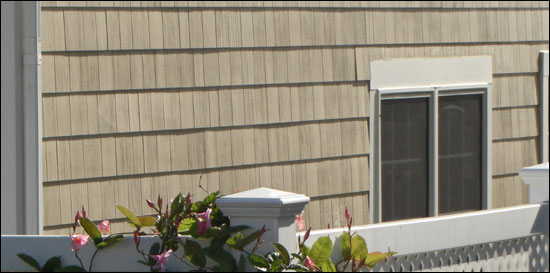 The exterior of your home could be built with so many different materials, for example: stucco, stone, wood, brick, aluminum, concrete, steel and fiber cement. That last one, fiber cement, is a vague and mysterious siding choice also referred to as HardiePlank siding, which has been around since the 1980's. So, what exactly is HardiePlank siding?? First, HardiePlank siding is a fiber cement, made out of sand, water, cellulose wood fibers and cement. Its source materials and design provide it with a number of unique qualities that often interest homeowners....
HardiePlank comes in all sorts of colors and styles, and you'll start to see it on some newly built homes in this area, for example on the Paired Homes at The Glen at Cross Keys, on this EarthCraft home on Cottage Circle, on most of the homes at Preston Lake, and on Urban Exchange. | |
|
|
|
|
A Hidden, Energy-Efficient Gem In The Peak View School District |
|
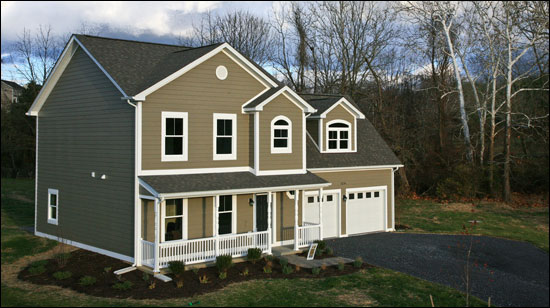 It's hard to come by a decent sized, relatively new, sub-$300k home in the Peak View Elementary school district. This is the highest growth area of the County, and most homes being built in this school district are priced above $300k (some are way... above $300k). So, what's a buyer to do?? The home pictured above fits this bill, and is energy efficient to boot, as an EarthCraft certified home. What on earth is an EarthCraft home, you might ask? They are homes that (in varying degrees):
Also of note, there will be six other homes built in this neighborhood. If you are interested in building your own EarthCraft home, come take a tour of this existing home, and then we can discuss other house designs, etc. | |
|
|
|
|
Building energy-efficient homes at Preston Lake |
|
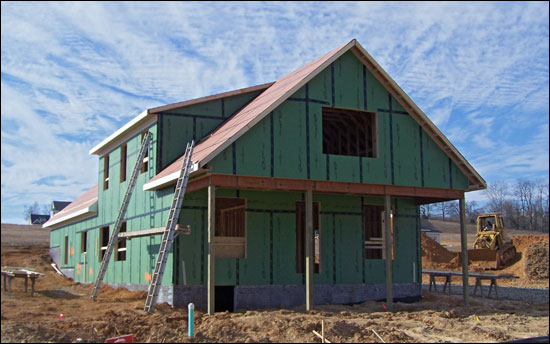 Yesterday, I accompanied my clients on a framing meeting at the home (pictured above) that is being built for them at Preston Lake. One of the impressive aspects of Preston Lake construction is that every residence (single family homes as well as rowhouses) will be EarthCraft and EnergyStar certified. Here's one small example of the difference you'll find in an EarthCraft home... The average duct leakage on new construction homes is 28% --- that is to say that 28% of the heated or cooled air being pumped into the ductwork never makes it into the living areas of the house. In contrast, an EarthCraft home MUST have 6% or less duct leakage --- which, as you can imagine, provides for a great deal of energy savings for a homeowner. Thus far, I have been very impressed with the construction process, materials and quality at Preston Lake. As the house moves further along, I'll post some additional photos showing some additional innovations found at Preston Lake. Here are some other communities and houses incorporating green building practices, materials or philosophies:
| |
|
|
|
|
How to "Build Green" - lots to learn! |
|
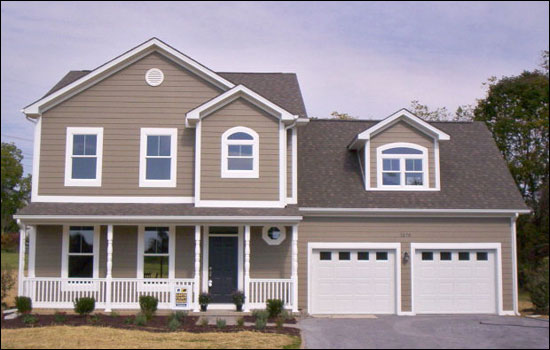 I recently attended an EarthCraft certification course to learn about the EarthCraft program --- a green building certification program that has been endorsed by our local builders association. I'm going a step further this week, spending all day Thursday and Friday in Hampton Roads in a training course for the National Association of Realtors' Green Resource Council. This training will provide me with the knowledge and awareness of green building principles applied in residences, commercial properties, developments, and communities --- it is bound to be a busy few days. If you have questions about building (or buying, or selling) a green house in Harrisonburg or Rockingham County, I'd be happy to share some of the information that I have learned already and will be learning later this week. More to come... | |
|
|
|
|
What is an EarthCraft House? |
|
Before I attended an EarthCraft training this week, I had heard of EarthCraft homes, and had been in EarthCraft homes, but I couldn't have given a very good definition of what they are, and what makes such a home different from a traditionally built home. Here's what I now know about homes that are certified as "EarthCraft Houses"...
| |
|
|
|
|
How to build a green home in Harrisonburg |
|
I spent the day today at an EarthCraft certification course learning about how to build higher quality homes, that are healthier, more comfortable, and have lower utility costs for homeowners. Click below to watch a brief interview with Aaron Yoder, the president of the Green Building Committee of the Shenandoah Valley Builders Association. | |
|
|
|
|
EnergyStar Testing at the Cottages at Stone Spring |
|
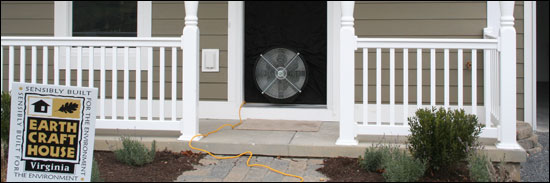 Have you ever heard of a blower door test? EnergyStar (and EarthCraft) homes are built to higher energy efficiency standards than your typical new construction home. EnergyStar homes have to meet standards set by the EPA, and are typically between 15% and 30% more energy efficient than traditionally built new construction homes. But how do you test the energy efficiency of a home? A common test is a blower door test, where a calibrated fan blows air out of the house while the pressure of the air flow is monitored. This test measures how "tight" a home has been built. A "tighter" home will be more energy efficient, as heated or cooled air will not escape the home as quickly. The home pictured above, 1270 Cottage Circle, is quite energy efficient (and green) with flash coat insulation, windows with a U-factor under 0.4, a 14-seer HVAC system, EnergyStar appliances, Toto Eco toilets, Lahara efficient faucets and shower heads, a fiber cement board exterior, Low VOC carpets and paints, and recycled hardwood floors. Today, Benjamin Meredith with Building Knowledge conducted a preliminary blower door test on the home to test its efficiency. Enjoy the brief interview with Laura Scripture, of Scripture Communities. | |
|
|
|
|
Solar Panels, Wind Turbines and Low Flow Toilets, Oh My! |
|
What a great story --- "On 5 acres along Interstate 81 about a mile north of Harrisonburg, Zach Fettig, a 24-year-old graduate of James Madison University's College of Integrated Science and Technology, is financing and building a self-sufficient, environmentally friendly house." (Source: Daily News Record) Zach is a recent graduate, and will house several other students in the house he is building --- providing a hands-on experience for learning about and performing research on sustainable living technologies in everyday life. 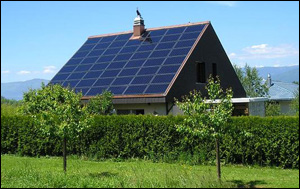 Per the Daily News Record, these technologies will include: Per the Daily News Record, these technologies will include:
| |
|
|
Scott Rogers
Funkhouser Real
Estate Group
540-578-0102
scott@funkhousergroup.com
Licensed in the
Commonwealth of Virginia

Home Search
Housing Market Report
Harrisonburg Townhouses
Walk Through This Home
Investment Properties
Harrisonburg Foreclosures
Property Transfers
New Listings


